At some point during the planning of a fine dining dinner in Bali, most guests encounter the same question. The restaurant offers a tasting menu, sometimes exclusively. There is no list of individual dishes to choose from. You are not asked what you want. You are asked to trust the kitchen, and then the evening begins.
For guests who are used to ordering freely, this can feel unfamiliar. For guests who have done it before, it is often the reason they came back. Understanding the difference between a la carte and a tasting menu is not just a practical matter. It shapes the entire fine-dining experience in Bali, and knowing which one suits you helps you choose the right restaurant and arrive with the right expectations.
What A La Carte Fine Dining Actually Means

A la carte is a French term meaning “from the menu”. In an à la carte fine dining restaurant, the menu presents individual dishes with individual prices. You choose your own starter, your own main course, your own dessert. The meal is yours to construct. The kitchen responds to your selections rather than presenting a predetermined sequence.
A la carte fine dining still involves the hallmarks of a fine dining experience: refined technique, quality ingredients, attentive service, and a considered wine list. The difference is in the structure of the meal and the degree of creative control that sits with the guest versus the kitchen.
For a broader understanding of how different menu formats work in fine dining, the types of fine dining menus guide covers the full range of formats you are likely to encounter.
What a Tasting Menu Is and How It Works
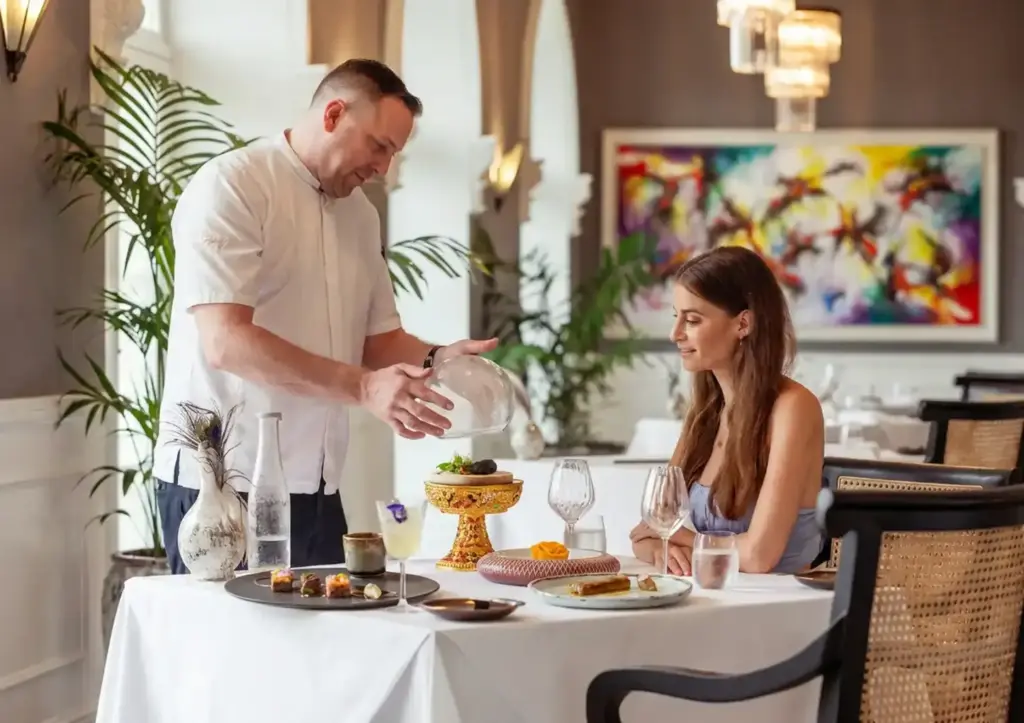
A tasting menu, also called a degustation menu, is a fixed sequence of courses chosen entirely by the chef. The number of courses typically ranges from five to ten, though some kitchens go further. Each course is designed to follow from the previous one in flavour, texture, and intensity. The meal is not a collection of dishes. It is a composition.
The guest’s role in a tasting menu is not passive. Dietary requirements and allergies are accommodated. However, it is essential to communicate any food allergies, vegetarian, vegan, halal, or other dietary requirements at the time of booking.
Most kitchens, including Apéritif, require at least 24 hours’ advance notice to adjust the tasting menu accordingly. Wine pairing, where a sommelier selects a different wine for each course, is usually available alongside.
At Apéritif, the tasting menu runs to seven courses, beginning with cocktails and canapés at the Pinstripe Bar before the dining room opens. This pre-dinner ritual is considered an integral part of the experience, setting the tone for the evening and introducing diners to the restaurant’s refined sense of hospitality. To enjoy the experience as intended, guests are encouraged to arrive early and allow ample time for the transition from the bar to the dining room.
The sequence moves through the kitchen’s full creative range, drawing from Indonesian ingredients and European technique in a format the restaurant calls Borderless Fine Dining. Every element of the evening, the pace, the service, the wine, the tableside rituals, is designed to support the meal as a whole rather than any individual dish.
Apéritif offers an à la carte menu called TASTED! by Apéritif, where you can create your own 3-course menu.
The Core Difference Between the Two Formats
The clearest way to understand the difference is this: a la carte fine dining gives the guest creative control. A tasting menu gives the chef creative control.
Neither is superior. They serve different purposes and different kinds of guests.
A la carte suits a guest who knows what they want, prefers flexibility, or is dining with people whose preferences vary widely. It suits a shorter evening, a business dinner where the focus is on conversation rather than cuisine, or a guest with a strong preference for a particular ingredient or dish.
A tasting menu suits a guest who wants to experience a chef’s full point of view, who is open to being surprised, and who is willing to commit the time. A full tasting menu with wine pairing at a fine-dining restaurant in Bali is typically a two- to three-hour experience. It is not a quick dinner. It is an evening.
Why Bali’s Top Fine Dining Restaurants Prefer Tasting Menus
The shift toward tasting menus in fine dining is not arbitrary. It reflects a change in how the most ambitious kitchens approach their work.
A la carte requires a kitchen to hold a wide range of components ready at any moment, for any combination of orders. This limits how precise and how ambitious each individual dish can be. A tasting menu allows the kitchen to focus its full attention on a fixed sequence, sourcing the exact quantities needed and preparing each element to a standard that would be impossible to sustain across a broad à la carte menu.
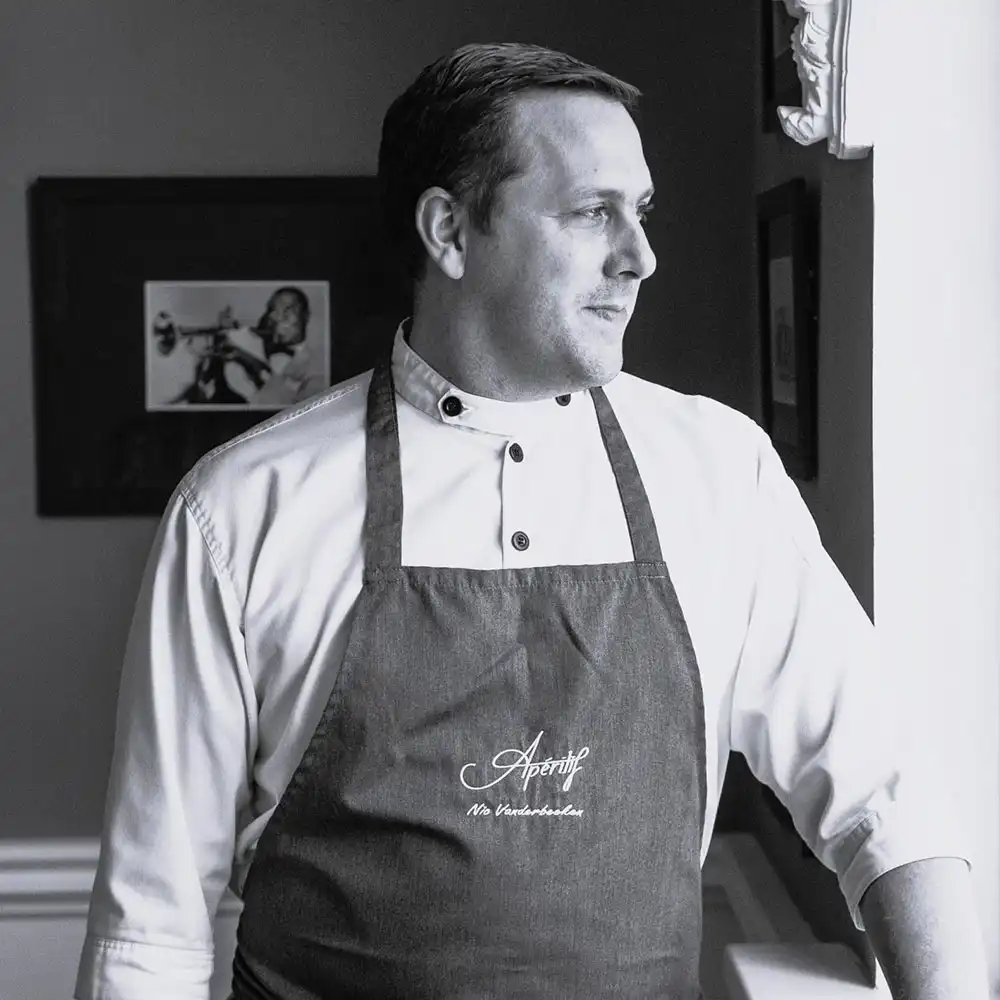
For a chef like Nic Vanderbeeken, whose cooking is built on hyper-seasonal sourcing, fermented Indonesian ingredients, and techniques that require careful timing and preparation, the tasting menu format is not a restriction. It is what makes cooking possible at the level it operates at.
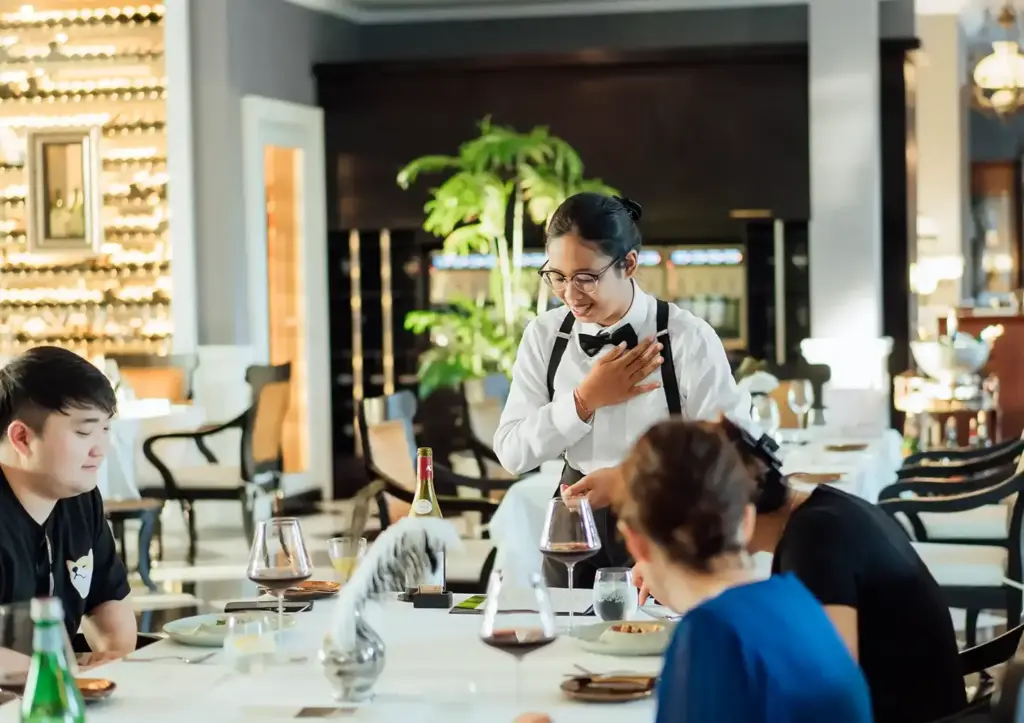
It also changes the service dynamic. When the kitchen knows exactly what is being served, the front-of-house can be fully briefed on every dish, every ingredient, every pairing. The result is a more informed, more attentive, and more coherent fine dining service experience than a la carte typically allows.
Beyond the food, the atmosphere of a dedicated tasting menu restaurant is part of the draw. Apéritif is housed in a 1920s-inspired colonial manor with grand chandeliers, antique furniture, and art deco details. The restaurant frequently hosts collaborations with internationally acclaimed Michelin-starred chefs, bringing a world-class, ever-evolving energy to Bali’s fine dining scene.
Practical Things to Know Before You Arrive
If you are booking a fine-dining tasting menu experience in Bali for the first time, a few practical points are worth knowing.
Dietary requirements should be communicated at the time of booking, not on arrival. A kitchen running a fixed tasting menu needs time to adjust courses for allergies, intolerances, or dietary choices. Vegetarian and vegan degustation menus are available at Apéritif alongside the main menu, each crafted with the same level of care and creativity as the standard sequence.
Reservation policies are stricter at tasting-menu restaurants. Most require a credit card guarantee. At Apéritif, no charge applies if you cancel more than 24 hours in advance, but cancellations within 24 hours or no-shows incur the full deposit amount.
Table hold times are also limited. Apéritif holds a reservation for up to 30 minutes after the booked time before the table may be released. Arriving on time is essential.
Timing matters more than in à la carte dining. A seven-course tasting menu is designed to unfold at a deliberate pace. Arriving on time and arriving without the pressure of another commitment immediately after makes a significant difference to how the evening feels.
Dress also matters, not because fine dining restaurants in Bali impose strict dress codes, but because the setting and the pace of the meal invite a certain kind of presence. At Apéritif, the recommended dress code is smart casual or cocktail attire, with guests asked to avoid sports clothing and beachwear such as singlets or flip-flops. A considered approach to what to wear to a fine dining restaurant is part of arriving in the right frame of mind for the experience.
If you are celebrating a special occasion, letting the restaurant know at least 24 hours in advance allows them to accommodate any special requests.
Apéritif also offers a wine-pairing experience curated by its in-house sommelier, and the restaurant boasts one of Bali’s most impressive wine cellars, with over 200 labels. Guests may even request a tour of the cellar. For those seeking an even more exclusive evening, a Private Dining Room is available for intimate gatherings.
Which Format Is Right for Fine Dining in Bali

If you are visiting Bali and considering a fine-dining dinner as part of your trip, the honest answer is that the most memorable fine-dining experiences in Bali are built around the tasting-menu format. The restaurants that have earned consistent international recognition, Apéritif among them, have done so by fully committing to degustation as the primary expression of their cooking.
À la carte dining still has its place, offering greater flexibility and a more casual approach. However, for diners seeking Bali’s fine dining at its most creative and refined, a tasting menu is often where the island’s leading chefs make their strongest statement.
Reservations for Apéritif’s seven-course degustation can be made from this website. Dinner is served from 6:00 pm, with the last kitchen order at 8:30 pm. Advance booking is required.