There is a particular kind of disappointment that comes with ordering the vegan option at a fine dining restaurant. The plate arrives, and you can tell immediately that it was designed around an absence. The protein is removed, something green is added, and the dish is sent out. It is polite. It is edible. It is not special.
Apéritif Restaurant in Ubud does not do that.
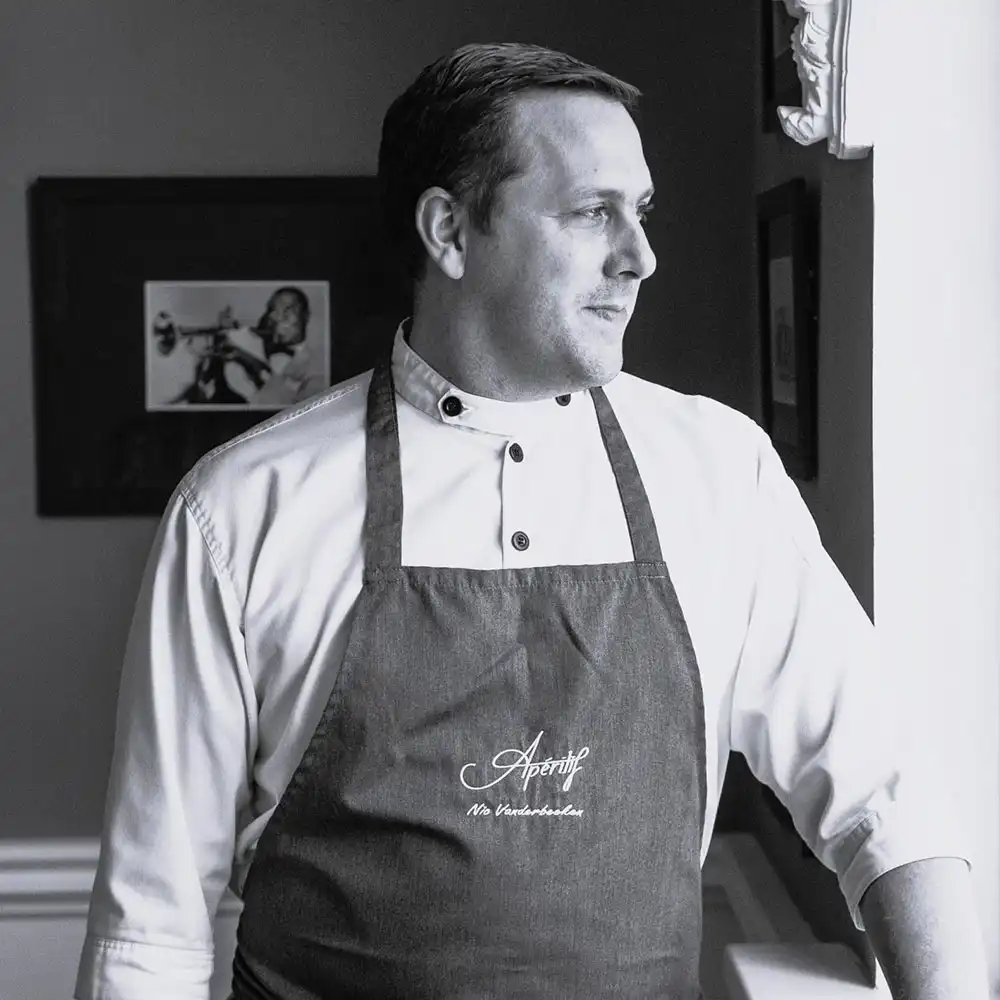
The vegan degustation menu here is not a modified version of the main menu. It is its own thing, built from the ground up with the same level of craft, intention, and creativity that defines every other plate from Executive Chef Nic Vanderbeeken’s kitchen. If you have been hesitant about vegan fine dining in Bali because of past disappointments, this is worth your attention. For a deeper understanding of our approach, explore our fine dining philosophy.
A Menu That Stands on Its Own
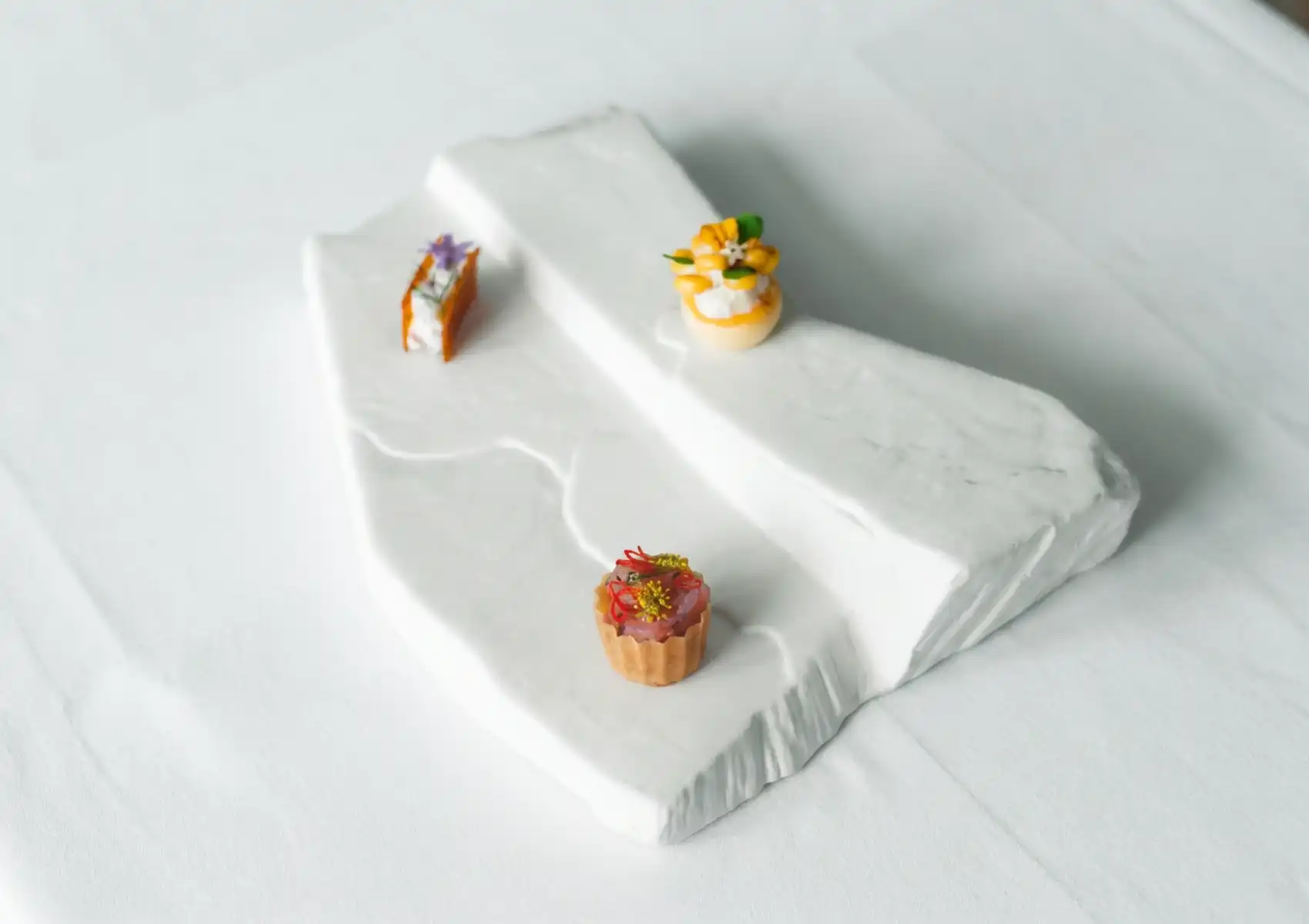
The vegan dégustation at Apéritif Restaurant opens with cocktails and canapés that immediately set the tone. The sequence includes an eggplant canapé with balado and leek, jicama with ponzu and potato chips, karedok-style vegetables with citrus, and a soy emulsion canapé with dashi tare and tempe crumble. These are not token bites. They are considered an introduction to a kitchen that treats plant-based ingredients as a complete flavour world in their own right.
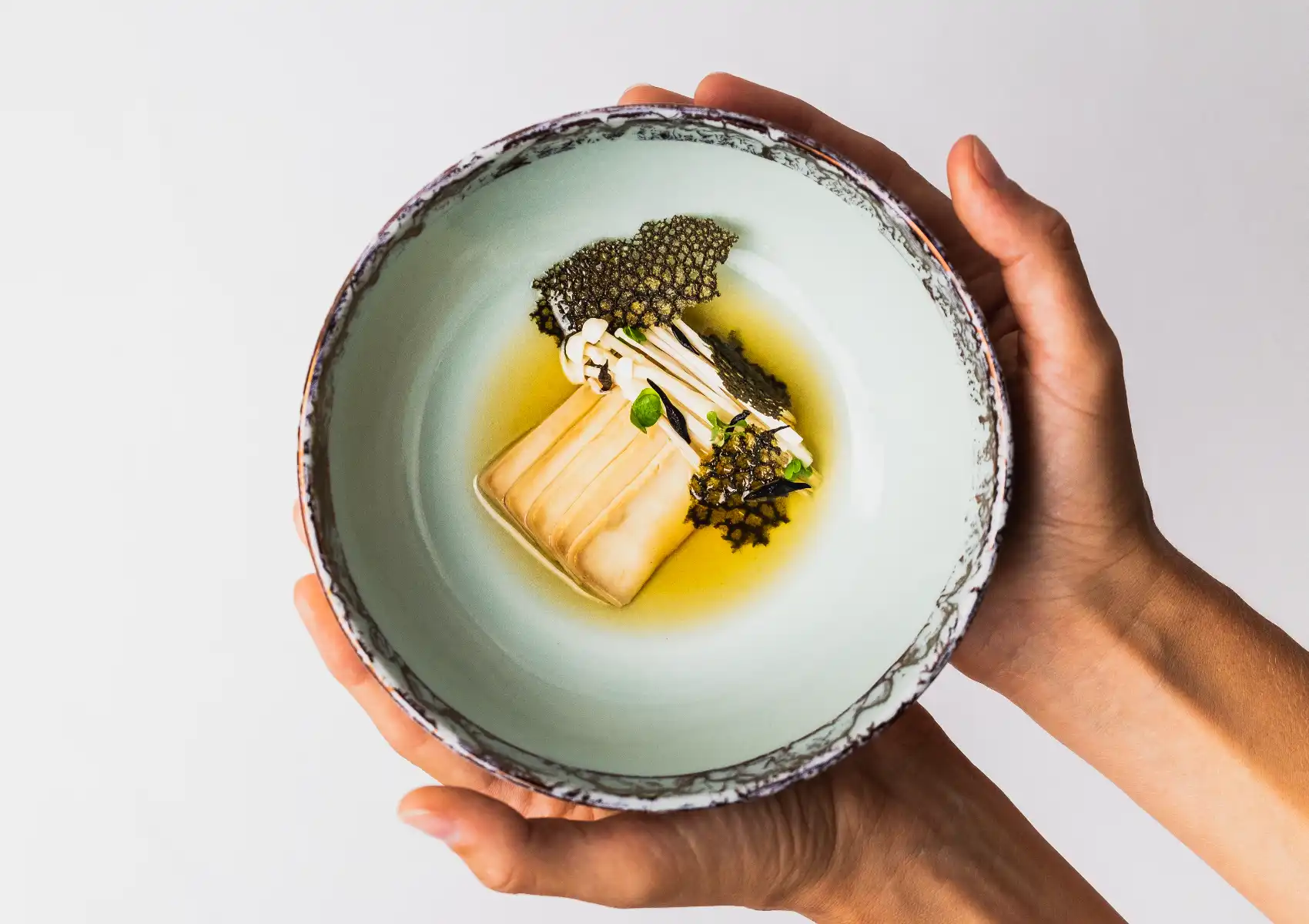
The first course, Tataki, pairs watermelon with soy, yuzu, and coriander. Clean, bright, and precise. It is followed by Tofu, cured for six months with miso and served with jicama and hijiki seaweed. Six months. The miso curing transforms the tofu entirely, concentrating its character into something with genuine depth and intensity. This is not tofu as a placeholder. It is tofu as the point.
Green Asparagus with rujak, vinaigrette, and jelly follows, the vegan interpretation of one of the menu’s most enduring courses. Where the main menu uses caviar and mousseline, the vegan version rebuilds the dish around plant-based components that serve the same structural and flavour function. The rujak, Indonesia’s traditional spiced sauce, bridges the local and the global in a single element. The dish is not diminished. It is reimagined.
The Eggplant course, lodeh, crumble, and kemangi, speaks a distinctly Indonesian flavour language. Lodeh is a Javanese coconut milk broth, gentle and aromatic. The kemangi, fragrant local basil, lifts everything. This is the kind of course that demonstrates how deeply the vegan menu is rooted in the archipelago’s culinary heritage.
The Main That Makes the Argument
The centrepiece of the vegan degustation is the Vegetable Terrine, with organic vegetables, tape, kluwek, and sambal ulek. Tape is a fermented cassava or rice preparation with a subtle tang. Kluwek, one of the most complex and distinctly Indonesian ingredients, brings a dark, earthy intensity. Sambal ulek provides heat and brightness. Together, they create a main course that carries the weight and ambition of a fine-dining centrepiece, not because it mimics meat, but because the ingredients themselves are powerful enough to demand that position.
This is the clearest sign that a vegan menu has been genuinely crafted rather than adapted. It diverges from the standard menu not out of necessity, but out of creative conviction.
Dessert as a Full Closing Act
The vegan menu closes with two dessert courses that are among the most distinctive on the entire Apéritif menu. Kolak with sweet potato, banana, and coconut is one of Indonesia’s most beloved traditional preparations, served here with the refinement of a fine dining kitchen. It is nostalgic and precise in equal measure.
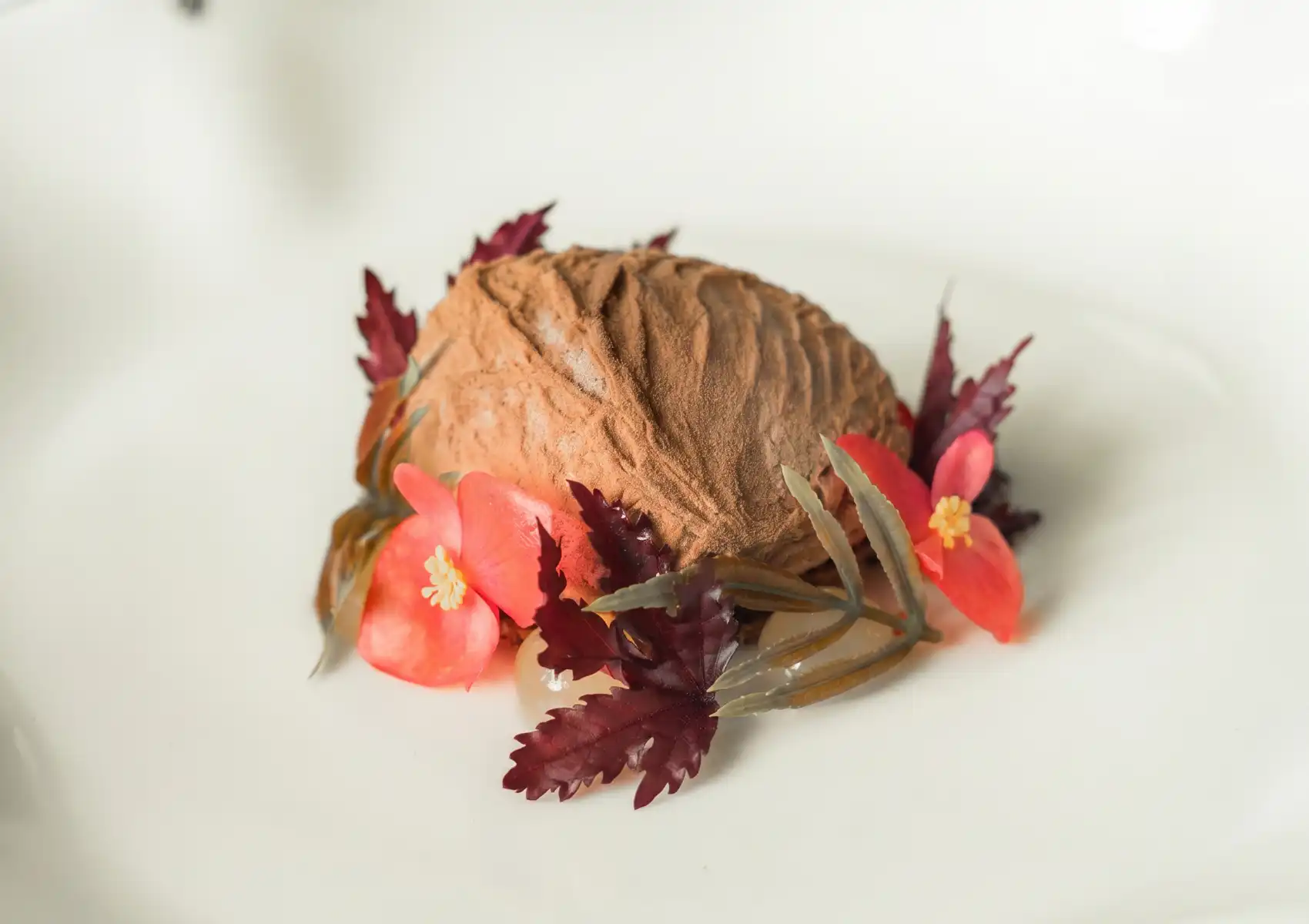
The Tamarillo course follows: dark chocolate, kluwek and kemangi. The tamarillo brings a sharp, tropical acidity. The kluwek deepens everything into something darker and more complex. The kemangi, appearing again in a dessert context, shows how completely the kitchen has absorbed this ingredient into its flavour language. The meal closes with Mignardises, sweet confections that offer a quiet, unhurried ending to the evening.
The Difference Between Substitution and Creation
The clearest sign that a vegan menu has been genuinely crafted, rather than adapted, is how it diverges from the standard menu at critical moments. At Apéritif, those divergences are telling.
While the main menu centres on animal protein in every course, the vegan sequence makes deliberate, creative choices about what replaces it. This is not a matter of removal. It is a matter of rebuilding. On the signature menu, Green Asparagus features caviar, mousseline, and cured egg. The vegan version retains the asparagus and rujak, while replacing the animal-derived elements with plant-based components that perform the same structural and flavour roles. The dish is not diminished. It is reimagined.
The Kluwek dessert course, pairing dark chocolate with salak and kenari, is one of the most distinctly Indonesian moments on the current menu and carries directly into the vegan sequence with minimal adaptation. This is the kind of dish that demonstrates what genuine vegan fine dining looks like: not a course designed around restriction, but one that happens to contain no animal products because the ingredient itself is the point.
The Setting
The food does not arrive in isolation. Apéritif Restaurant is nestled amidst Ubud’s lush greenery, within a colonial-style mansion defined by Georgian doors, antique chandeliers, and mid-century heirloom pieces, creating an atmosphere unlike anywhere else in Bali.
Service is polished and attentive without being stiff. There is a warmth here that feels genuinely Balinese, woven through what is otherwise a very European sense of occasion. The sommelier team curates wine pairings that work with the plant-based menu’s range of textures and intensities. For non-drinkers, there are thoughtful alternatives.
This setting is also perfect for a romantic candlelight dinner in Ubud.
Why This Matters for Vegan Fine Dining in Bali
Vegan fine dining in Bali has grown considerably, but the gap between a beautiful plant-based meal and a genuinely memorable fine dining experience remains wide. What Apéritif does is close that gap. Not by lowering the standard of fine dining to accommodate vegan food, but by applying full fine dining rigour to a vegan menu.
Chef Nic Vanderbeeken trained at Ter Groene Poorte in Bruges and has worked across respected kitchens in Europe and Southeast Asia. His approach draws from the historic Spice Islands while using modern European technique, and that dialogue is visible throughout the vegan menu. The result is cuisine that draws on global influences and is deeply rooted in local ingredients.
Pair your vegan journey with a selection from our wine cellar, featuring over 200 labels.
For anyone seeking vegan fine dining in Ubud, whether you are fully plant-based, simply curious, or travelling with someone who is, Apéritif is the clearest answer the island currently offers.
Reservations can be made on our website, and advance booking is required. Dinner is served from 6:00 pm, with the last kitchen order at 8:30 pm. Lunch is available from noon to 2:00 pm with 24-hour advance notice.