The Michelin star rating system is one of the most recognised markers of excellence in fine dining worldwide. For guests planning a special dinner, it functions as a signal: this kitchen has been evaluated by independent experts and found to meet a standard that most restaurants never reach. For chefs and restaurateurs, it represents something more complicated: a form of external validation that influences how a restaurant is perceived globally, how it attracts talent, and how seriously the wider industry takes its work.
But Michelin recognition is not a single thing. There are stars, and there are other forms of acknowledgement that carry their own meaning. Understanding the difference matters, particularly when you are trying to make sense of what fine dining in Bali actually offers and how it sits within the global Michelin conversation.
What the Michelin Guide Is and Why It Matters
The Michelin Guide began in France in 1900 as a practical resource for motorists. Over the course of the twentieth century, it evolved into the world’s most influential restaurant guide, with inspectors operating anonymously across dozens of countries to evaluate restaurants against a consistent set of criteria. To understand the full history and scope of the guide, the Michelin Guide provides a thorough overview of how it works and why it carries the weight it does.
What matters for the purposes of a fine dining guest in Bali is this: Michelin recognition, in any form, means that an independent body of trained evaluators has assessed a restaurant and found it worthy of attention. That is not a small thing in a region where the number of restaurants is vast, and the quality varies enormously.
While the Michelin Guide has not yet introduced restaurant stars in Bali, it has recognised the island’s hospitality sector through the MICHELIN Key, a distinction awarded to hotels that deliver exceptional guest experiences.
In 2025, Viceroy Bali was awarded One MICHELIN Key, recognising its excellence in design, service, character, and overall quality of stay. Although separate from the Michelin star system for restaurants, the award reflects the standards that define the property as a whole.
For guests dining at Apéritif Restaurant, that context matters. The restaurant is part of a wider hospitality experience, and the attention to detail that earned Viceroy Bali Michelin recognition extends well beyond the guest room and into the dining room.
Stars Are Not the Only Form of Michelin Recognition
This is the point that most guests misunderstand. Michelin stars, awarded on a scale of one to three, are the most famous form of recognition. But the Michelin system includes several distinct categories of acknowledgement, and a restaurant can be genuinely Michelin-recognised without holding a star.
The Michelin Bib Gourmand is awarded to restaurants that offer exceptional quality at a more accessible price point. It is a meaningful distinction in its own right, separate from and not subordinate to the star system.
Michelin Selected restaurants represent another tier: restaurants that Michelin inspectors have visited, evaluated, and chosen to include in the guide as worthy of a guest’s attention, without necessarily awarding a star or a Bib Gourmand. Being included in the Michelin Guide as a selected restaurant is recognition of consistent quality and a distinct culinary point of view.
Apéritif has been featured in Michelin editorial content and has hosted collaborations with multiple Michelin-starred chefs, including Julien Royer of the two Michelin-starred Odette in Singapore, Guillaume Galliot of Caprice Hong Kong, and Nick Bril of The Jane in Antwerp. These collaborations are not incidental. They reflect a level of peer recognition within the global fine dining community that is independent of, and in some ways more telling than, formal award categories.
How Michelin Recognition Differs From Other Fine Dining Awards
Michelin is not the only system used to evaluate fine dining restaurants globally. The chef hat system, used primarily in Australia, operates on a different scale with different criteria. The World’s 50 Best Restaurants list uses an industry vote rather than anonymous inspection. The Gault&Millau guide, which has covered Apéritif and Chef Nic Vanderbeeken directly, uses a points-based system with its own criteria and its own inspectorate.
Each system captures something different. The Michelin star rating system tends to place a very heavy weight on consistency, technique, and the coherence of a restaurant’s culinary identity. A restaurant that performs brilliantly on one visit but inconsistently across multiple visits will not hold Michelin recognition for long. This is why the standard is genuinely difficult to maintain, and why Michelin recognition of any kind is a meaningful signal for a guest trying to decide where to spend a fine-dining budget in Bali.
What Michelin Recognition Actually Changes for a Fine Dining Restaurant
For a restaurant, Michelin recognition changes several things at once.
It changes how the restaurant is perceived internationally. Guests researching fine dining in Bali from Europe, the United States, or elsewhere in Asia will encounter Michelin as a reference point. A restaurant with Michelin editorial coverage or guest chef collaborations with Michelin-starred peers occupies a different position in that research than one without.
It changes how the restaurant attracts culinary talent. Chefs in the early or mid-career stage who want to work at the highest level look for environments with demonstrably high standards. Michelin recognition, in any form, signals that the kitchen operates at a level worth learning from.
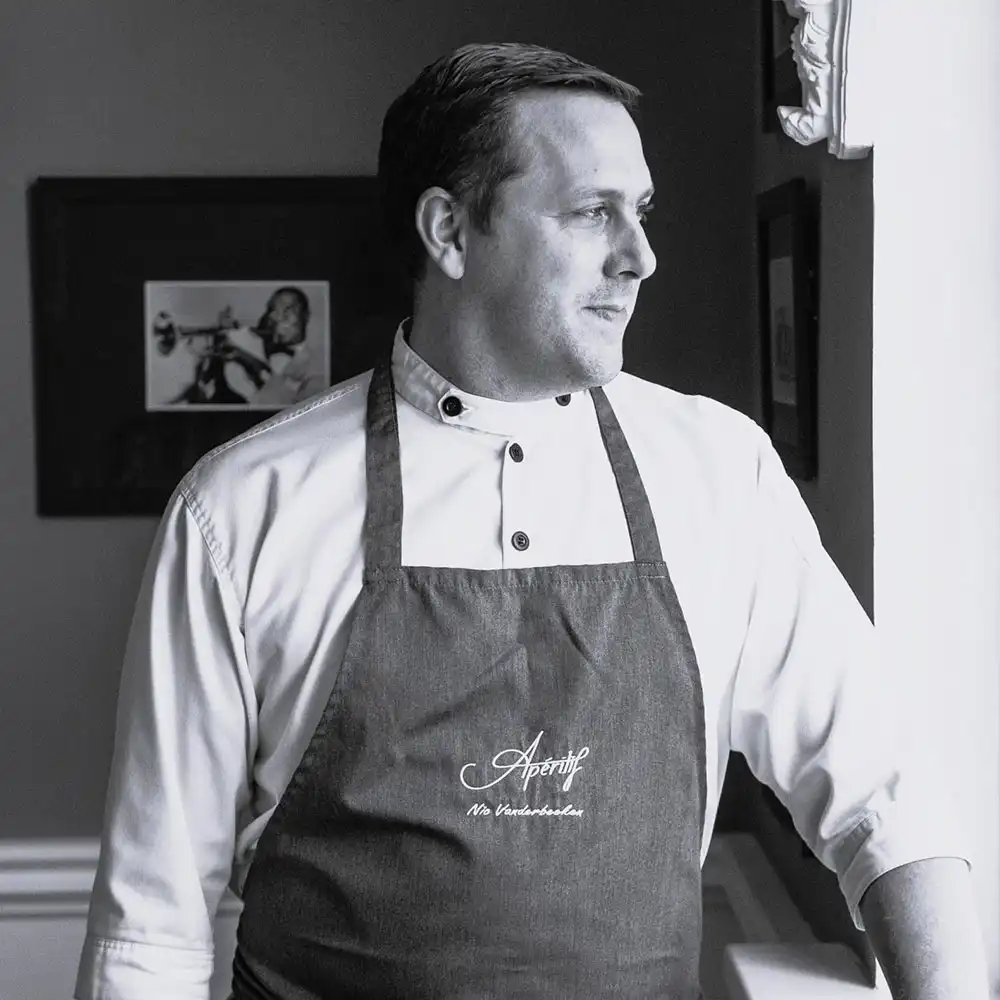
It changes the conversation the restaurant can have with its guests. At Apéritif, the guest chef residency programme brings internationally acclaimed chefs, including Michelin-starred chefs, to collaborate with Executive Chef Nic Vanderbeeken. These residencies are only possible because the Apéritif kitchen is understood by its peers to be operating at a level that makes the collaboration genuinely worthwhile, not merely a promotional exercise.
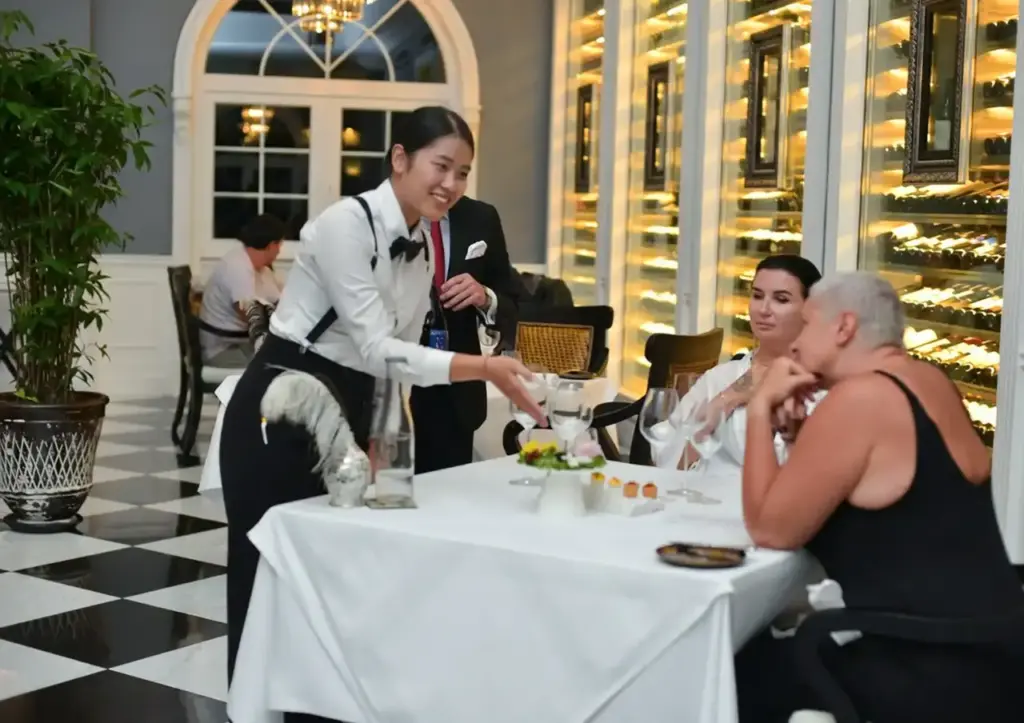
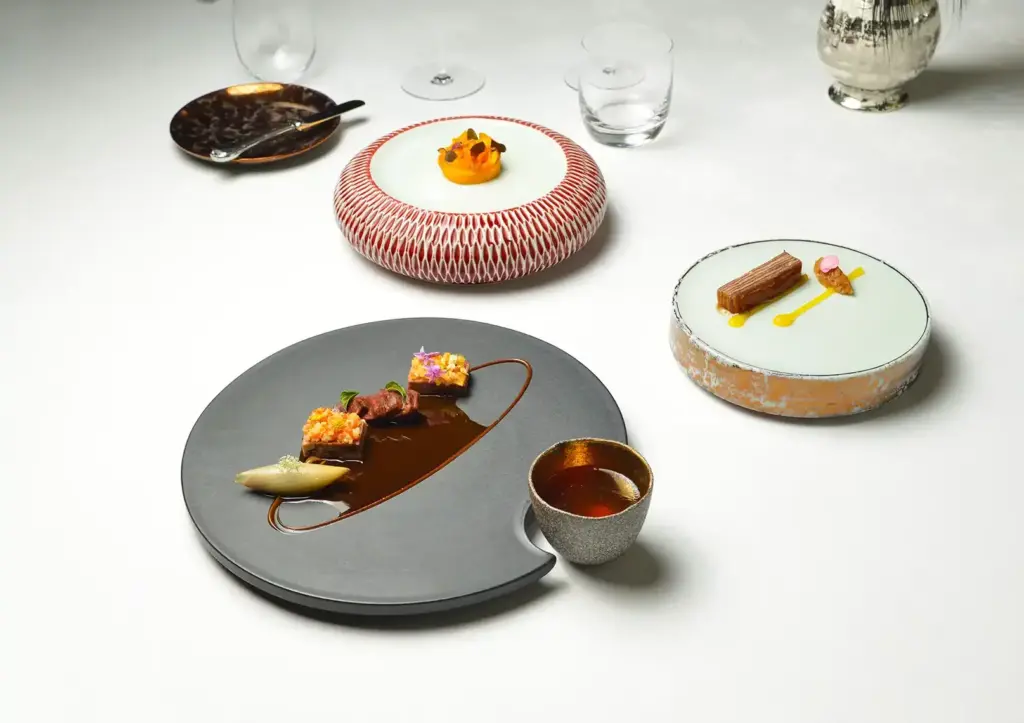
This commitment to excellence is reflected in the experiences Apéritif creates for its guests. The evening unfolds as a carefully curated journey, beginning with cocktails and canapés at Pinstripe Bar, the restaurant’s 1930s-inspired speakeasy, before moving into the dining room. At the heart of the experience is the “Guided by the Moon Cycle” degustation menu, a seven-course culinary journey inspired by the Balinese lunar calendar. Evolving with each lunar phase, the menu reflects the kitchen’s connection to seasonality, creativity, and storytelling. This level of thought, precision, and narrative is characteristic of the immersive dining experiences that have come to define some of the world’s most celebrated restaurants.
Complementing the food is a wine program of equal ambition. Curated by a professional sommelier, Apéritif’s cellar holds more than 200 labels, including rare finds from Bordeaux and Burgundy. Guests are invited to explore this collection and can opt for a sommelier-guided wine pairing to perfectly complement each course. A world-class wine program is a cornerstone of any top-tier fine dining restaurant, and Apéritif’s is no exception.
For guests celebrating a milestone, Apéritif offers a separate private dining room. This space offers a more intimate experience, accommodating small groups or couples who want a celebration that feels theirs exclusively, without compromising the restaurant’s grand atmosphere.
What This Means for a Guest Choosing Fine Dining in Bali

For a guest planning a fine dining dinner in Bali, Michelin recognition is a useful starting point, but not the whole picture. Bali does not currently have a dedicated Michelin Guide of its own, unlike Singapore, Tokyo, or Paris. This means that Bali’s finest restaurants are evaluated and recognised through Michelin’s broader editorial coverage in Southeast Asia and globally, rather than through a dedicated local guide.
In practice, this means that a fine-dining restaurant in Bali can be genuinely world-class without holding a formal Michelin star, simply because the guide’s formal coverage does not yet extend to a dedicated Bali edition. The absence of a star in this context is not an absence of quality. It is an absence of geography.
Apéritif operates within this reality with clarity. The restaurant’s culinary philosophy, ingredient sourcing, guest chef programme, and kitchen consistency are all oriented toward a standard of excellence that the global fine-dining community, including Michelin-starred peers, has recognised and engaged with directly.
For guests seeking to understand what fine dining in Bali can achieve at its most ambitious and refined, this level of recognition serves as a meaningful signal. And for those still trying to interpret what Michelin recognition means in practice, a single evening at Apéritif often offers a more immediate understanding than any guidebook can.
Experience the art of borderless fine dining for yourself. Apéritif’s seven-course degustation menu is a journey through flavour, technique, and storytelling. Dinner is served from 6:00 pm. Lunch is available from noon to 2:00 pm with 24-hour advance notice. Secure your table and prepare for an evening unlike any other in Bali.