The word gastronomic gets used loosely. It appears on menus, in hotel brochures, and across restaurant descriptions across Bali. Sometimes, to mean little more than “the food is good”. But when it is used with accuracy, it points to something specific and genuinely rare. Understanding what a gastronomic restaurant actually means helps explain why so few places truly qualify, and why finding one that does is worth the effort.
What Does Gastronomic Restaurant Mean?
A gastronomic restaurant is not simply a restaurant that serves expensive food. The term derives from gastronomy, which concerns the relationship among food, culture, and the art of eating well. A gastronomic restaurant, then, is one where cuisine is treated as a serious creative discipline. Every element of the meal is considered: the sourcing of ingredients, the logic of each course, the relationship between flavour and technique, and the way the meal unfolds as a whole experience.
In practice, this means a gastronomic restaurant operates with a level of intention that separates it from even a very good neighbourhood restaurant. The kitchen is led by a chef with a clear culinary point of view. The menu is not assembled from popular dishes but composed to tell a story. The service, the setting, and the wine selection are not incidental details but integral parts of the guest experience.
What Is the Meaning of Gastronomic Food?
Gastronomic food is cuisine designed with intention at every stage, from ingredient selection to technique to presentation. It means food where every decision, from the choice of ingredient to the method of preparation to the way it arrives at the table, has been made with purpose.
What separates gastronomic food from ordinary restaurant food is the presence of a culinary philosophy. At Apéritif, that philosophy is what the kitchen calls the Borderless Food Concept: a commitment to drawing connections between Indonesian ingredients and global culinary traditions without privileging one over the other. A dish might apply French technique to a Balinese spice. A sauce might reference the flavour logic of Japanese umami. The result is food rooted in place yet genuinely international in its thinking.
This is gastronomic food. It has a point of view, and that point of view is consistent across every course.
What Is Gastronomic Dining?
Gastronomic dining is the full experience of eating at a gastronomic restaurant, understood as more than the sum of its dishes. It encompasses the setting, the pace of the meal, the quality of service, the selection of wines and drinks, and the way each of these elements contributes to a coherent whole.
A useful way to think about it: in ordinary dining, the food is the product, and everything else is context. In gastronomic dining, the food and everything else are equally part of the experience. The moment you arrive, the way the evening unfolds, and the rituals built into the meal are all carefully designed.
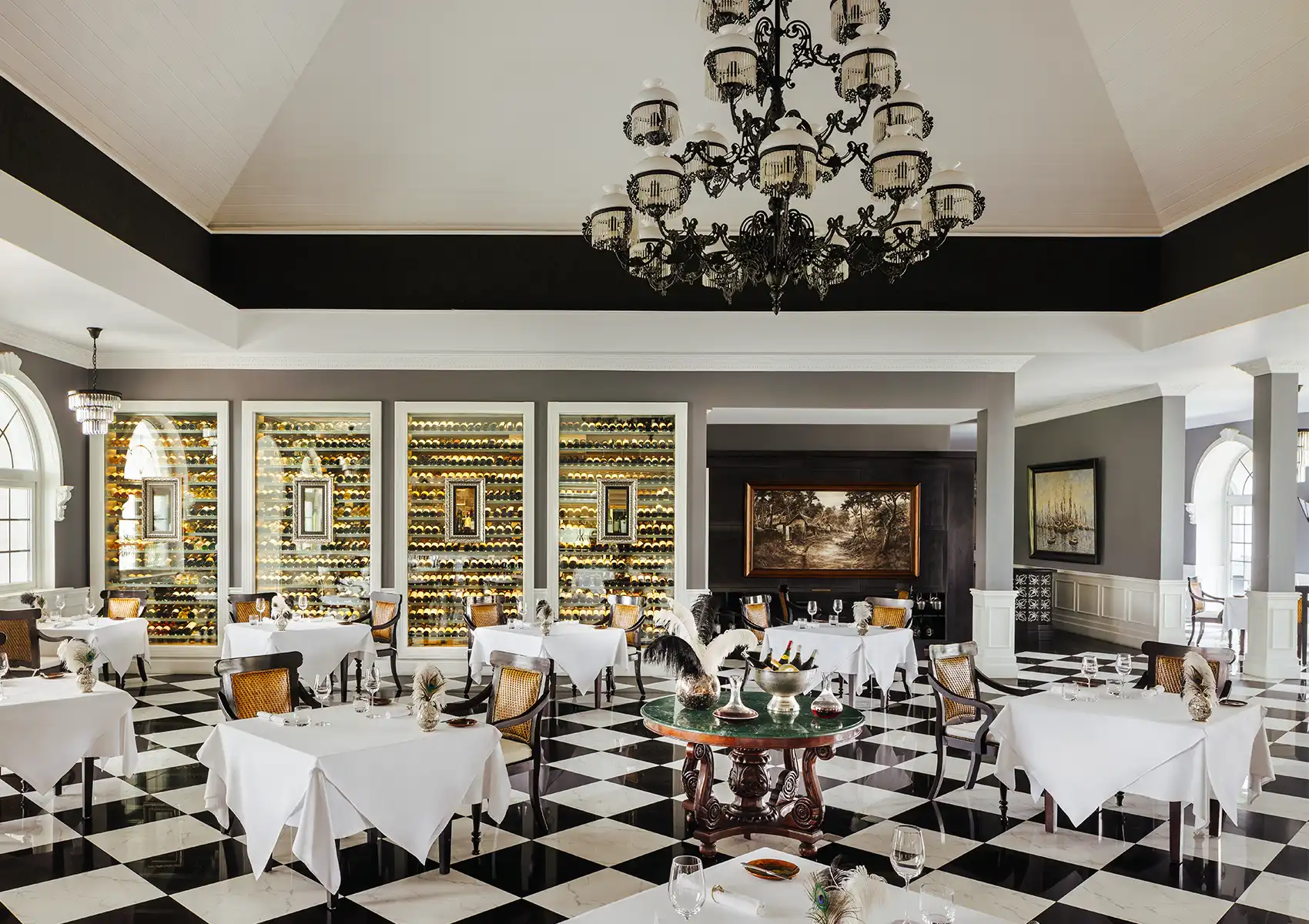
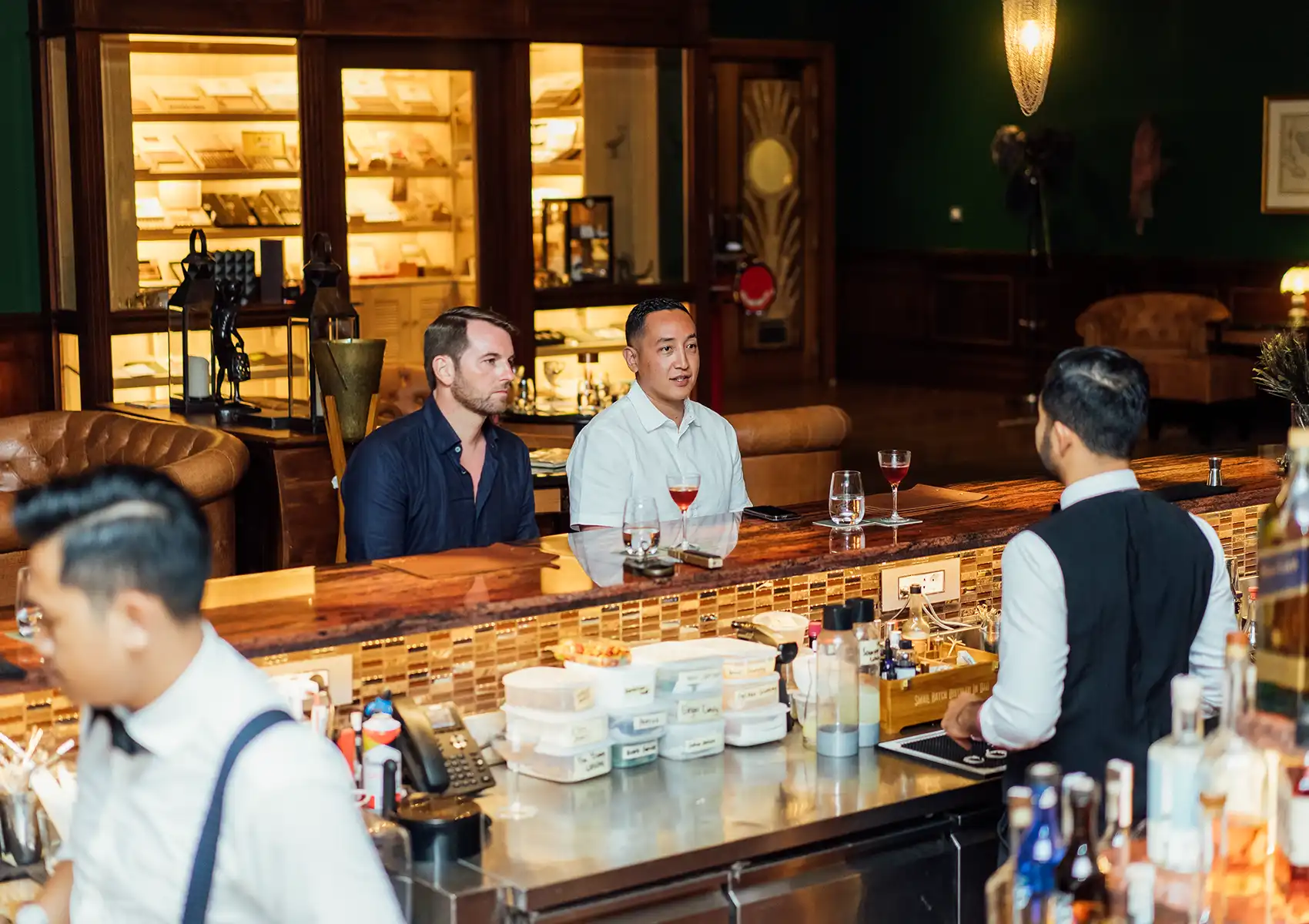
Gastronomic dining begins before you reach the table at Apéritif. The evening opens at the Pinstripe Bar, where aperitifs and canapés set a deliberate, unhurried pace. The colonial manor setting, with its Georgian doors, antique chandeliers, and mid-century heirloom pieces, signals from the outset that this is not an ordinary dinner. When you move into the main dining room, the pace of the meal is guided by the kitchen’s rhythm, not the clock. This is what fine dining in Bali at its most considered looks like.
What Is a Gastronomic Dinner?
A gastronomic dinner is a meal structured as a progression. Rather than a collection of independent dishes chosen from a menu, a gastronomic dinner unfolds as a sequence of courses that build on each other in flavour, texture, and intensity. Each course plays a specific role within the overall dining experience.
Gastronomic dinners are often presented as degustation or tasting menus: a series of courses, typically between five and ten, that guide the diner through the kitchen’s full range of creativity. At Apéritif, the degustation menu runs to seven courses, beginning with cocktails and canapés before progressing through a sequence that highlights the kitchen’s dialogue between local ingredients and global culinary techniques.
A gastronomic dinner also tends to involve wine pairing, where a sommelier selects wines to complement each course rather than leaving the diner to choose a single bottle for the whole meal. At Apéritif, the wine cellar is curated by a sommelier, whose selections enhance the nuances of each dish. The pairing is not decorative. It is part of how the dinner is designed to be experienced.
What Is a Gastronomic Dish?
A gastronomic dish is a dish that reflects a clear culinary idea. It is not defined by luxury ingredients alone, though high-quality ingredients matter. What defines a gastronomic dish is the thinking behind it: why these components together, why this technique, what is the dish trying to say?
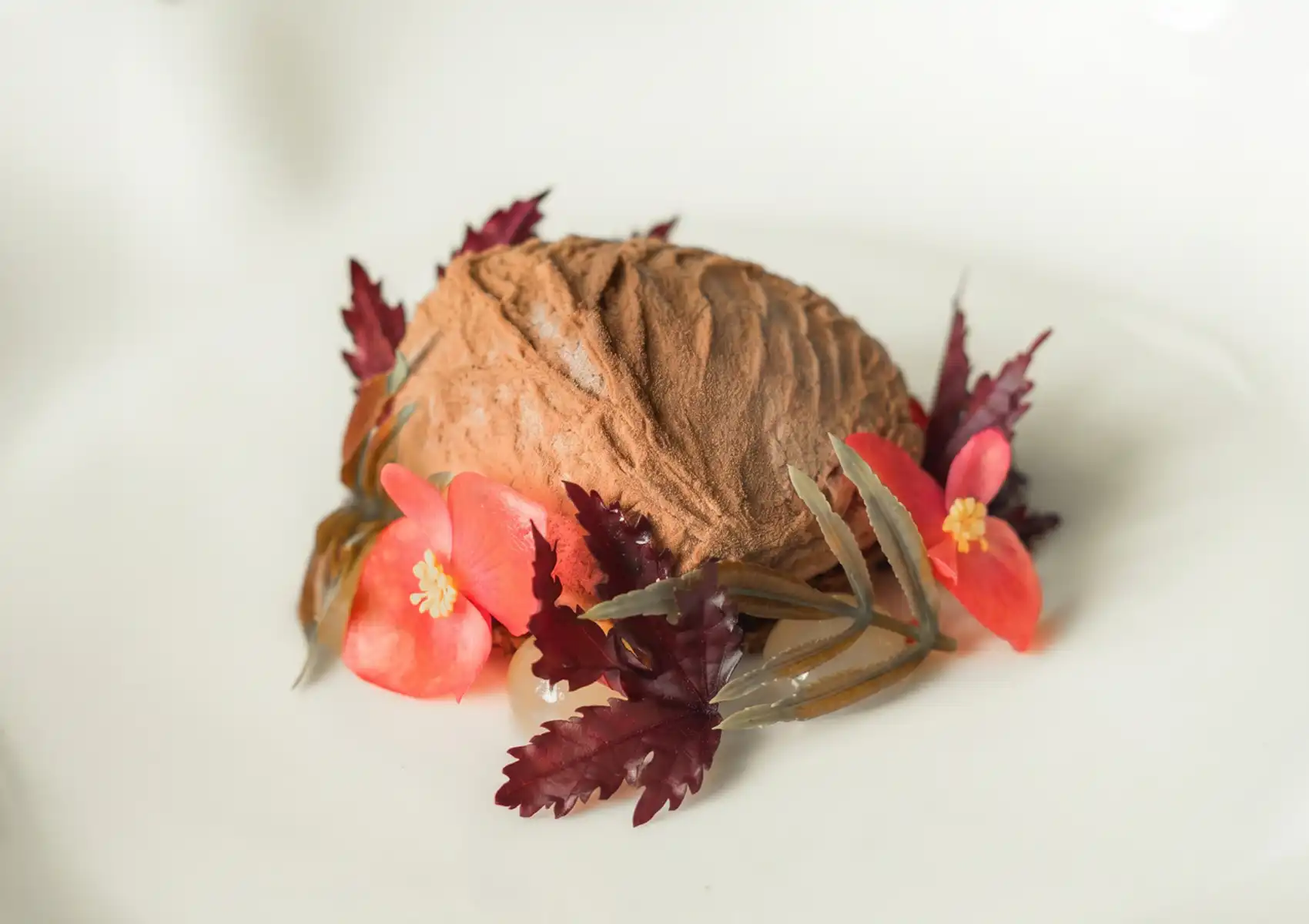
Consider how Apéritif approaches kluwek, the dark, complex Indonesian nut traditionally used in rawon. In most contexts, kluwek belongs firmly in home cooking and traditional Indonesian cuisine. At Apéritif, it appears in the Vegetable Terrine alongside organic vegetables, tape, and sambal ulek, and again in the dessert course paired with dark chocolate and kemangi. This is a gastronomic approach to a local ingredient: treating it not as a regional curiosity but as a serious flavour with a place in contemporary fine dining composition.
A gastronomic dish, at its best, makes you think about an ingredient differently. It reveals something you did not expect. It is precise, but not cold. It is creative, but grounded in logic.
Why Bali, and Why Now
Bali has long attracted visitors for its landscape, its culture, and its informal food scene. What has grown considerably in recent years is the depth of its gastronomic restaurant offering: kitchens where the cooking is thoughtful, the menus are carefully composed, and the dining experience is well thought through.
Ubud, set inland among rice fields and jungle, has become a particular centre of this. Its altitude, agricultural richness, and relative quiet make for a more immersive dining experience. Ingredients are exceptional, the environment encourages attentiveness, and the town’s rhythm naturally supports longer, more reflective meals.
As a result, Ubud attracts a mix of culturally curious travellers and long-stay visitors who are increasingly engaged with food not just as sustenance or entertainment, but as an expression of place and craft.
Apéritif is nestled in Ubud’s rice fields, in a building that would not look out of place in an old-world elegance, with 1920s-inspired details and a bygone era of unhurried refinement. It is a gastronomic restaurant in Bali that takes the term’s full meaning: a kitchen with a defined philosophy, a menu composed with intention, and a dining experience that treats every element as part of a coherent whole.
For anyone asking what a gastronomic restaurant means in practice, an evening at Apéritif is a more useful answer than any definition. Reservations can be made on our website. Lunch hours added alongside dinner hours. Lunch is available from 12 noon to 2:00 pm. Dinner is served from 6:00 pm, with the last kitchen order at 8:30 pm.