Bali is usually reduced to two seasons and two verdicts. Visit during the dry months, or plan around the green season.
For anyone organising a trip around a beach, that is reasonable. For anyone planning an evening around a dining table, the distinction matters less because the two calendars do not fully align. The drier stretch runs roughly from April to October, and the green season runs from November to March. The visitor calendar peaks in July and August, then again over Christmas and New Year. Which means the busiest weeks of the year are not the driest ones.
What a Season Does Not Change
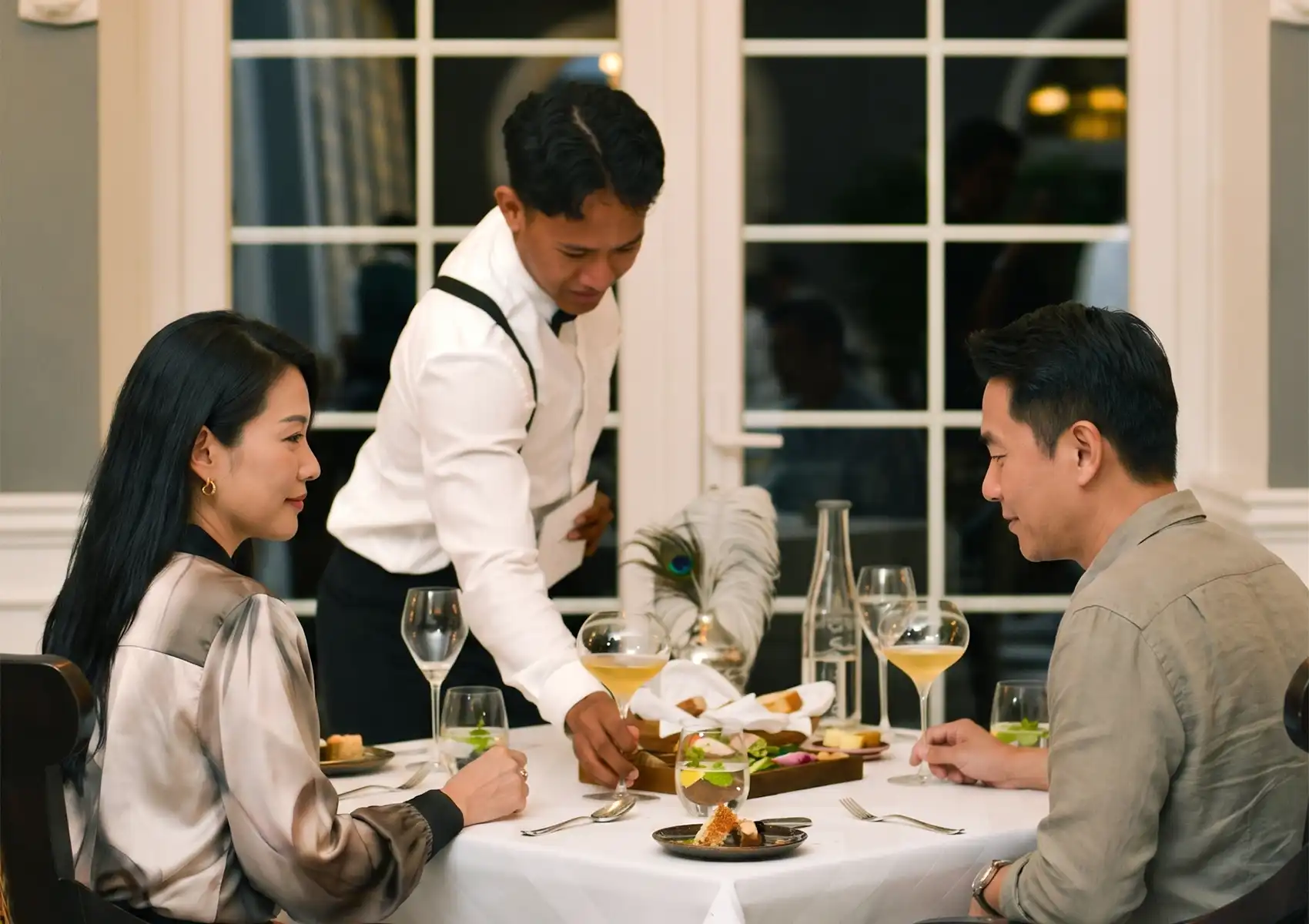
The fine-dining room at Apéritif Restaurant is fully air-conditioned and indoors, with dinner served from 6 pm to 8.30 pm year-round. A table in February is the same table as a table in July.
Temperatures also remain relatively consistent throughout the year. Monthly averages in Ubud shift by only about 2 degrees throughout the year, and humidity sits between 80 and 85% year-round. What actually changes is rainfall, and how many other people are booking.
So the useful question is not which months are best for fine dining in Bali. It is three narrower ones. How far in advance the table needs to be booked, what the afternoon before it looks like, and where the hour before it is spent.
April to June
These are the drier months at their quietest. Lead times are the shortest here, making this one of the easiest periods for securing a specific date, preferred seating, or the private dining room.
Afternoons are dependable, so anything outdoors before a 6 pm sitting can be planned rather than left to chance. For a guest who wants rice terraces at four and a dining room at six, this is the period that most reliably allows both.
July to August
The driest weeks of the year and the busiest. August is typically among the driest and sunniest months in Ubud. This month has the most sunshine, and it is also when the room fills the earliest.
The key consideration during this period is lead time. Dinner should be booked well in advance, and the private dining room, which seats up to 10 at one long table and requires a minimum spend, needs to be enquired about even earlier. A request made only a few days ahead in August is considerably harder to accommodate than the same request in May.
Ubud sits inland and higher than the coast, so evenings here in July and August are the coolest of the year. The light layer that belongs in a suitcase for the air conditioning earns its place outdoors as well.
September and October
Still dry and gradually quieter, this period also carries the fullest cultural calendar. The Ubud Writers and Readers Festival runs from 21 to 25 October 2026, and festival week changes traffic in central Ubud in the early evening rather than the weather.
Lead times sit between the two periods on either side. A fortnight ahead is usually comfortable, with festival week being the exception.
November to March
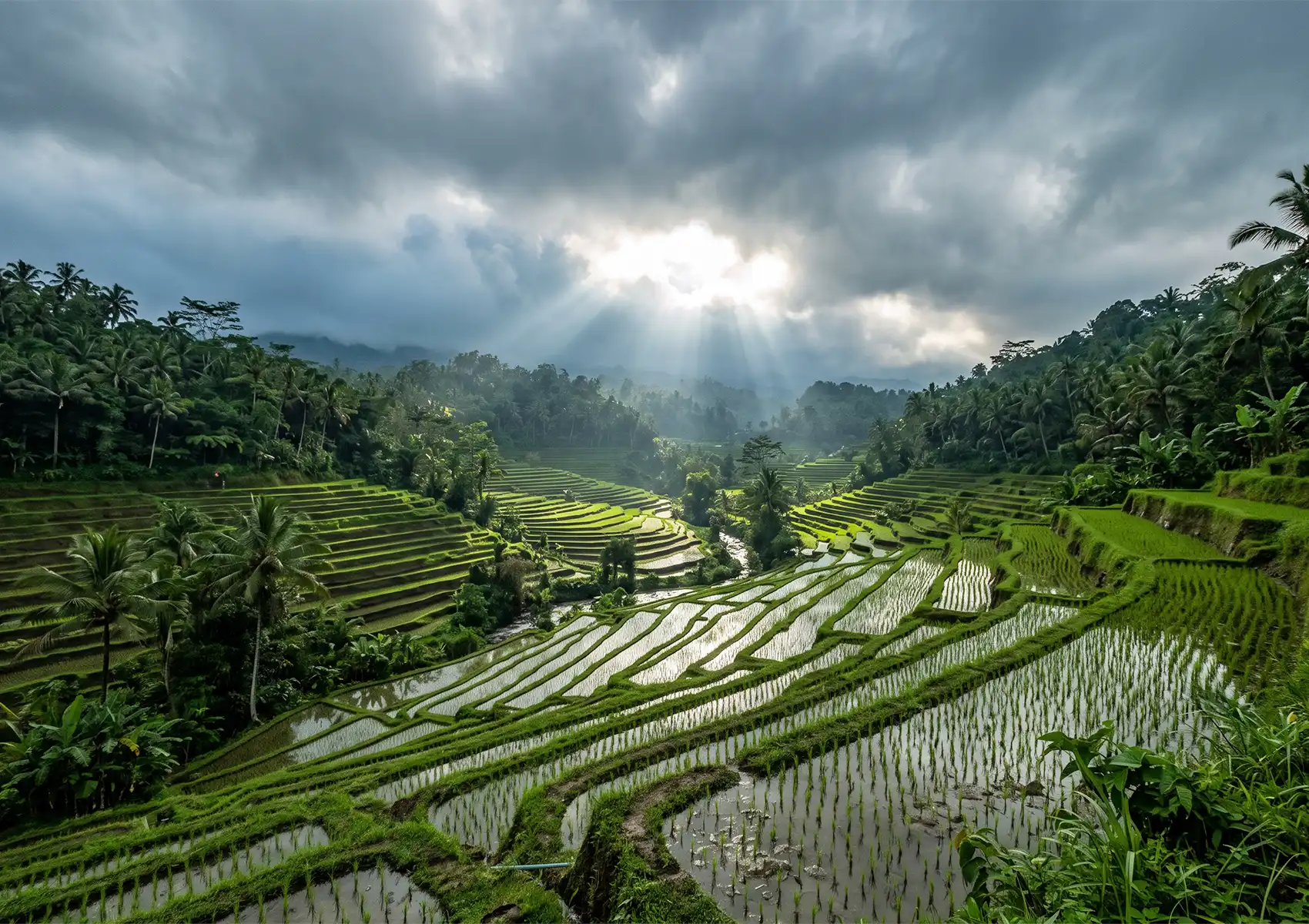
The green season is the period most visitors plan around rather than into. It holds both the wettest weeks of the year and the most contested night of it.
January typically receives significantly more rainfall than August, creating a noticeable difference between the wettest and driest periods. Rain in this period tends to arrive heavily and then stop rather than settling in for the day, and none of it reaches an air-conditioned room.
What the period offers is space. Outside the festive fortnight, the dining room is less in demand, a specific date is easier to secure, and the same booking requires less planning than it would in August.
Two things inside it need earlier attention than the rest. The festive week runs across 24, 25 and 31 December and 1 January, with lead times closer to August than to February, as set out in the festive dining article. And Galungan runs from 13 to 23 January 2027, which affects transport rather than availability, since drivers are scarcer through the period and rural roads fill with families travelling between temples.
The Afternoon Is What Shifts
This is where a season actually lands on an evening.
The herons of Petulu return to roost every evening of the year, arriving from around 5 pm and settling by about 5:45, which is fifteen minutes before service opens. Unlike many outdoor activities, this experience is less dependent on weather conditions, and its location in the same village as the restaurant makes it one of the more reliable afternoon plans year-round.
Rice terraces, ridge walks and waterfalls are the weather-dependent options, and through the green season they sit better in the morning than in the late afternoon.
The drive matters too. Ngurah Rai to Ubud takes 1.5 to 2 hours in ordinary conditions and longer in heavy rain, so an arrival day in January wants more margin than the same arrival in June.
Indoors or on the Terrace
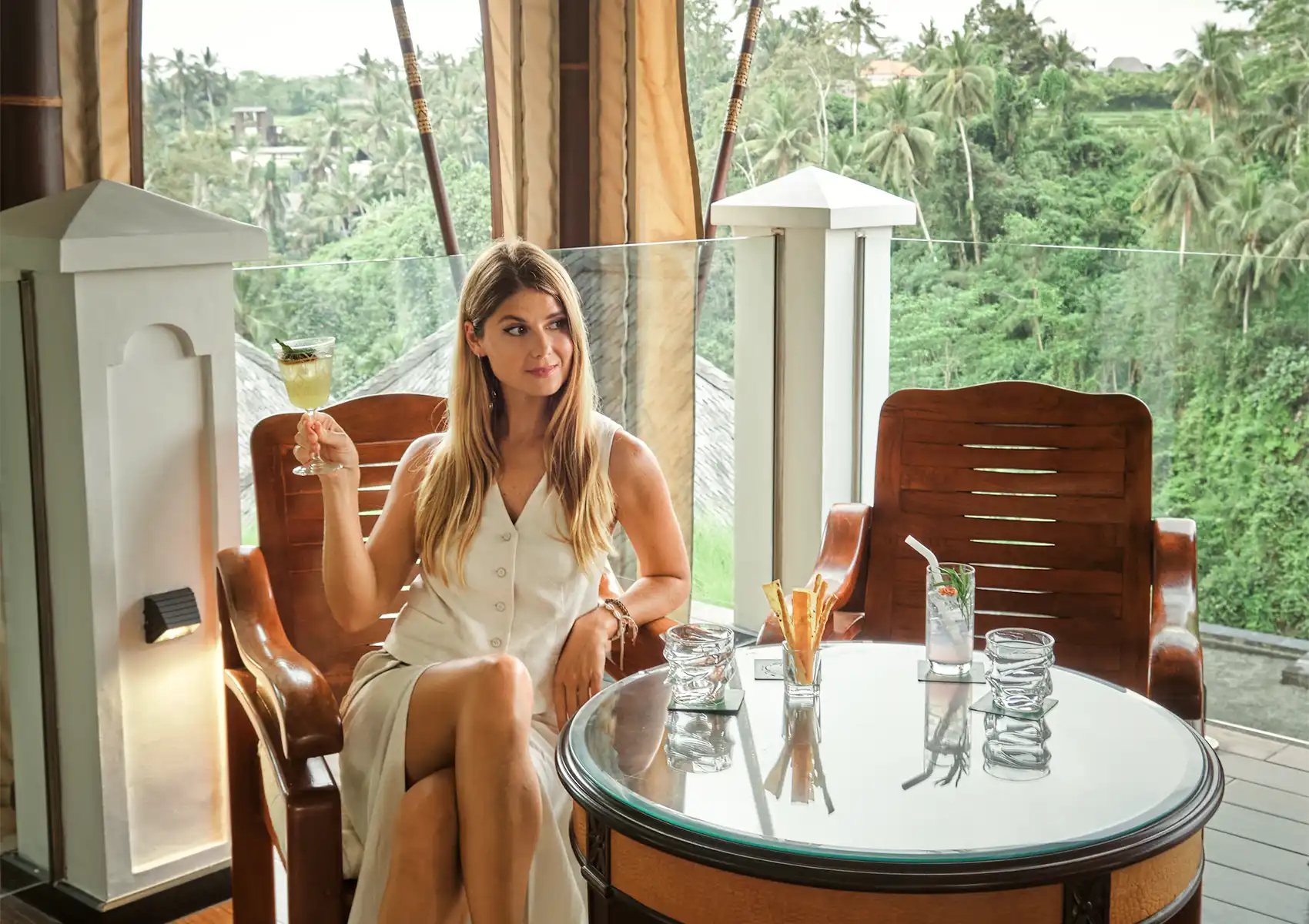
Pinstripe Bar opens daily from 4 pm and has two halves. The interior is Art Deco and air-conditioned. The terrace area includes the cigar lounge.
Through the drier months, the terrace is the obvious choice at five. During the green season, the interior is dependable, and the terrace becomes a matter of watching the sky for an hour. Neither is a lesser room.
Booking by Period
Taken together, the pattern is simple.
Longest lead times run through July and August and across the festive week. The shortest lead times usually occur from April to June and from mid-January through March. September and October sit between the two, with festival week as the exception.
Everything else holds in every month. All dining services require reservations. Lunch runs from 12 pm to 2 pm and requires 24 hours’ booking notice, as do the vegetarian, vegan, and pescatarian menus. The menu is Guided by the Moon, a degustation structured around the lunar cycle and built on Indonesian regional cuisines using European techniques, created by the Apéritif Restaurant’s culinary team, in seven-course and five-course formats, with a three-course option.
No month here is the wrong time for a fine-dining table. The variables are how early it is booked and what happens in the hours beforehand, and both of those are within a guest’s control in a way the weather never will be.
The booking process remains the same year-round, with reservations handled through the official booking page.
Only the lead time changes.