Some dishes are recognisable before they reach the table. The name gives away the architecture: a substantial centre, layers around it and pastry enclosing the whole. Venison Wellington belongs to that group. It carries the familiarity of a classic even when served in a setting shaped by Apéritif’s Art Deco design rather than the European dining rooms with which the form is traditionally associated.
At Apéritif Restaurant in Ubud, the dish keeps that familiar construction while giving it a distinctly Indonesian character. The pastry and careful assembly draw from European technique, while rendang provides a flavour reference rooted in West Sumatra. That relationship is what makes the dish worth looking at more closely.
From Beef Wellington to Venison
The better-known reference is Beef Wellington, a preparation in which meat is enclosed in pastry and traditionally associated with formal European dining. Its exact origins remain open to interpretation, while the name continues to be associated with the Duke of Wellington, making the dish especially recognisable through its enduring structure and elegant culinary tradition.
Venison Wellington is a natural variation on that format, replacing beef with venison while retaining the central idea of a carefully layered preparation. At Apéritif Restaurant, this familiar European framework becomes the starting point for a dish that moves in a distinctly Indonesian direction.
Why Familiar Forms Still Matter
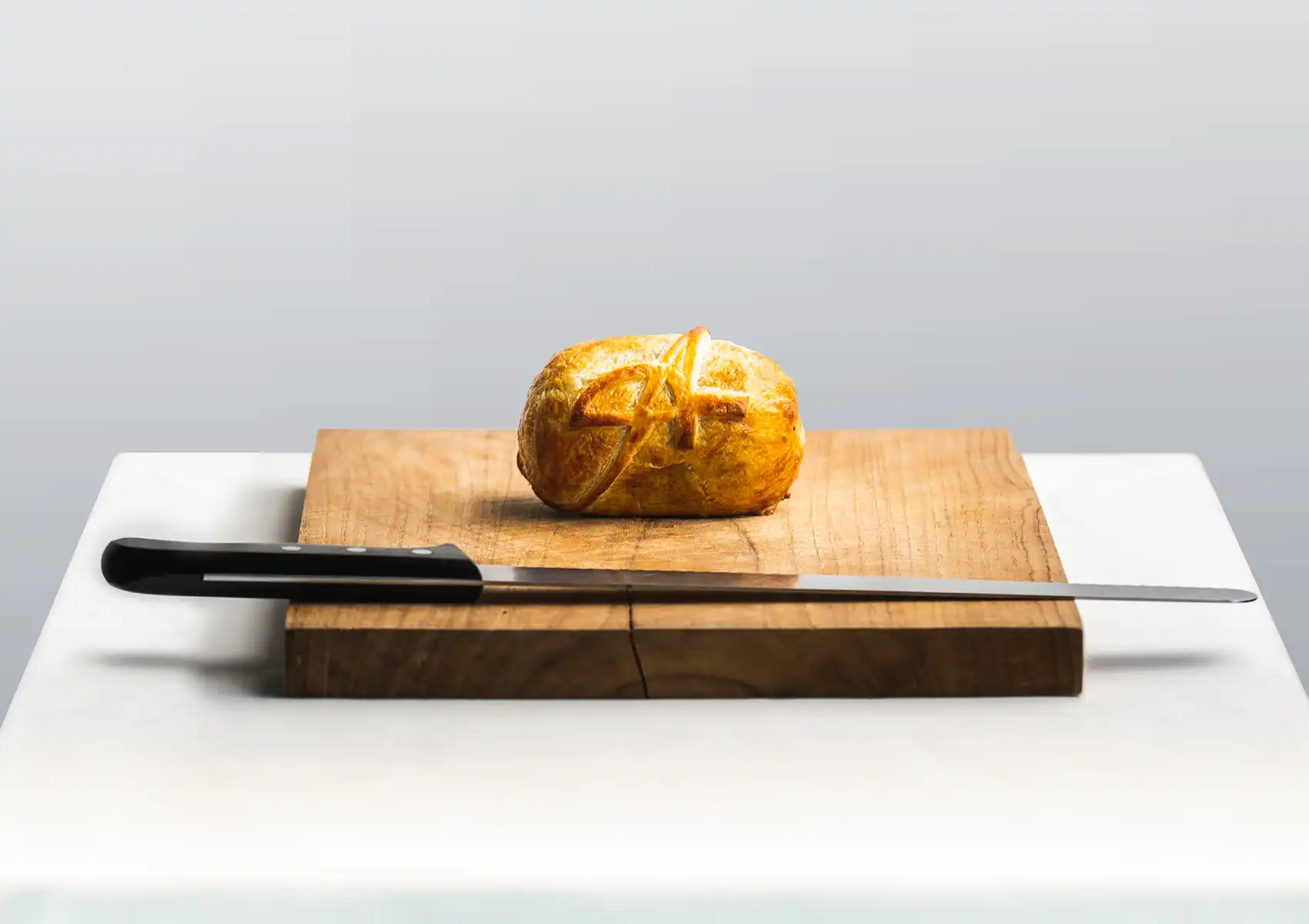
Fine dining does not need to make every plate unrecognisable. A familiar form gives the guest a point of reference. Wellington has a clear visual and physical structure: the pastry needs to be carefully handled, the meat remains central, and the different layers need to work together rather than compete.
That clarity can be particularly useful within a degustation menu, where guests encounter several techniques, ingredients, and culinary references throughout one evening. Recognition provides a point of orientation, while the interest comes from what the kitchen does within that familiar framework.
This is part of the appeal of Venison Wellington at Apéritif Restaurant. The dish is recognisable as a Wellington, but its identity extends beyond the classic reference. Rendang is not simply placed beside the dish as an accompanying flavour. It helps define the direction of the preparation.
Two Long Preparations Doing Similar Work
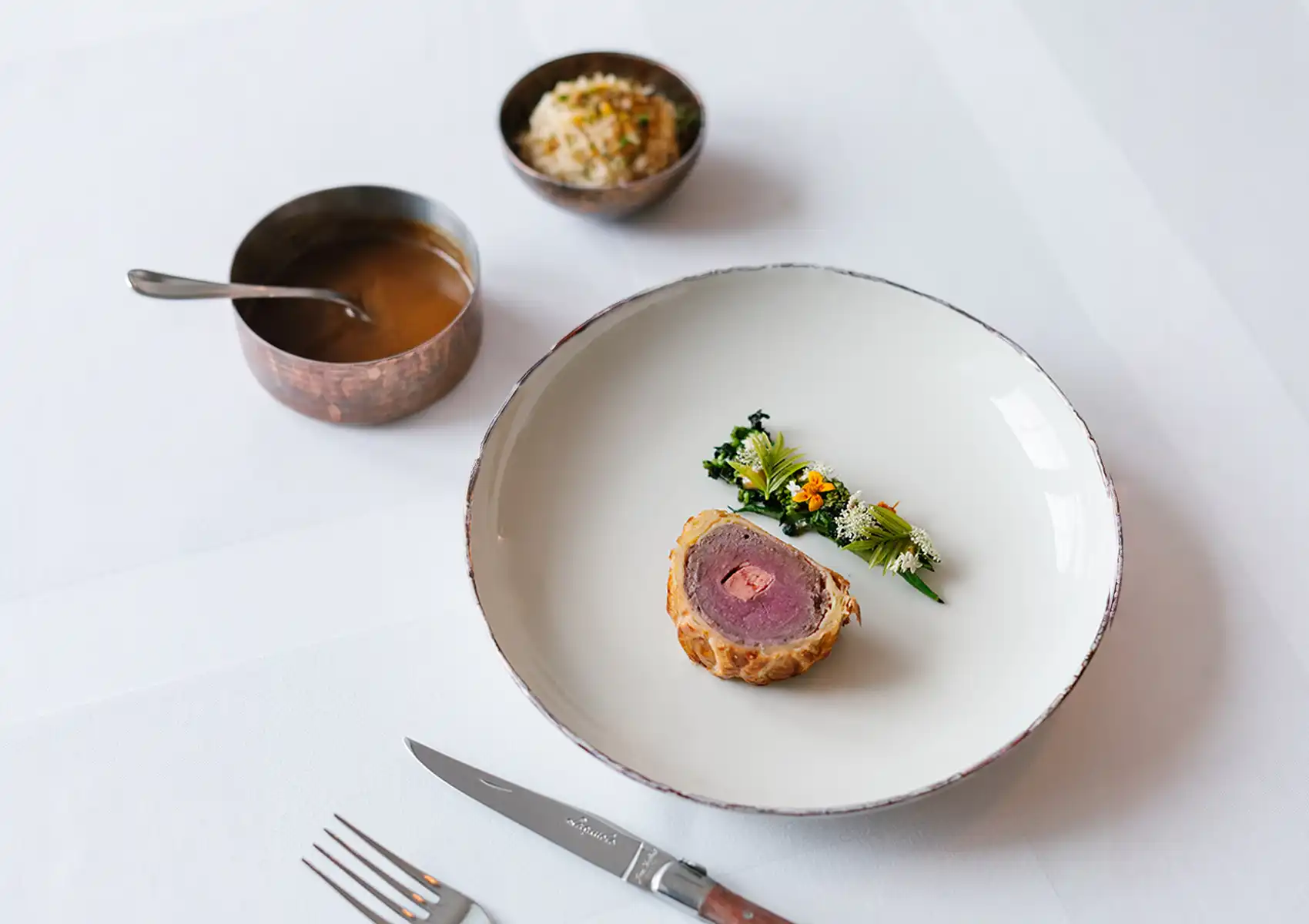
Venison Wellington and rendang share an important quality: both reward patience. A Wellington is built through a sequence of preparations before it can be cut and served. At Apéritif Restaurant, it is served as venison with foie gras, rendang and sweet potato. The finished dish depends on the relationship between those elements rather than on any one component alone.
Rendang also develops through time. Its spices and aromatics are worked into a preparation whose depth comes from slow cooking and concentration. Bringing the two ideas together is therefore more considered than placing an Indonesian flavour beside a European one for contrast. Both preparations have a layered character, and both ask the kitchen to control time, texture and intensity.
Rendang gives the Wellington its Indonesian direction, while the pastry gives that direction a recognisable European structure. Neither side is there merely for decoration. The construction makes the dish possible; the rendang makes clear what the dish is about.
The Dish Beyond Its Name
The name Venison Wellington may initially lead a guest to expect a variation on a familiar European classic. That expectation provides a useful starting point, but it is only the first layer of the experience.
Once the pastry is cut, the dish presents a more specific combination of ideas. The kitchen has to consider how the character of rendang can be expressed alongside venison, foie gras and pastry, while keeping the dish balanced enough to sit within a longer tasting menu.
This is where technique becomes important. The European structure gives the kitchen a disciplined framework, while the Indonesian flavour reference gives the dish its character. Rather than treating the two traditions as opposing ideas, Apéritif uses one to express the other.
That approach reflects the restaurant’s philosophy, “European Technique. Indonesian Soul.”. The technique provides the structure, while the Indonesian reference shapes the flavour direction. In the Wellington, that philosophy is particularly easy to see because the familiar form remains visible while the flavour profile takes it somewhere different.
A Signature Within Guided by the Lunar Cycle
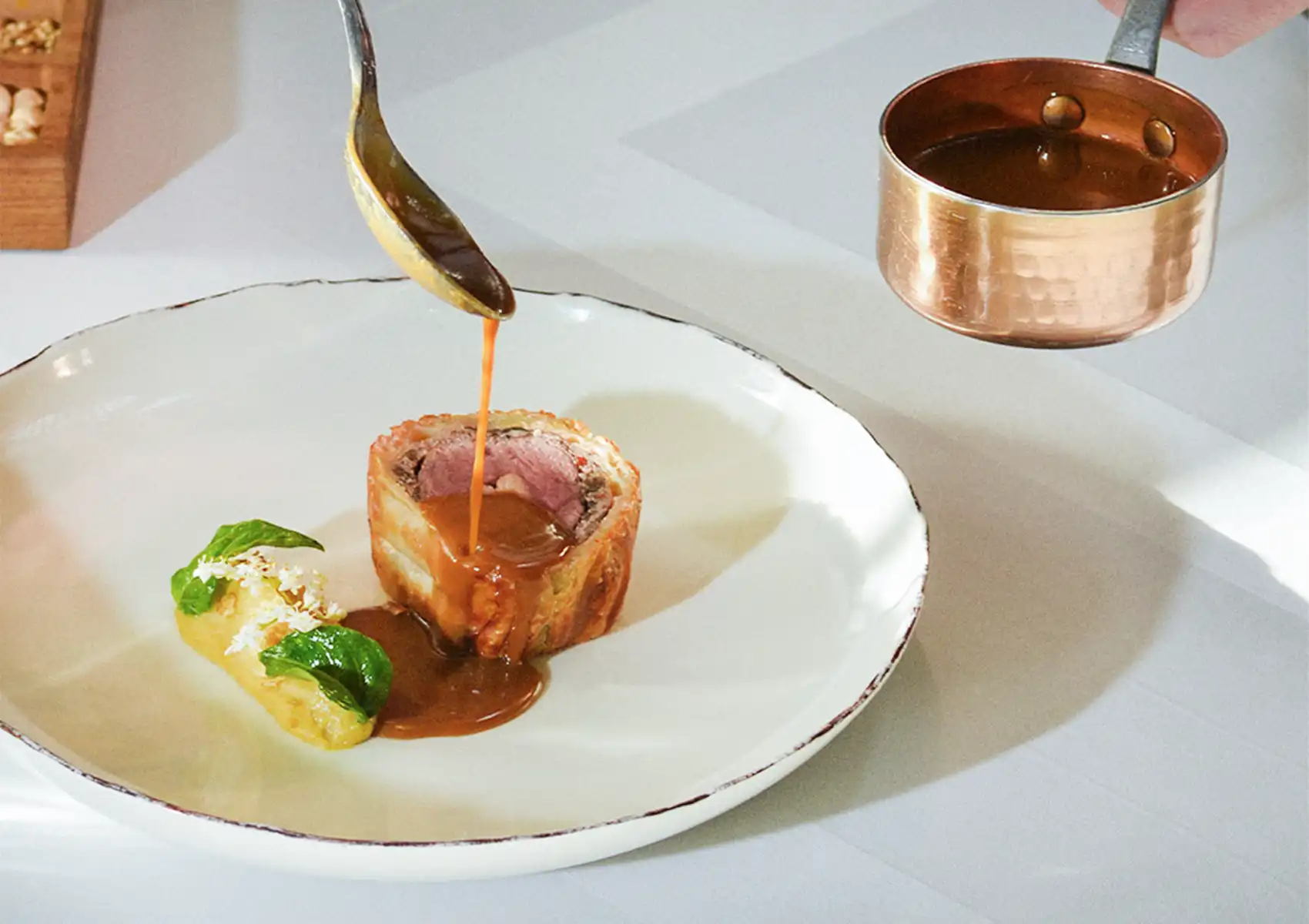
Venison Wellington is one of Apéritif’s signature dishes. It is served as the main course across the Guided by the Lunar Cycle tasting menu formats, alongside Last Light, opu fish with woku and nasi uduk, and Closing Moon, aged duck with tamarind jus. These menus include several courses, so the Wellington is served as one part of the full dining experience rather than as a separate special dish.
That context changes how the dish is experienced. By the time the Wellington arrives, the menu has already moved through Lapis Bresaola with rujak and pineapple, mushroom forest, and cuttlefish with pindang Palembang, so several Indonesian references and European techniques are already in play. This helps guests understand the restaurant’s style, so the Wellington feels like part of the overall dining experience.
Its familiarity becomes part of the experience. The Wellington offers a recognisable form, but the rendang gives the dish a flavour identity that is specific to its setting at Apéritif Restaurant.
Where to Try Venison Wellington in Bali
Apéritif Restaurant serves the Guided by the Lunar Cycle degustation in Ubud, with dinner from 6 pm to 8.30 pm and lunch from 12 pm to 2 pm, which requires booking 24 hours in advance. Walk-ins are accepted subject to table availability, though booking ahead is advised. The five-course and seven-course formats and their individual dishes may change as the menu evolves, so guests should confirm the current menu when making a reservation.
For guests interested in fine dining in Bali that brings European technique together with Indonesian culinary references, Venison Wellington provides a clear introduction to the approach behind the Apéritif table. It takes a familiar form and uses it as a framework for a flavour profile rooted in Indonesia.