Ubud, Bali | June 2026 – Apéritif Restaurant presents the latest chapter of its Lunar Cycle menu, a continued exploration of Indonesian flavours through the restaurant’s distinctive culinary perspective. The focus is on authenticity, but without losing the soul of Apéritif.
We are not here to lecture the guest or make the food difficult to understand. You come to dine with us, to taste new flavours, to feel something, and to enjoy the moment. Some flavours will feel familiar and comforting, some will be new, but everything should be easy to enjoy.
The lunar cycle follows the same idea. It is not only about the moon itself, but about emotion, rhythm, and feeling. The menu moves from freshness and clarity into deeper, warmer, more comforting flavours, before closing again in a softer way.
This is smart, comfortable food. It is refined, but not complicated. The food, the service, the wines, the friendly smile, the white tablecloths, the feeling in the room — everything works together. When you dine with us, you should feel special, but you should also feel relaxed. You can be who you are with us.
This is Apéritif. Everyone is welcome, and everyone can understand.
Canapés — Team Creativity
We begin the menu with canapés. They are not really inspired by one specific memory or one traditional dish. They come more from teamwork, brainstorming, and the creativity of the kitchen.
For me, this is important. A menu should not only be the chef’s ideas. The team also needs space to think, taste, create, and bring something of themselves into the experience. These small snacks give them that moment.
The canapés open the journey in a playful way. They prepare the palate, but they also show the energy of the team behind the menu.
Amuse-Bouche — Kare Telur, Crispy Egg, Shimeji, Espuma Kare
After the playful snacks, we serve the first small composed bite of the menu: our Kare Telur.
This dish is inspired by the feeling of Indonesian kare telur: egg, warm spices, and a sauce that feels comforting and familiar. It is the kind of flavour many people can recognise, but we present it in a more refined Apéritif way.
The egg is the centre of the dish. Instead of serving it in a traditional way, we make it crispy on the outside, so you get texture first, and then the soft richness of the egg inside. Around it, we add shimeji mushrooms for an earthy flavour that works very well with the spices.
The espuma kare brings the soul of the dish. It gives the flavour of curry, but in a lighter and softer way. It is aromatic, warm, and generous, without becoming too heavy.
For me, this amuse-bouche is the first clear step into the menu. After the snacks from the team, this bite starts to show what the journey will be about: Indonesian comfort, familiar flavours, and Apéritif technique, all in one small bite.
Tuna — Pindang Sauce
The plated menu starts with something fresh, clean, and very connected to Indonesia.
This tuna dish has been with us since the first year of Apéritif. In the beginning, the idea was almost like a rollmops-style fish preparation, because in pindang soup they also use acidity and vinegar. So I first marinated the fish more strongly, inspired by that sharp, fresh, pickled feeling.
Over the years, the dish became more subtle. Instead of making the fish too acidic, we cure it gently and serve the pindang more like a cold sauce or dressing. The flavour is still there: fresh, aromatic, slightly sour, with spice and brightness, but now it is more refined.
For me, this dish shows how a recipe can grow with time. The first idea stays, but the balance becomes more elegant.
Heirloom Tomato — Zero Waste Tomato
After the tuna, we stay fresh, but move into something brighter and more vegetable-driven.
This dish is a reinvention of one of Apéritif’s favourite signature dishes from the Covid period. Of course, we do not want to bring Covid back, but many guests still remember and miss this tomato dish.
The idea is to use everything from the tomato and show how much flavour one ingredient can give when you respect it fully. The flesh, juice, skin, seeds, and trimmings can all become part of the dish in different ways.
It is fresh, light, and colourful, but also has depth from fermentation and acidity. For me, it is a dish about memory, creativity, and not wasting beautiful produce.
Madura Blue Crab — Bubur Manado Risotto
From the freshness of tomato, we move into comfort.
The inspiration for this dish comes from my time in Manado and Bunaken. When I was there, I could eat bubur Manado almost every day. It is simple, comforting food, but full of vegetables, herbs, texture, and real flavour.
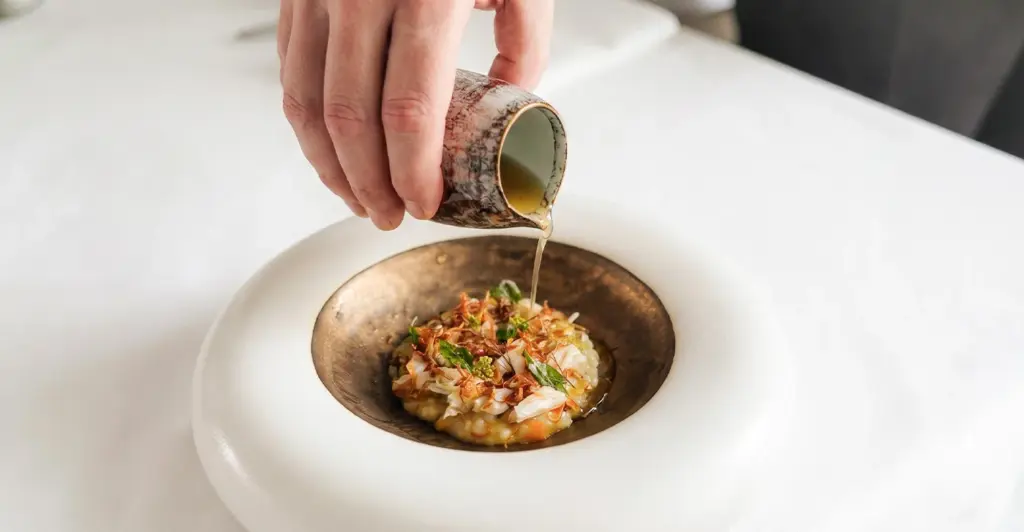
For this menu, I wanted to share that feeling, but in a more refined way. Instead of making a classic bubur, we bring the idea closer to a risotto: creamy, warm, generous, and comforting. The flavours still come from Manado, but the texture and technique are more from our kitchen.
We add sweet Madura blue crab because the natural sweetness of the crab works beautifully with the pumpkin, kemangi, and bouillon. It makes the dish richer, but still fresh and elegant.
Organic Chicken — Surf and Turf with Lobster
From the crab, we move into something more luxurious, but still warm and comforting.
This dish is about harmony between land and ocean. Chicken and lobster maybe sound very different, but together they can feel very natural. The chicken gives comfort and familiarity, while the lobster brings sweetness and a sense of occasion.
We use chicken fillet filled with lobster mousse and bamboo lobster, served with Jerusalem artichoke purée, kremes, and Albufera sauce. The kremes gives crunch and a small Indonesian touch, while the Albufera sauce brings everything together in a rich and elegant way.
For me, this is high-end comfort food. It is refined, but it still feels soft, warm, and generous.
Beef Cheek — Coto Makassar
Now the menu goes deeper, richer, and more intense.
This dish started in a very simple way. I asked the team, “What is one of the most famous beef dishes in Indonesia?” One of them said Coto Makassar. I started to read more about it and saw peanut in the recipe. At first, I panicked a little, because I am not really a big fan of peanut sauce. Maybe weird for a chef in Indonesia, but that is the truth.
But then I understood that in Coto, the peanut is not used like a strong satay sauce. It is more to give body, depth, and thickness to the broth. That changed everything for me.
For our version, I wanted to keep the soul of Coto Makassar, but lift the spices and make the broth very clean and precise. We serve a beef consommé next to the dish because this is also something I love in our kitchen: a few small sips can clean the palate, but still give a lot of flavour.
It shows the strength of our sauces, bouillons, and consommés. It is deep, comforting, and full of Indonesian flavour, but still very Apéritif.
Fish of the Day — Bobor Sauce
Next to the richness of the beef, we bring back lightness, freshness, and the feeling of the garden.
This dish started with opu fish, but now it becomes fish of the day, depending on what is best and freshest. The inspiration of the dish itself is not bobor soup. The inspiration comes from the sauce.
The sauce is inspired by bobor, a comforting Indonesian coconut-based vegetable soup. I took that feeling and made it more intense and more refined. We increase the spices, balance the coconut, and finish it with spinach chlorophyll. This gives the sauce a deep green colour and a flavour that almost feels like an Indonesian green curry.
The fish is served with short-sautéed purslane, raw sorrel leaf, hoja santa, parsnip, and confit bell pepper underneath. The dish is delicate, but it still has warm spice, acidity, freshness, and depth.
For me, this dish shows how we can take inspiration from Indonesian comfort food for the sauce, but translate the full plate into something lighter, elegant, and very easy to enjoy.
Venison Wellington — Chef Nic’s Signature
After travelling through Indonesian flavours, we return to one of Apéritif’s most recognised signatures.
The Venison Wellington is a classic for us. It brings together European technique and Indonesian flavour memory. The structure is inspired by a classic Wellington, with venison, foie gras, and sweet potato, but the soul of the dish comes from the rendang sauce.
The base of the rendang recipe comes from Nic’s wife’s family in Padang. It started from her family recipe, and over the years we developed it further in our kitchen until it became our own unique Apéritif version.
For me, this dish is very personal. It connects my European background with the Indonesian flavours I learned through family, through the team, and through living here. It is not fusion for the sake of fusion. It is two worlds that meet naturally on one plate.
This is also why the dish has stayed with us for so long. It feels special, but it also feels comforting. It is Apéritif in one dish.
Rice — Pineapple, Vanilla, Cinnamon
After the deeper savoury part of the menu, we start to calm the palate.
Rice is one of the most familiar ingredients in Indonesia, and for many people it gives a feeling of home. Here we use it in a softer, sweeter way, with pineapple, vanilla, and cinnamon.
The dish is gentle, warm, and familiar. It does not try to be heavy or complicated. It is there to bring the guest slowly towards the end of the menu.
It feels like a quiet moment after the main journey.
Chocolate — Tamarind, 70% Chocolate, Almond
We close with deeper flavours again, but now in a sweet and emotional way.
The chocolate brings richness and intensity, while the tamarind gives acidity and a very Indonesian kind of freshness. Almond adds nuttiness and texture.
It is dark, elegant, and comforting, but not too heavy. For me, it is the final emotional point of the menu: deep flavour, balance, and a little bit of surprise.
Mignardises
The mignardises are the final moon of the journey.
They are small, precise bites to end the experience with care. Not too much, not too heavy, just something beautiful to leave a lasting impression. The last taste should feel complete, like the end of a cycle.