This food plating and presentation guide provides the key elements to presenting a meal with actionable techniques and tips.
As a diner, when you understand the basics, your dining experience becomes sharper and more enjoyable. As a chef, when you perfect these techniques, you can create a whole new experience for your guests.
Food plating and food presentation shape your first impression of a dish. Together, they tell you what the chef wants you to notice first and how they want you to feel before the first bite.
What Is Food Plating
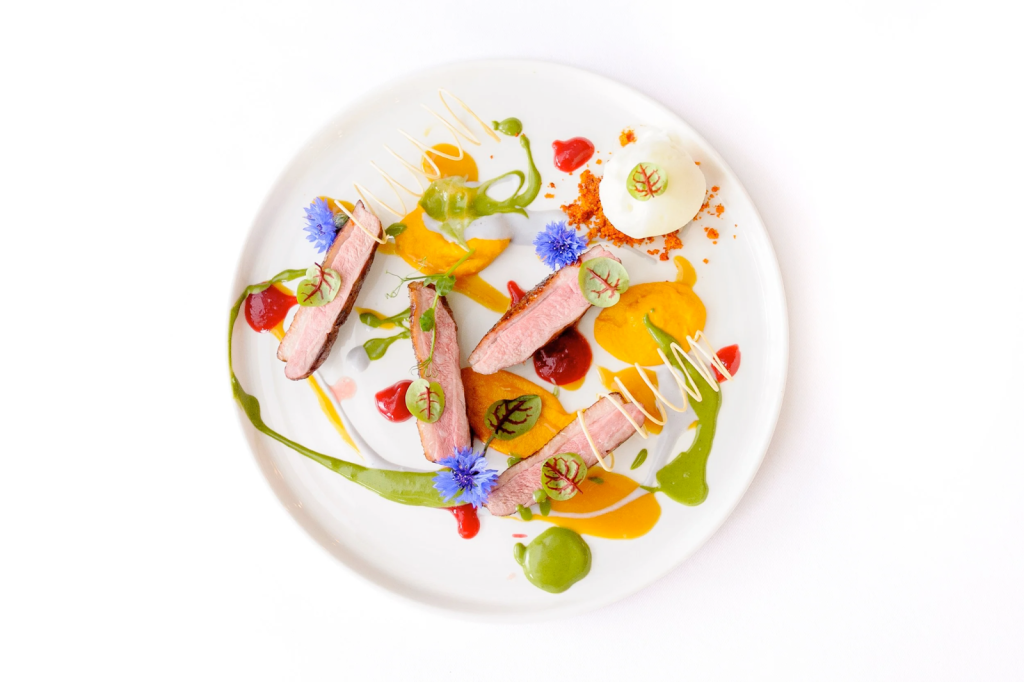
Food plating is the way a chef arranges the elements of a dish on the plate. It is the structure. It decides what you notice first and how you understand the dish before tasting it.
What Food Plating Shows
- Ingredient hierarchy:
The chef places the main components where your eyes land first. The supporting elements sit around to highlight them.
- Flavour path:
The placement suggests the order in which the flavours build, from light to intense.
- Balance:
The colours, textures, and shapes sit in a way that makes the plate look organised. Nothing on the plate feels cramped or pushed to one side.
- Portion spacing:
The space between the parts shows how they fit together. It keeps the plate from looking crowded.
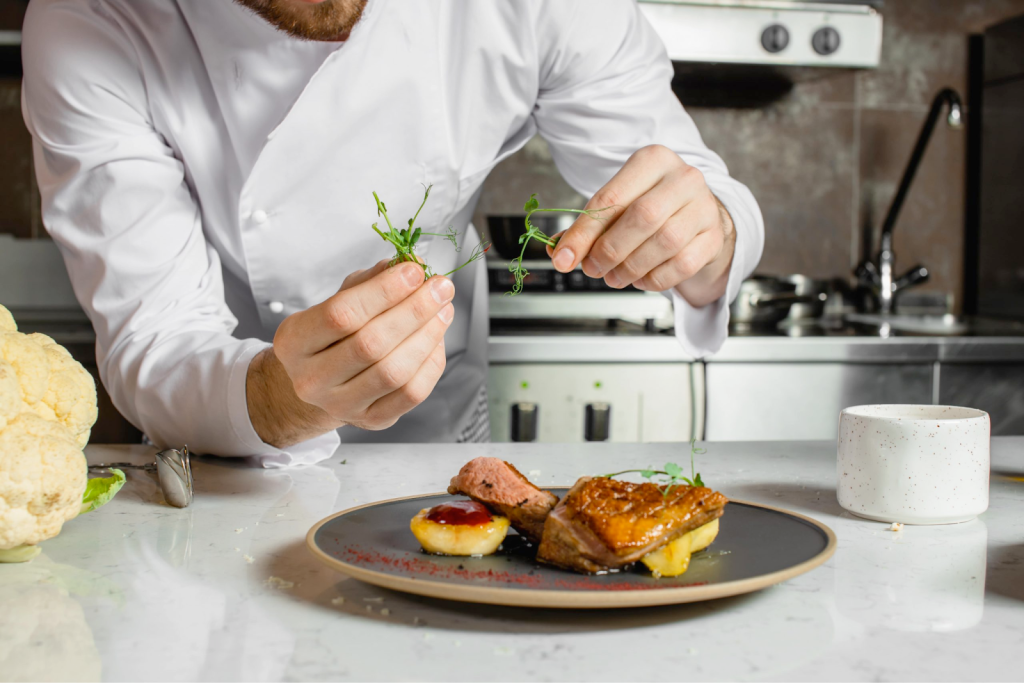
What Influences Food Plating
- Ingredient texture (crisp vs soft):
Crisp elements stay on top, so moisture does not soften them. Soft items are stable. They form the base. This arrangement helps you predict texture before you take a bite.
- Height and layering:
Height protects the delicate pieces and keeps the textures apart. It also gives the plate more shape instead of a flat, blended layout.
- Contrast:
Chefs separate colours and textures. This method makes it easy for you to see each ingredient.
- Temperature:
Hot food needs more open space for steam to escape. Cold items can sit closer together because they hold their form longer.
What Is Food Presentation
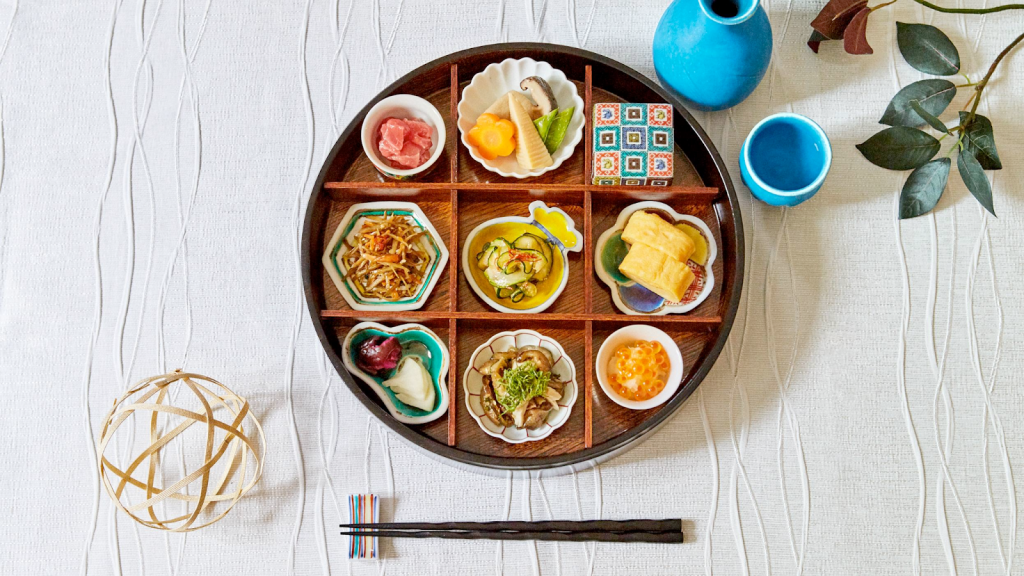
Food presentation is the complete visual experience of a dish. It includes the plating, the plateware, the table setting, and the overall look and mood when the dish reaches the table.
What Food Presentation Shows
- Colour meaning:
Bright colours mean the ingredients are fresh. Darker colours often mean that the flavours are deeper or more concentrated. These colour cues influence what you expect before tasting.
- Plateware choice:
Different plate types create different visual effects.
A dark matte plate makes bright ingredients stand out. It gives the dish a modern feel. A white porcelain plate makes the dish look cleaner and more classic.
A wide plate creates space. A smaller plate makes the dish look fuller.
A deep bowl changes how you see layered or sauced dishes. A flat plate gives more focus to arrangement and spacing.
- Table setting:
Clean cutlery, simple glassware, and a plain napkin keep the table looking open, so the food becomes the main focus.
A fuller setting with extra glasses or layered napkins makes the table look richer and more dressed up.
- Negative space around the plate:
Space around the plate on the table creates a calm feel. It prevents the visual experience from becoming cluttered, so the dish stands out clearly.
- Finishing touches:
Finishing touches help you understand how the chef wants the dish to be eaten.
A neat swipe may suggest that you should pull a bite through it. Small dots or a drizzle add flavour gently, without taking over the dish.
- Garnishes:
Garnishes give you quick clues about the flavours and aromas in the dish.
Herbs, citrus skin, spices, or microgreens usually tie back to the main ingredient and hint at the flavour you will taste first. A garnish can also show freshness or add a small contrast in texture.
- Lighting and ambience:
Lighting affects how colours appear.
Warm lighting makes colours look deeper and richer. Cooler lighting makes the dish look sharper and cleaner.
The restaurant’s ambience also changes how the dish feels when it arrives. A calm, dim room makes the presentation feel more focused and elegant. A brighter, livelier room makes it feel more energetic.
The presentation also sets the emotional tone of the dish. The colours, plate choice, spacing, and finishing touches can make the dish feel calm, rich, playful, or refined before you taste anything.
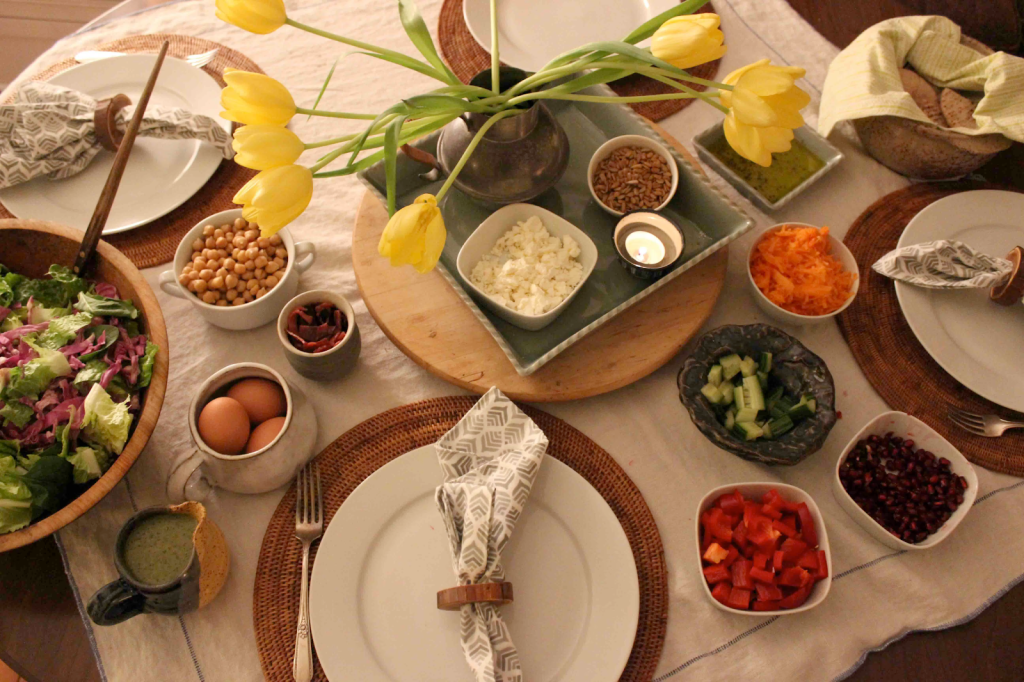
What Influences Food Presentation
- Chef’s philosophy:
Every chef has a specific way of wanting their food to look. This approach shapes the entire presentation.
Chefs who like a bold style often choose brighter colours and stack elements for height. They choose dark plates or unusually shaped plates so that the dish stands out.
A chef who likes a natural, earthy style might use textured ceramics, uneven edges, and loose, organic arrangements that look like nature.
This personal philosophy guides the choice of plateware and the structure of the plating. It also shapes the small details on the plate and the feeling you get when the dish arrives.
- Cuisine or cultural style:
Different cuisines have their own way of looking on the plate. A good presentation respects those roots. The dish looks and feels connected to the place and culture it comes from.
Japanese plates feel calm and balanced. You see clean lines, small portions, and lots of open space on the plate.
Italian plates look fuller and more relaxed. Portions feel warm and generous — just like the cooking style itself.
Indian dishes are bright. The colours and layers make the plate look lively.
- Restaurant identity:
A dish’s presentation has to align with the restaurant’s identity so everything feels consistent.
A modern fine dining venue may favour sharp contrast, geometric layouts, and minimal plate accessories because the space itself is sleek and contemporary.
A nature-led restaurant may choose earth-toned ceramics, organic shapes, and softer, flowing arrangements to reflect a connection to the outdoors.
- Seasonality:
Seasonal ingredients affect the colours, textures, and the presentation’s mood.
Summer produce brings bright greens, yellows, and reds. It creates a fresh and lively look.
Winter produce often has deeper colours and denser textures, making the presentation feel warmer and more grounded.
- Portion style:
The style of the portion communicates the type of dining experience the chef wants you to have.
A tasting-menu portion is small and focused. Each element is placed with precision. The dish feels delicate.
A larger à la carte portion feels more relaxed and generous; it has a fuller presence on the plate.
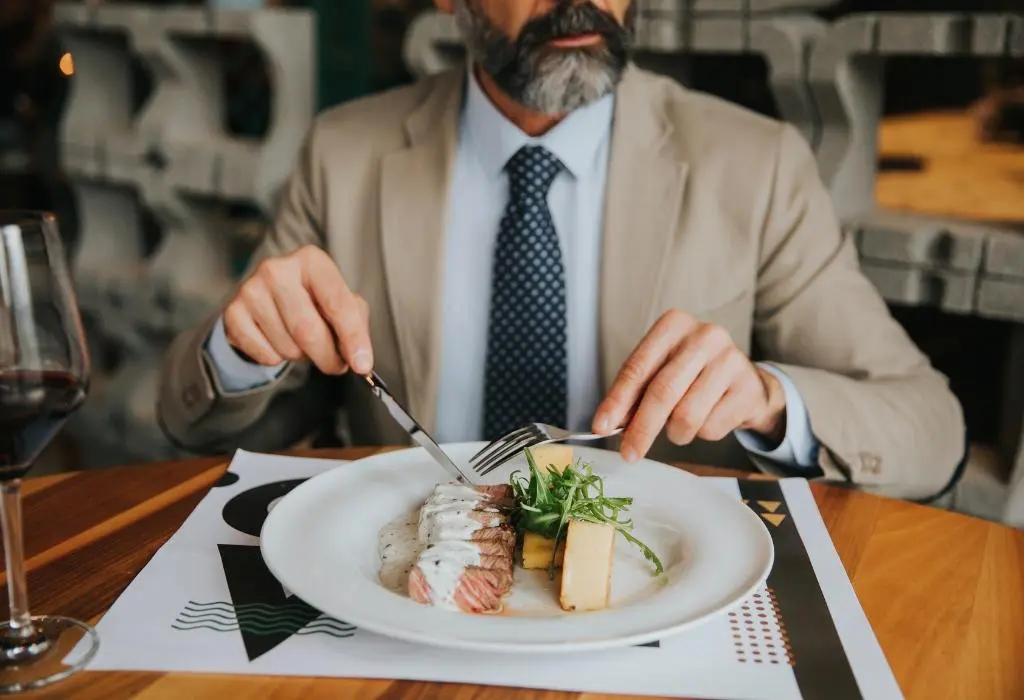
How to Appreciate Food Plating and Presentation
- Look first for the main component in the dish. It is on the upper left, upper middle, or right in the centre of the plate. Start with the main component and the elements placed closest to it.
- Notice the direction in which the plate flows. A left-to-right layout moves from light to rich flavours. A right-to-left layout tends to go from bold to subtle. A circular layout allows you to mix components.
- Do not eat the components placed separately together.
- Look at the top layer. Eat it before the heat or steam makes it soft.
- Check how the sauce is placed. If it is a straight swipe, take a little with each bite. If it is a full pool, then it is the base flavour. Place the meat or seafood in it. Adjust the acidity with scattered dots.
- Check the size of elements on the plate. Small portions are strongly flavoured. Bigger portions are usually mild, creamy, or neutral.
- Look for symmetry. A symmetrical layout means the flavours are balanced. An asymmetrical layout usually means the flavours contrast. One element is sharp and another rich.
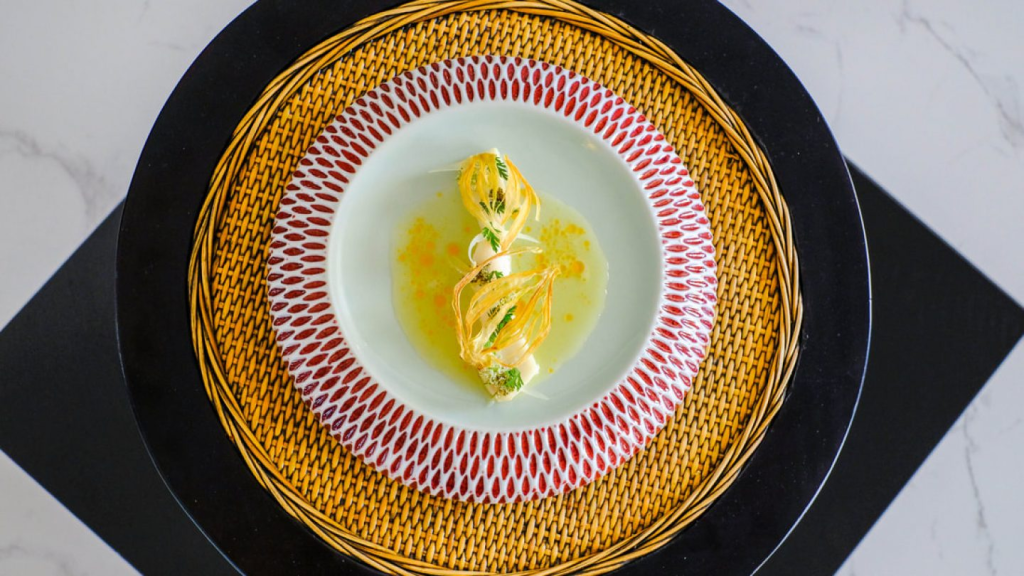
Explore Artful Fine Dining at Apéritif Restaurant, Ubud
At Apéritif Restaurant, food plating blends creativity, skill, and a multi-sensory approach to create a fine dining feast for the eyes and palate.
Each dish tells a story. The textures, temperatures, and layout are on purpose, not just for show. This attention to detail separates fine dining from a regular meal. It sets the mood early and shapes the experience even before you taste anything. Reserve your table today.