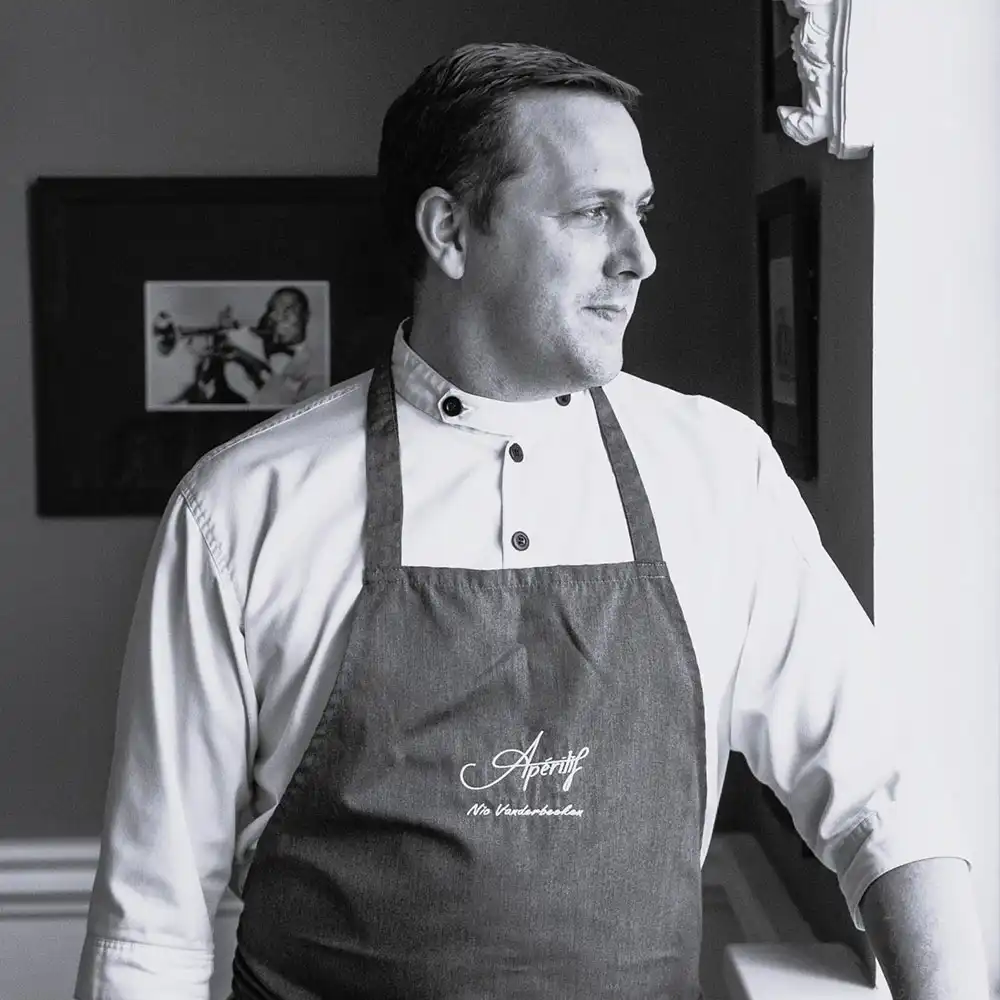
Fine dining doesn’t have to make every dish completely different. Familiar dishes help diners feel comfortable, while local ingredients and thoughtful techniques add something new. At Apéritif Restaurant in Ubud, these classic forms become a way to showcase Indonesian flavours on the Guided by the Lunar Cycle menu.
The Venison Wellington is a great example of this idea. Other dishes use the same method, like pairing Italian cured beef with Indonesian fruit salad, using a South Sumatran soup as inspiration for a cuttlefish dish, and preparing duck with classic European techniques and Indonesian touches.
1. Wellington and Rendang
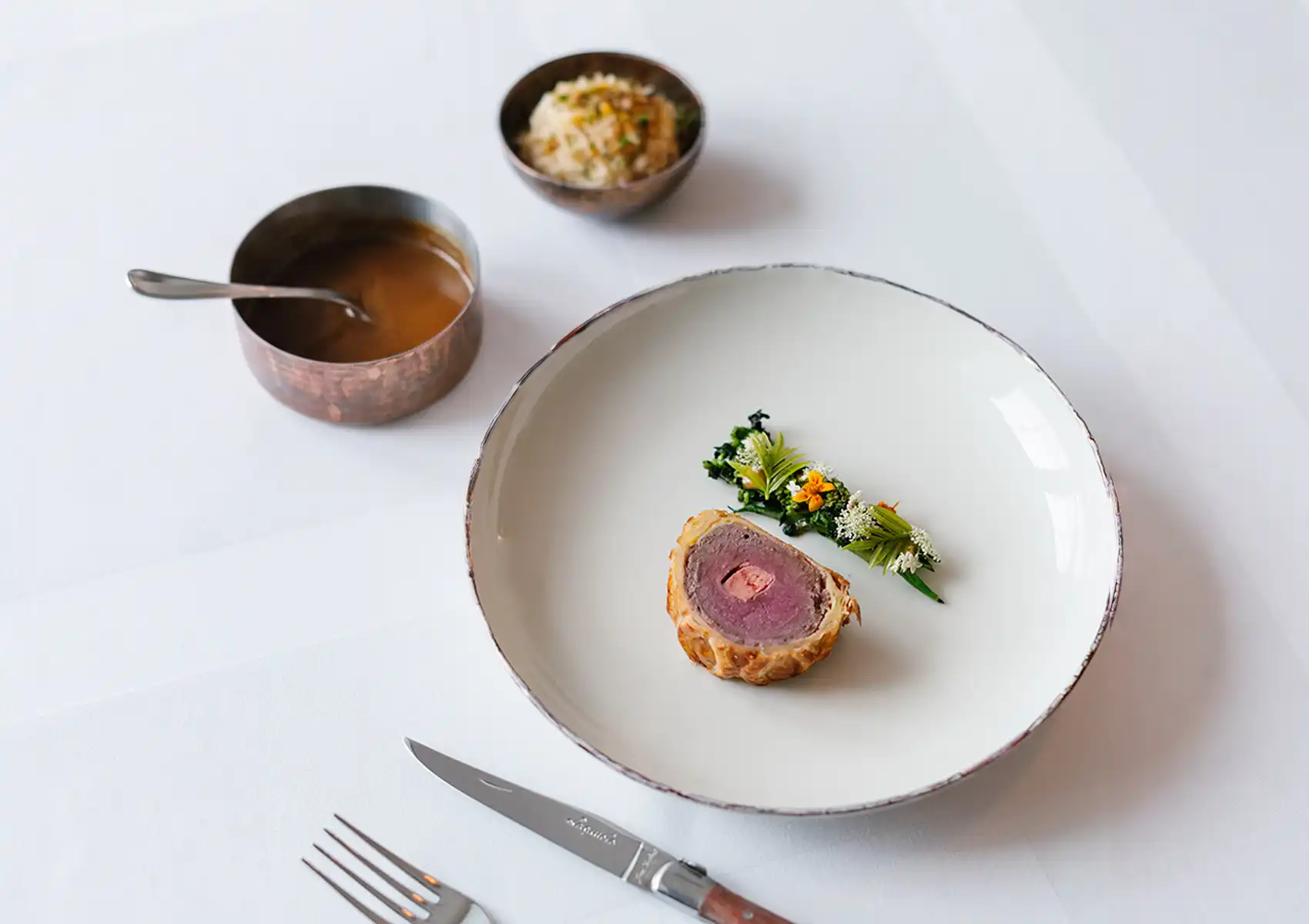
Venison Wellington starts with a classic European style. At Apéritif Restaurant, venison and foie gras are mixed with sweet potato and wrapped in pastry, while still keeping the traditional Wellington look. The Indonesian twist comes from rendang, a slow-cooked and spicy dish from West Sumatra. The pastry keeps it familiar, while the rendang brings a deep Indonesian flavour.
The Venison Wellington is a signature dish of Apéritif Restaurant, served at the main course stage of the Guided by the Lunar Cycle tasting menu.
2. Bresaola and Rujak
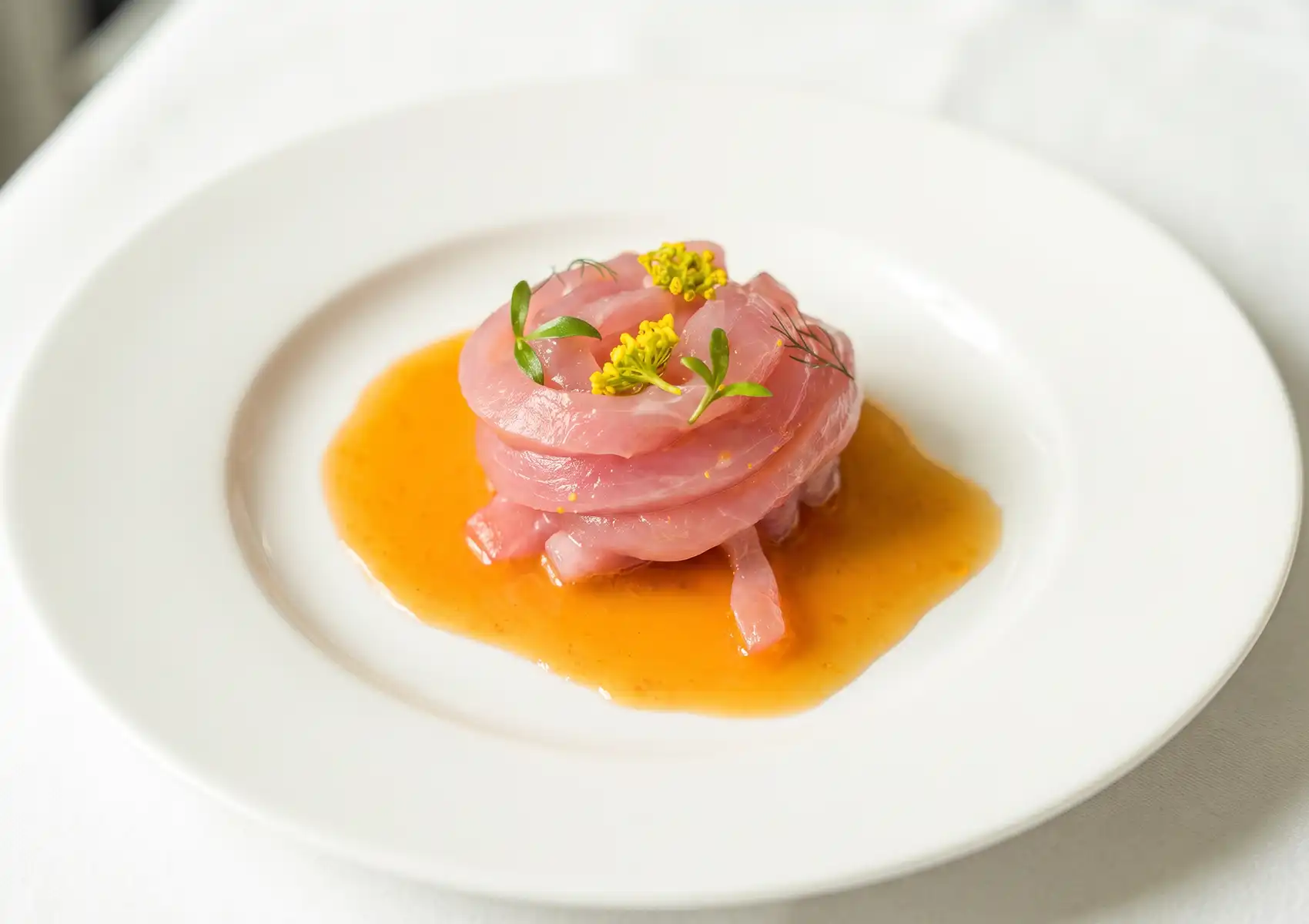
Bresaola is air-dried, salted beef from Valtellina in northern Italy, usually served in thin slices. At Apéritif Restaurant, it becomes Lapis Bresaola in the Half Moon course, layered with foie gras, pineapple, and rujak flavours.
Lapis means layer in Indonesian, like in lapis legit, the famous layered cake. The name fits how the course is put together. Rujak is an Indonesian fruit salad with a dressing of palm sugar, tamarind, and chilli. This mix adds sweet, sour, and spicy flavours, giving the dish a fresh, tangy taste that balances the richness of the beef and foie gras.
The course brings together Italian cured beef and French foie gras, with rujak adding a distinctly Indonesian contrast of sweet, sour and spicy flavours.
3. Pindang and Cuttlefish
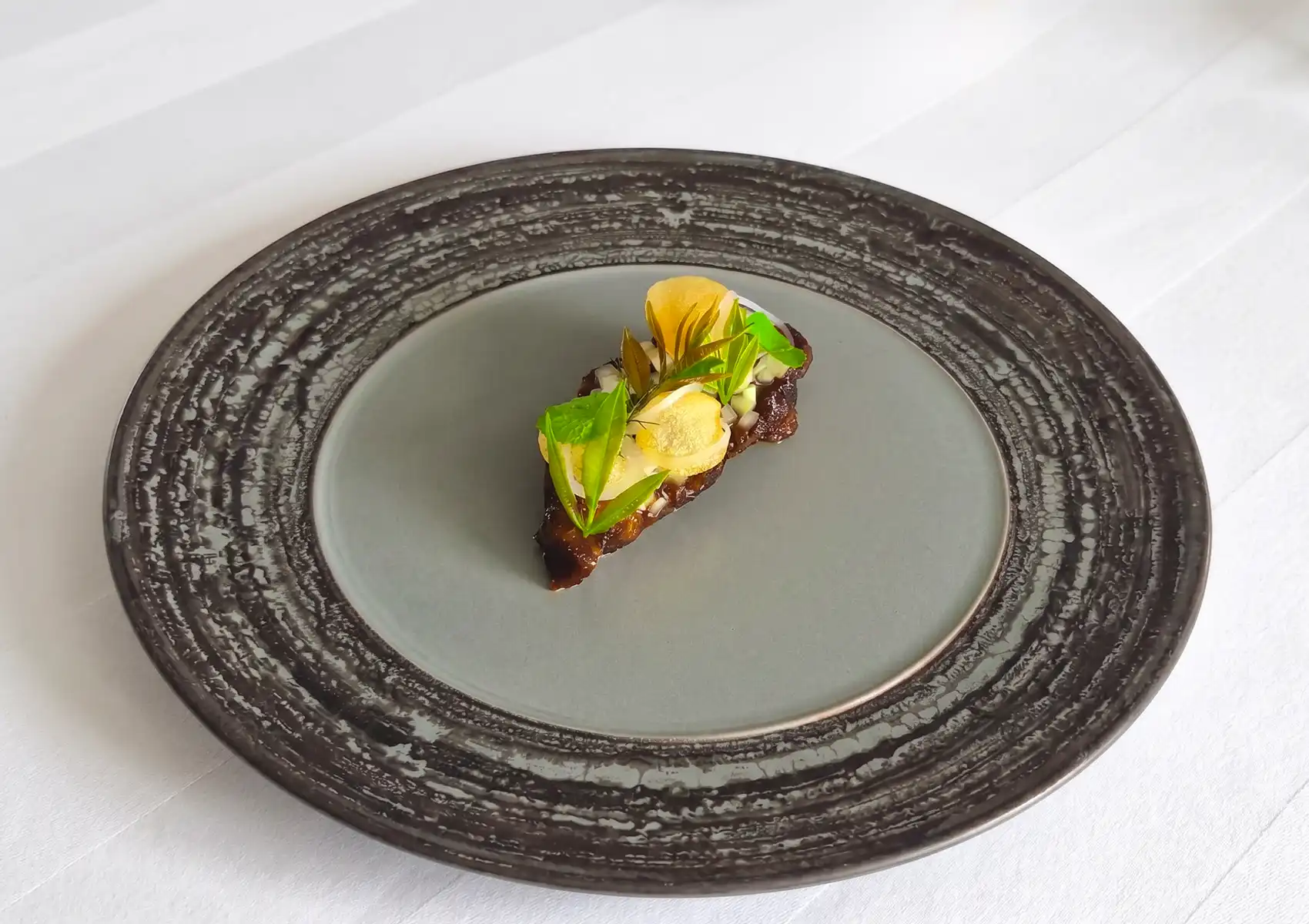
Pindang Palembang is a sour, spicy and aromatic fish soup from South Sumatra, built on tamarind, pineapple, chilli, lemongrass and galangal. It reaches the table as the After Full Moon course, where cuttlefish is served with the pindang alongside X.O. and chilli oil.
The X.O. sauce also comes from Asian cooking traditions. It was first made in Hong Kong in the 1980s and usually includes dried scallop, dried shrimp, cured ham, and chilli. At Apéritif Restaurant, the X.O. sauce is made in-house with octopus and cuttlefish to match the seafood in the dish. Marigold leaves are added to finish the plate.
The dish draws on the sour, spicy character of pindang, reinterpreting its regional flavours in a composed cuttlefish course.
4. Iberico Pluma, Lawar, and Base Genep
Pluma means feather in Spanish. It is a small, marbled cut from the shoulder end of the Iberian pig, a special breed from Spain. The fat in the meat makes it rich and tender. It is served medium rare, following updated health guidelines, including those from the USDA, which now say whole pork cuts are safe at 63°C after resting for three minutes.
At Apéritif Restaurant, the pluma comes with lawar and base genep. The lawar is made with long beans and cassava, using the Balinese style of mixing chopped vegetables, grated coconut, and spices. Base genep is a Balinese spice paste made from shallot, garlic, galangal, turmeric, ginger, kencur, and chilli.
The dish pairs a Spanish cut of pork with two elements of Balinese cuisine: lawar and base genep. The Fading Moon course appears in the seven-course menu only.
5. Ageing, Confit, and Tamarind
The Closing Moon course uses two classic European methods for duck. The duck breast is dry-aged to deepen its flavour, and the duck leg is slowly cooked in its own fat using the traditional French confit technique.
The Indonesian influence comes from the sauce and vegetables. The jus is reduced for a stronger taste, then balanced with tamarind, a sour fruit that is common in Indonesian dishes. The pak choy is lacto-fermented, which gives it a tangy flavour. Rice is mixed in at the table.
Guests can choose this duck dish or try Last Light, a lighter main course with opu fish and woku, a fragrant spice mix from Manado in North Sulawesi. It comes with palm kale from the restaurant’s greenhouse and nasi uduk, which is Indonesian coconut rice.
A Familiar Starting Point
Pastry, cured beef, seafood broth, a special cut of pork, and classic duck methods make these dishes feel familiar. Indonesian ingredients and local cooking styles give each course a real sense of place.
This balance shows Apéritif Restaurant’s food philosophy: European technique with Indonesian soul.
Apéritif Restaurant is located at Viceroy Bali in Ubud and offers the Guided by the Lunar Cycle menu in five- or seven-course options. The five-course menu does not include the Iberico Pluma and Black Rice dishes. Since the menu changes with the seasons, check what’s available before booking. You can reserve a table on the Apéritif Restaurant website or by calling +62 361 908 2777.