A guest chooses wine once. A sommelier builds a pairing across an entire sequence of courses, and that requires a different way of thinking.
Unlike an à la carte meal, where diners select individual dishes, a tasting menu follows a fixed progression, typically between five and ten courses. Because the sequence is known before service begins, the sommelier can design a pairing that develops alongside the menu rather than reacting to each course individually.
At Apéritif Restaurant, every wine pairing is created to accompany the Guided by the Moon tasting menu from the opening course to the final dessert. The aim is not simply to find wines that match individual dishes, but to create a progression that feels balanced from beginning to end.
Reading the Menu Before Service
Every successful wine pairing begins long before the first guests arrive.
Because the order of the courses is fixed, the sommelier studies where the menu becomes lighter, richer, or more complex. Those changes determine where different wines should appear and how each glass prepares the palate for the next course.
The opening courses of Guided by the Moon focus on freshness, combining tuna, romesco, mango salad, and pindang sauce with heirloom tomato, goat cheese, and kombucha. Bright acidity and delicate flavours define the first part of the experience.
The middle of the menu becomes richer with Madura blue crab served alongside pumpkin risotto before progressing to organic chicken filled with lobster mousse, Jerusalem artichoke purée, Albufera sauce, and kremes. These dishes carry greater richness and texture, requiring wines with more structure while maintaining balance.
The menu reaches its deepest point with the main course before gradually becoming lighter again through dessert.
No single wine can comfortably accompany that entire progression. A bottle with enough body for the later courses may overwhelm the opening dishes, while a lighter wine could disappear beside the richer flavours of the main course. Understanding those transitions is the foundation of the sommelier’s work.
How Each Wine Is Chosen
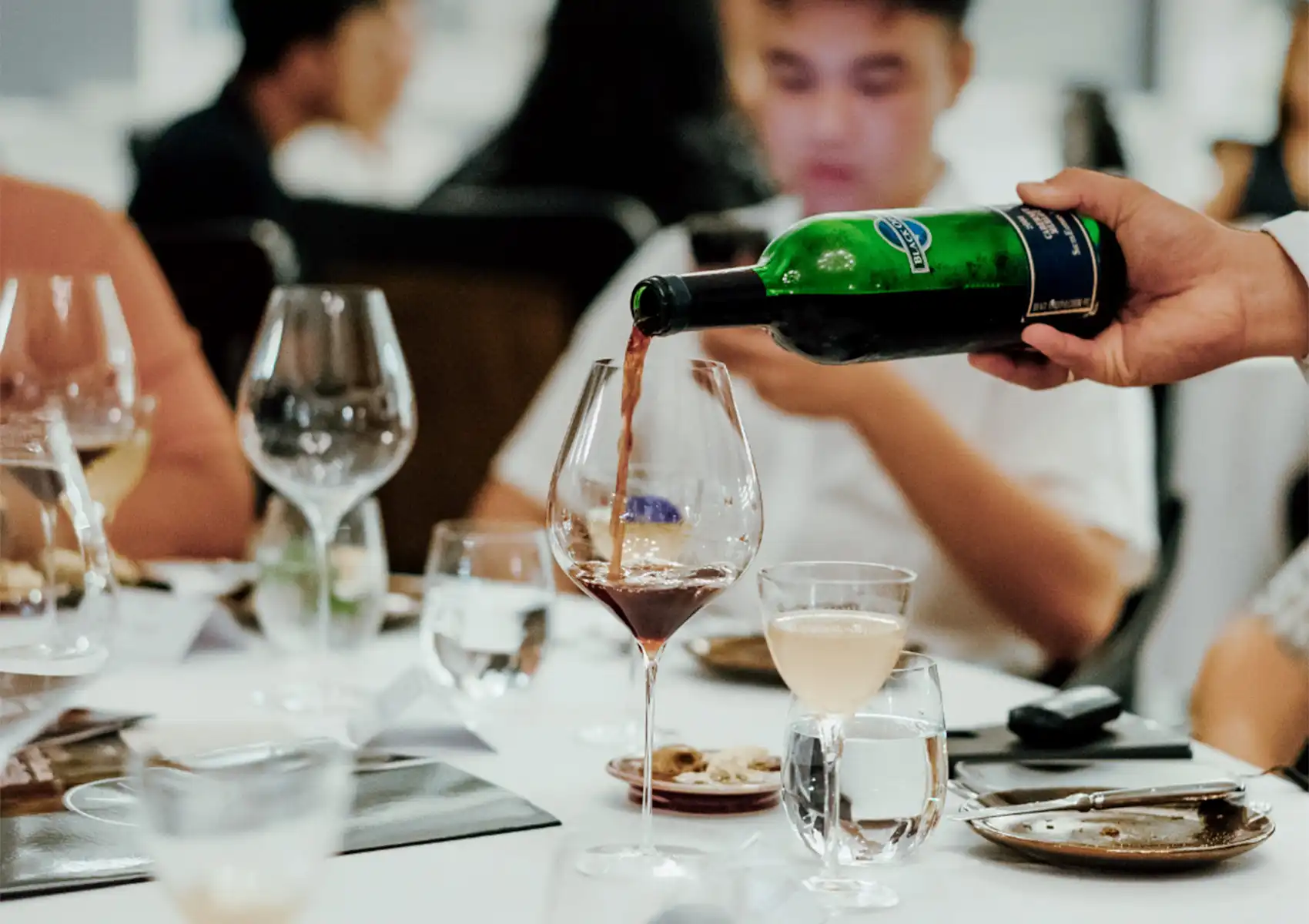
Selecting wines for a tasting menu is not simply about matching flavours. It is about deciding how each wine should interact with the food.
The first is to match weight, putting a wine of similar body alongside a dish of similar body. This creates harmony and consistency throughout the meal.
The second is to bridge, finding a note the wine and the dish share, a herbal edge or a smoky one, so the two feel connected.
The third is to contrast, setting acidity against richness or coolness against spice, so each makes the other more expressive. It is the riskiest, and it produces the pairings people remember.
A complete wine pairing tasting menu usually combines all three approaches. Too many contrasting pairings can become overwhelming, while too many similar combinations risk feeling predictable. The progression matters just as much as the individual selections.
Some guests prefer a wine with every course, while others choose a shorter pairing that highlights only the key transitions within the menu. Another option is to enjoy one or two carefully selected bottles throughout dinner, particularly when sharing wine across the table. The most suitable approach depends on personal preference rather than a single correct answer.
The Course That Requires Flexibility
The Fading Moon course presents one of the most interesting challenges for the sommelier. Because it is a choice, not a fixed dish.
It arrives either as beef cheek in the manner of coto Makassar, with acar, cem-cem leaves and beef consommé, or as dry-aged line-caught fish with bobor and summer garden vegetables.
When diners at the same table choose different main courses, the sommelier must either recommend separate wines or identify a single bottle that complements both dishes.
That decision is possible because the choice is known before the course is served. It allows the pairing to remain balanced throughout the meal instead of becoming an afterthought.
Working with Indonesian Flavours
Indonesia’s regional cuisines introduce ingredients and flavour combinations that require careful consideration when selecting wine.
Chilli is one example. Ingredients such as sambal matah and acar can make highly tannic or high-alcohol wines appear even hotter on the palate. For these dishes, wines with softer tannins or a touch of residual sweetness often provide better balance.
Coconut presents another consideration. Rich coconut-based sauces add texture without contributing significant acidity, making fresh wines particularly effective at bringing lift to the dish.
Tamarind creates a different challenge. Its natural acidity can be more difficult to pair with sweet wines than many guests expect. Depending on the dessert, the most appropriate accompaniment may be a fortified wine, coffee or, occasionally, no wine at all.
Knowing when not to pour another glass is as important as knowing which bottle to recommend.
What the Sommelier Needs to Know
The pairing is designed in advance, but it is finalised at the table and is only as good as three pieces of information.
What is usually enjoyed. What is being avoided. Roughly what should be spent.
Budget is often the detail guests hesitate to mention, yet it gives the sommelier the clearest framework for making thoughtful recommendations. Personal preferences are equally valuable. Saying that you enjoy crisp whites or prefer lighter reds offers more useful guidance than simply naming a famous wine region.
The goal is never to test a guest’s knowledge. It is to understand their tastes well enough to recommend wines that suit both the menu and the people enjoying it.
A Wine Programme That Evolves During Service
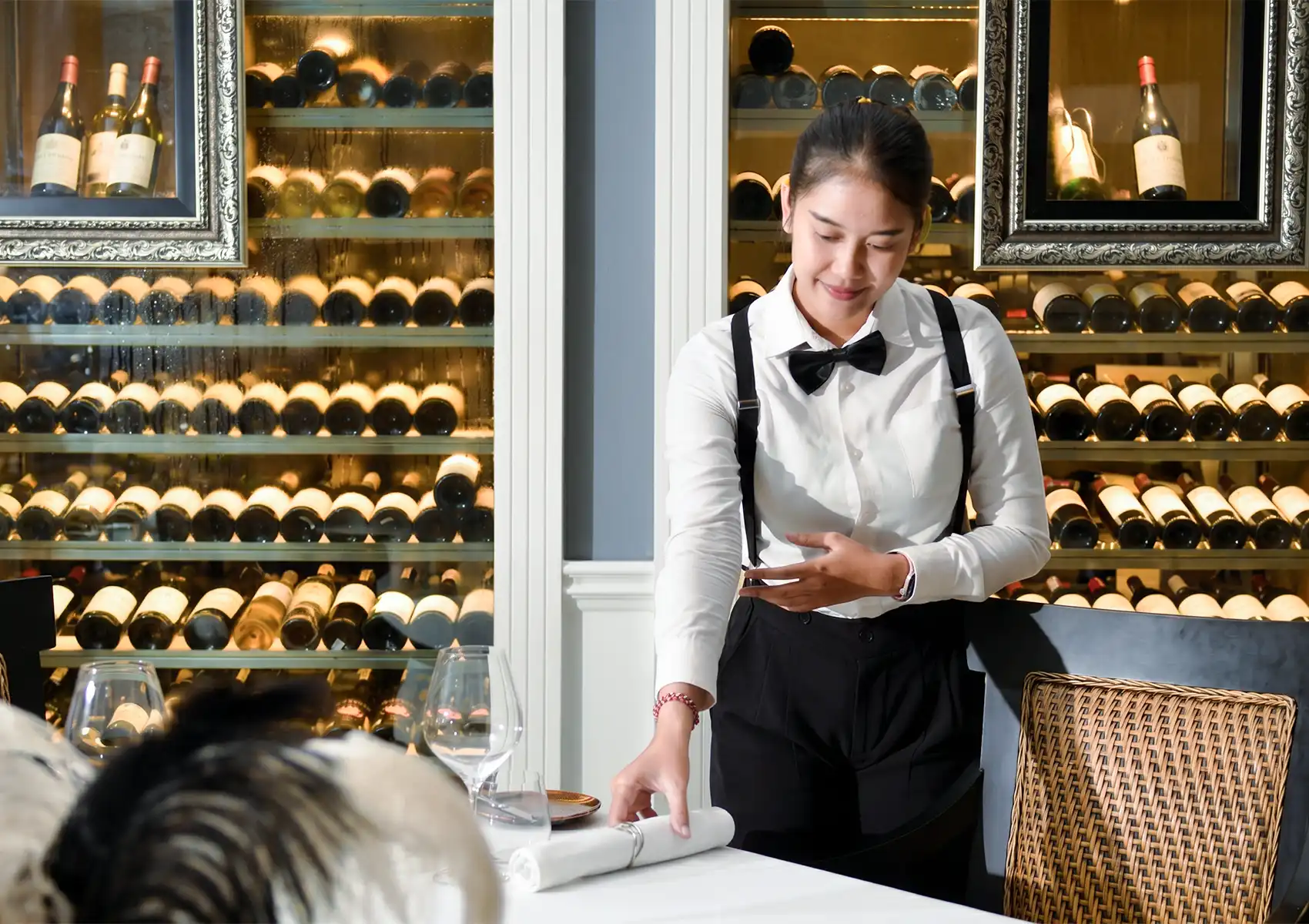
At Apéritif Restaurant, the wine cellar forms part of the dining room rather than remaining hidden behind the scenes. The restaurant has also been recognised by Star Wine List of the Year South-East Asia, reflecting the strength of its wine programme.
That visibility mirrors the sommelier’s role throughout dinner. Service continues to evolve as the evening progresses.
A table may linger longer over one course, move more quickly through another, or decide to change direction after tasting a particular wine. Because the sommelier remains engaged throughout the meal, recommendations can adapt naturally rather than follow a fixed plan.
A pairing prepared before service is the starting point, not the final script.
Before and After the Table
Pinstripe Bar opens daily from 4 pm, carries its own wine list, and has a sommelier on the floor, so a glass at five can be chosen with a 6 pm table in mind.
Dinner is served from 6 pm to 8.30 pm, while lunch is available from 12 pm to 2 pm with at least 24 hours’ notice. Wine pairing can be arranged during service, although guests hoping to enjoy a particular bottle are encouraged to mention it when making their reservation.
Ultimately, the sommelier’s role extends well beyond recommending wine. Every decision is made with the complete journey in mind, ensuring that each glass contributes to the rhythm, balance, and enjoyment of the tasting menu as a whole.