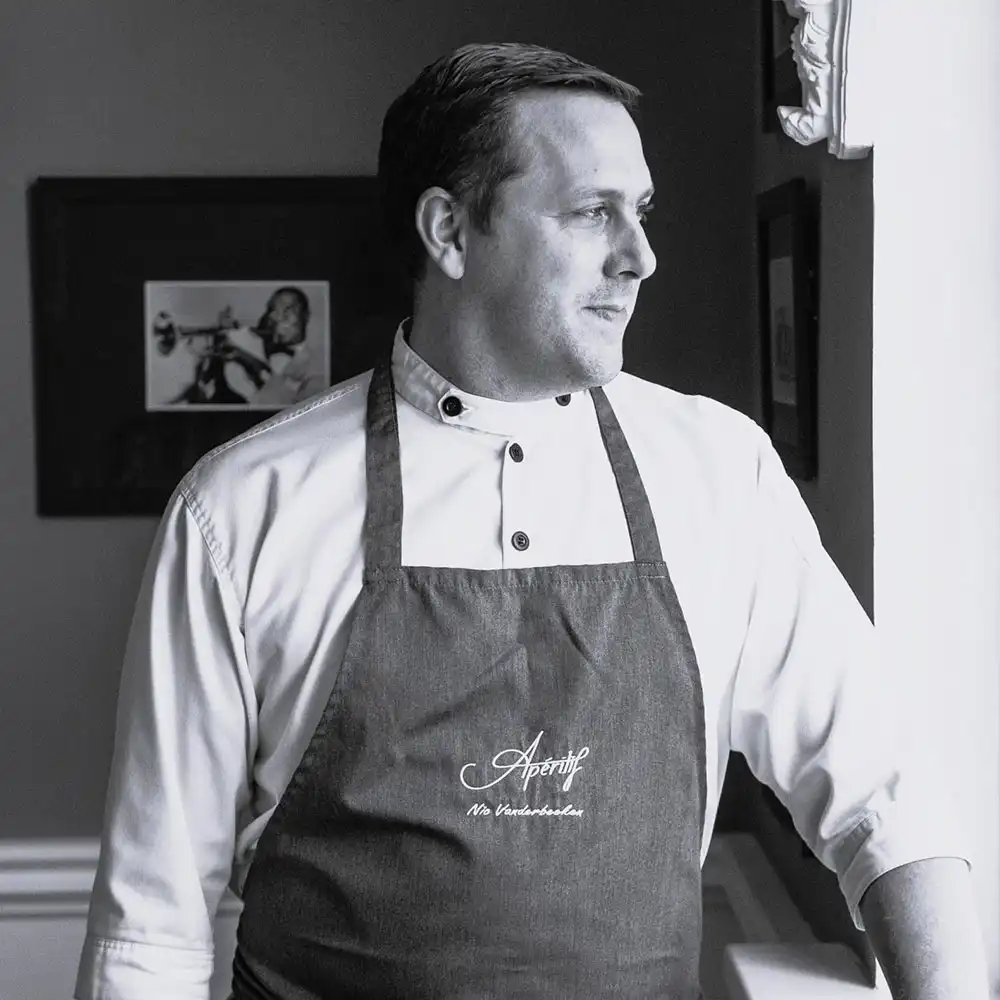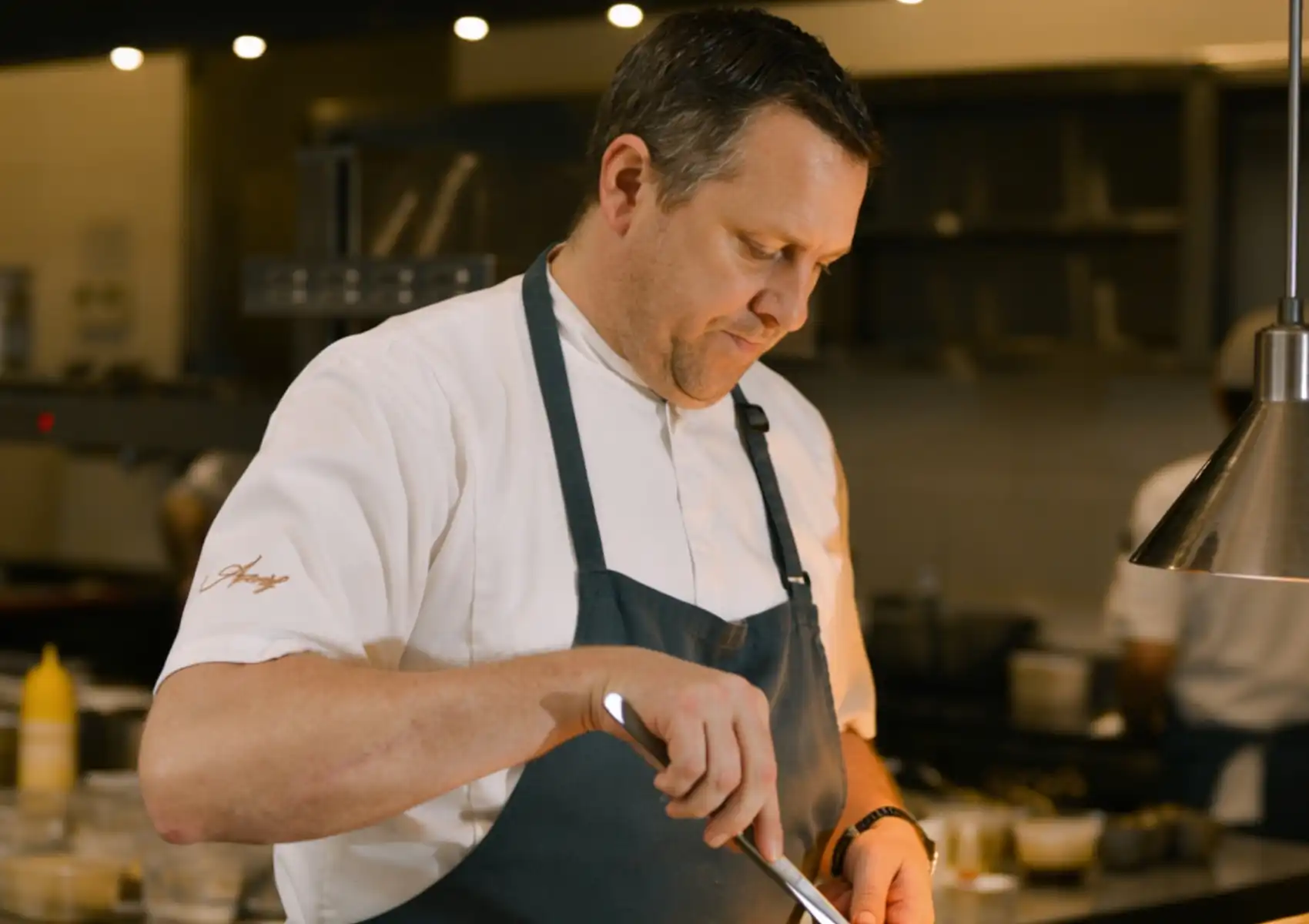
Every serious restaurant is eventually asked what its food is actually about. At Apéritif Restaurant in Ubud, the answer is a fine dining philosophy that governs each decision made in the kitchen, from what is bought in the morning to how a plate leaves the pass.
Apéritif presents contemporary Indonesian cuisine, shaped by European technique and inspired by the flavours, ingredients, and culinary traditions of the archipelago. The kitchen puts it more briefly as European Technique. Indonesian Soul.
Stated plainly, an Indonesian preparation supplies a dish’s flavour logic and European technique supplies its structure. That describes a method rather than a style, and the method is visible across the Guided by the Moon degustation in the decisions made about individual plates. Under the culinary artistry of the Apéritif team, those decisions follow a consistent order. The Indonesian reference comes first. The technique that carries it is chosen afterwards.
The Opening Bites Belong to the Team
The menu opens with cocktails and canapés at the New Moon, and this part of the sequence does not begin from a traditional dish or a single reference. The canapés come from teamwork, brainstorming, and tasting inside the kitchen, and they change as the team develops them. The current selection includes an ube croustade, a carrot taco with duck and lawar, and a charcoal puff with smoked mackerel.
An egg curry with shiitake mushrooms appears in the same opening sequence and shows the method at its smallest scale. Kare telur is a familiar Indonesian preparation of egg in a warm spiced sauce. Here the egg is made crisp on the outside so that texture arrives before richness, the shiitake brings an earthy note that holds the spice, and the curry is served as an espuma, aromatic and noticeably lighter than the sauce it refers to.
Translating a Dish by Changing Its Texture
The Full Moon course is the clearest example of the method at work. Bubur Manado is a rice porridge from North Sulawesi made with vegetables, herbs and pumpkin, and eaten as everyday comfort food. Its flavour profile stays intact on the Apéritif plate. Its format does not.
Instead of porridge, the kitchen makes risotto. Pumpkin, kemangi and vegetable bouillon carry the original character, and the change in technique produces a creamier and more controlled texture. Sweet Madura blue crab is added because its natural sweetness works with the pumpkin and the herb rather than competing with them. The result is richer than the dish it comes from and still recognisable as its relative.
This is the pattern the fine dining philosophy describes. Nothing is combined for contrast. A preparation is understood, its flavour logic is preserved, and a different technique is used to express it with greater precision.
A Sauce Taken Out of Its Dish
The line caught fish at the Fading Moon shows the method working on a component rather than on a whole dish. The reference is not bobor, the coconut and vegetable soup, as a soup. The reference is only its sauce.
The kitchen intensifies the spices, rebalances the coconut so that it supports rather than dominates, and finishes the sauce with spinach chlorophyll oil, which gives a deep green colour and a character closer to a green curry than to the soup it started from. The fish is dry-aged and served with summer garden vegetables rather than the vegetables that would appear in bobor itself.
Taking one element out of a traditional preparation and rebuilding a plate around it is a more demanding version of the same method. It requires knowing which part of a dish carries its identity.
Structure From Europe and Spice From Sumatra
The Venison Wellington is a signature dish, offered on both the seven-course and five-course menus for an additional charge. It runs the method from the other end, since here the European element is the construction and the Indonesian element is what the plate is really about.
A Wellington is a classic construction, venison and foie gras enclosed in pastry and served with sweet potato, and it takes hours of preparation. Rendang, the slow-cooked spice preparation from West Sumatra, takes a comparable time and asks for the same patience. The two are not placed together for contrast. They are placed together because a long-layered European preparation and a long-layered Indonesian one are doing similar work, and the rendang is what the dish is built to deliver. That rendang has been developed in the Apéritif kitchen across successive menus into a version particular to the restaurant.
Understanding What an Ingredient Does
The Beef Cheek, offered at the Fading Moon as an alternative to the fish, began with a question put to the kitchen team about the beef dishes Indonesia is known for. The answer was Coto Makassar, a slow-cooked beef soup from South Sulawesi, and the recipe contained peanuts.
Peanuts are usually associated with satay sauce and therefore with a dominant flavour. In coto, they do something different. They give the broth body, depth and thickness, a structural role closer to the function of a reduction in European cooking than to a sauce in its own right. Recognising that function is what brought the dish onto the menu.
The Apéritif version keeps that structure, lifts the spices and holds the broth clean and precise. Acar and cem-cem leaves add acidity, and a beef consommé is served alongside so that a few sips reset the palate between richer mouthfuls.
A Dish That Has Changed Over Years
The Tuna at the Half Moon has been on the menu since Apéritif’s first year, and it shows that the method is a practice rather than a fixed position.
The original version was marinated strongly, closer to a rollmops-style pickling, drawing on the sharp acidity and vinegar that characterise pindang. Across successive menus, the balance moved. The fish is now gently cured, and the pindang flavours appear in a cold sauce rather than in a marinade. The plate is still aromatic and slightly sour, with spice and brightness, but it is carried differently. Romesco, a mango salad and kemangi complete it.
The first idea survived. What changed was the degree of intervention, which is the kind of adjustment that only becomes visible across years of service.
One Ingredient Used Completely
The Heirloom Tomato at the Nearly Full Moon is a returning signature dish and the menu’s zero-waste dish. Flesh, juice, skin, seeds, and trimmings are each given a use, and the plate is built to show how much a single ingredient can carry when none of it is discarded. Goat cheese and house-made kombucha accompany it, and fermentation adds depth beneath the freshness.
This is the fine dining philosophy applied to sourcing rather than to technique. Respect for produce belongs to the same method.
The Philosophy Behind Every Evening at Apéritif
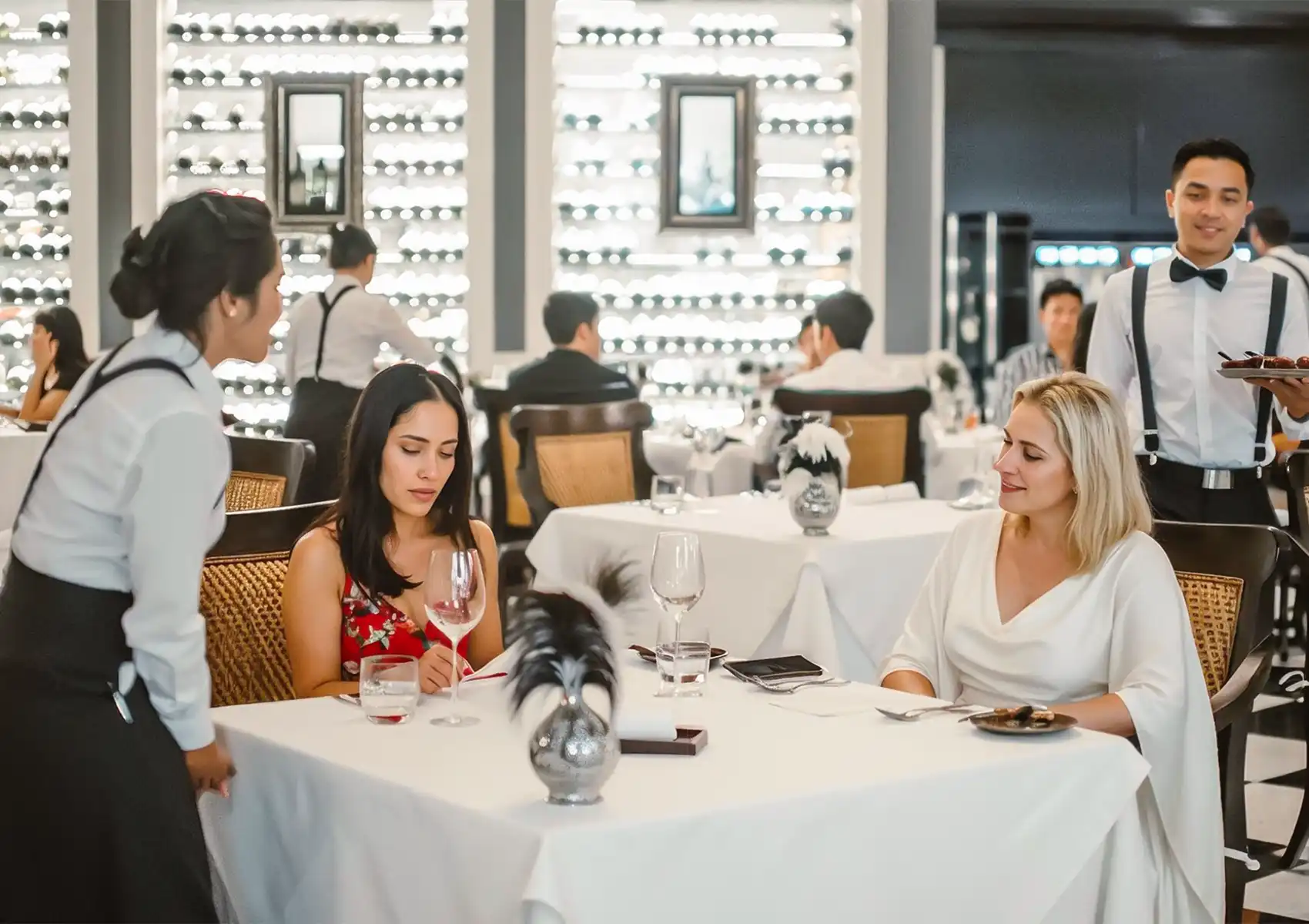
The degustation closes quietly. Rice with pineapple, vanilla and cinnamon refreshes the palate before a chocolate and tamarind dessert finishes the menu. The tamarind contributes an Indonesian acidity that balances the richness of 70% chocolate and almond, and mignardises follow.
Taken as a whole, the Guided by the Moon menu shows that European Technique. Indonesian Soul is less a concept than a disciplined way of working. Every dish begins by identifying what gives a traditional preparation its identity. Those defining flavours are kept, and the techniques around them are refined until they express those flavours more precisely.
That is the fine dining philosophy at work in Ubud every evening at Apéritif Restaurant, and it rests on curiosity, on respect for Indonesian ingredients, and on the precision of European kitchen technique.
The Guided by the Moon degustation is served each evening at Apéritif Restaurant, above the Valley of the Kings. Dinner begins at 6 pm; booking ahead is required, and two to three hours is the right amount of time to allow. Vegetarian and vegan menus are standing menus rather than requests. Reservations can be made at Apéritif’s website.