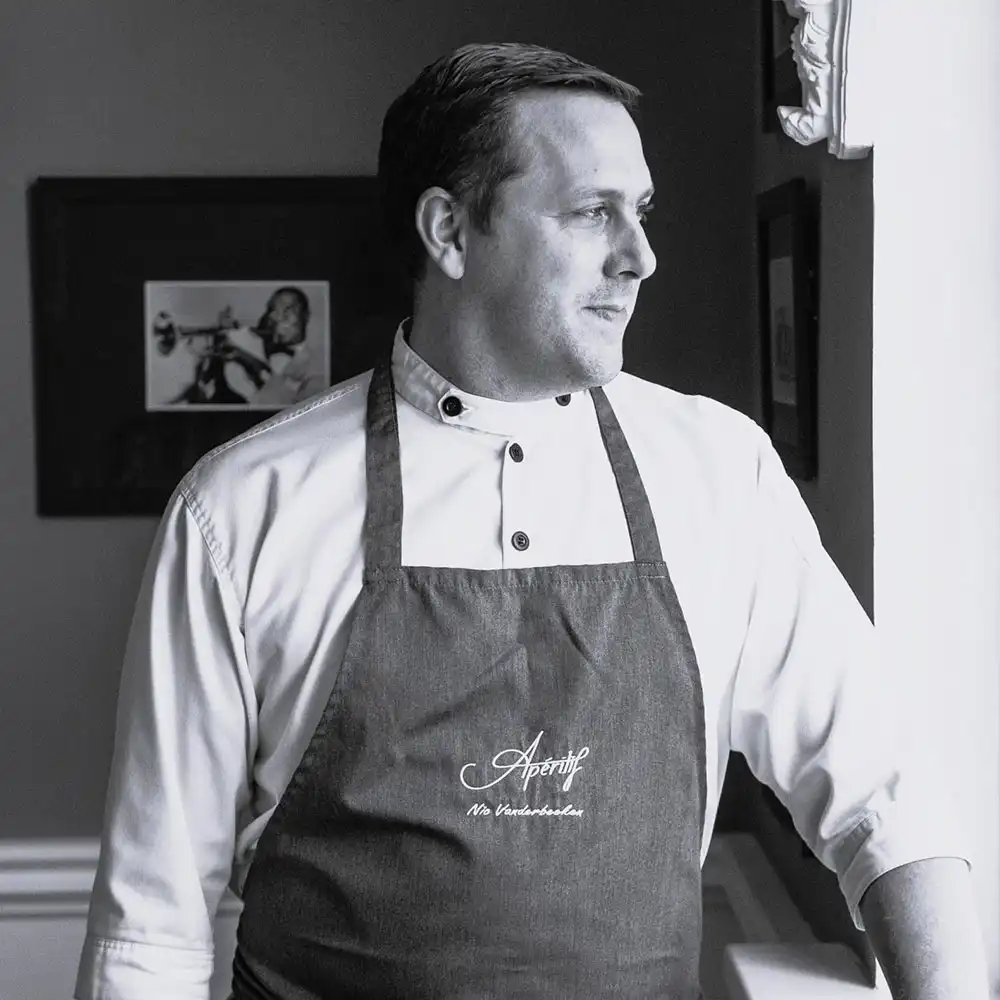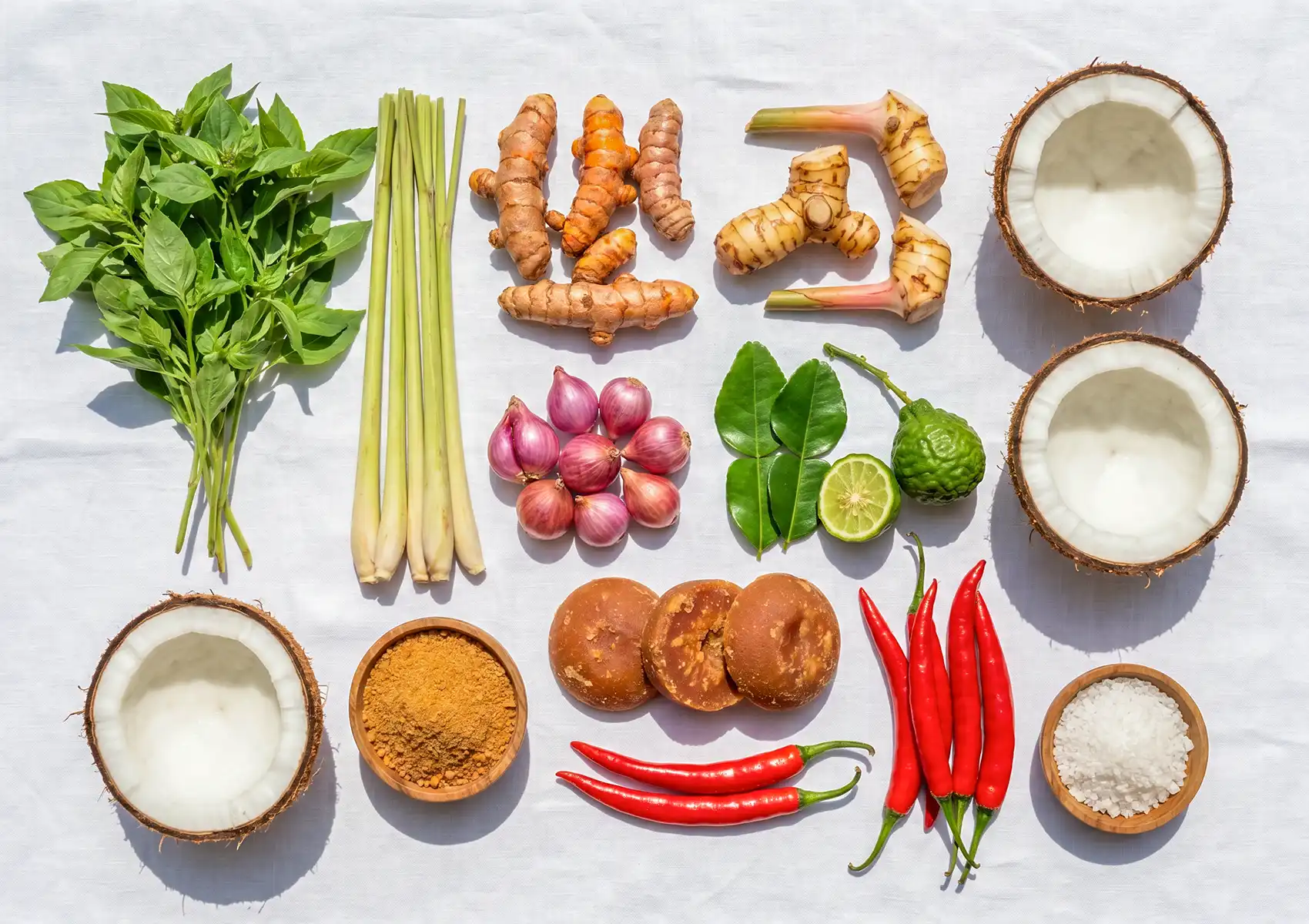
The Guided by the Moon degustation at Apéritif Restaurant in Ubud is built on Indonesian regional cooking, with Bali one of several regions represented. Sulawesi, Sumatra and Madura all appear in the sequence. The specifically Balinese elements are a small group, and their number is the point rather than a shortfall. Each one is on the menu because it performs a job that no substitute performs as well. Under the culinary artistry of the Apéritif team, the island’s contribution is measured in precision rather than quantity.
Lawar in the Opening Canapés
Lawar is among the most culturally significant preparations in Balinese cooking. It combines finely chopped meat or vegetables with grated coconut and a spice paste, and it has always been made collectively, for temple ceremonies and community occasions. Villages across Bali carry their own versions, passed down and varied locally.
On the Apéritif menu, it appears in the opening sequence of cocktails and canapés at the New Moon, as a component of the carrot taco served with duck. Its job there is the job it has always had. The spiced coconut character cuts the richness of the duck, balancing fat and spice as it does at a ceremonial table.
That continuity is what makes the canapé work. A preparation built for collective occasions has become a single bite without losing what it does.
Sambal Matah and the Logic of Raw Preparation
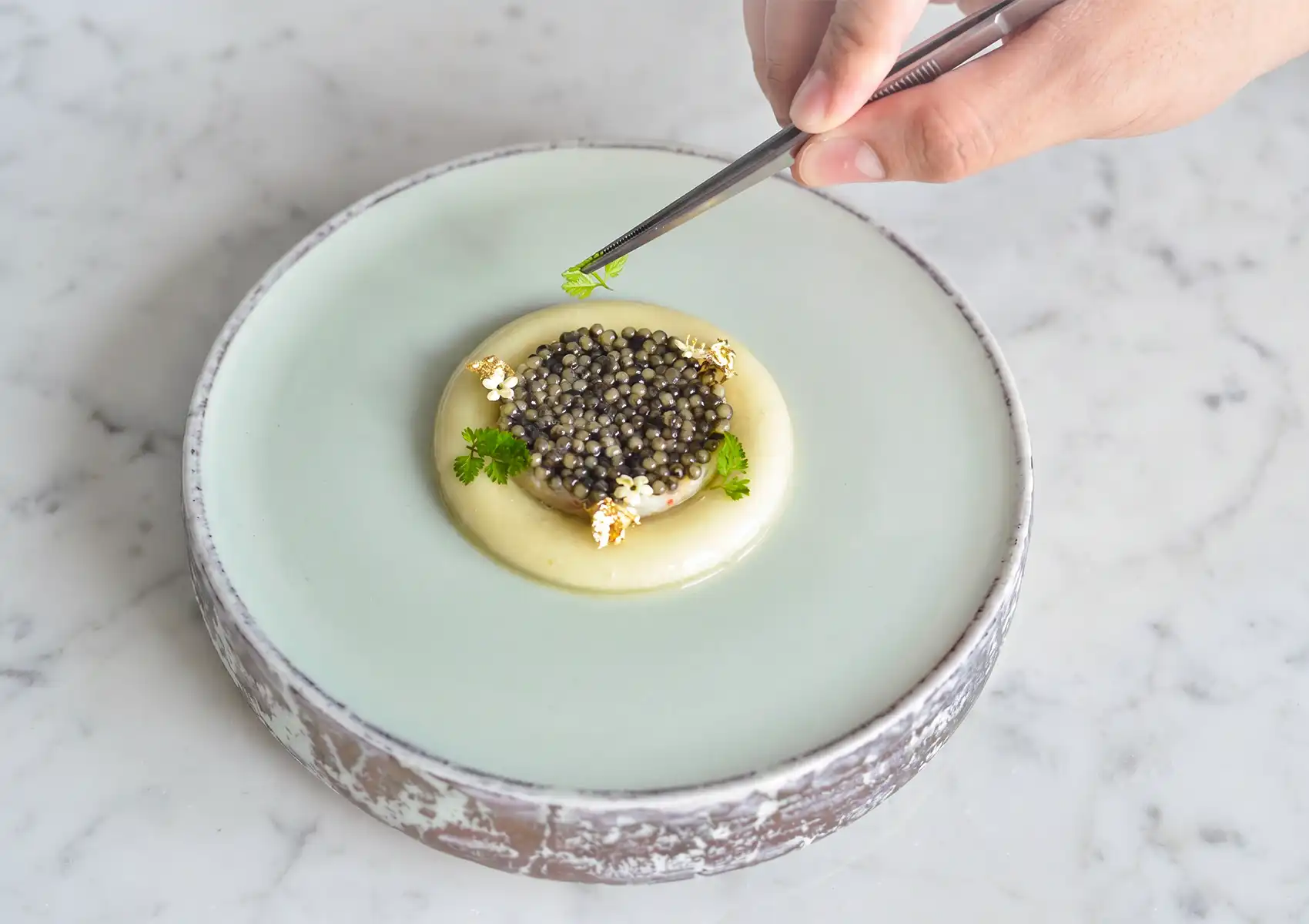
Sambal matah reaches the table at the Growing Moon, as part of an optional cauliflower course served with caviar, oyster gel and crab. Guests add it to the seven-course menu at a supplement.
It is the sambal most closely associated with Bali, and it is raw. Thinly sliced shallots, lemongrass, kaffir lime leaf and chilli are dressed with coconut oil and terasi, a fermented shrimp paste that supplies depth and salinity. Nothing is cooked, and the result is sharp, fragrant and citrus-forward.
Its placement beside caviar and oyster gel follows from that character rather than from contrast. Caviar brings richness and oyster gel brings brine, and both need acidity set against them. Balinese cooking has long worked with that balance between richness and brightness. The fine dining context makes the reasoning visible without altering it.
Kemangi Across Two Courses
Kemangi, Indonesian lemon basil, appears twice, on the tuna at the Half Moon and on the Madura blue crab at the Full Moon.
It is widely used in Balinese cooking and deeply embedded in the island’s culinary identity, though it grows across the Indonesian archipelago and belongs to no single region. In Balinese home kitchens, it is used raw, torn over grilled fish or folded in at the last moment so that its citrus fragrance survives.
Apéritif handles it the same way, adding it late so that it lifts the plate rather than cooking into it. The technique around the herb has changed. The treatment of the herb itself has not.
Cem-Cem Leaves Inside a Sulawesi Dish
The Fading Moon offers a choice between beef cheek and line-caught fish. Guests who take the beef receive the clearest example on the menu of a Balinese ingredient working inside a dish from elsewhere in Indonesia.
The course is built on Coto Makassar, a slow-cooked beef soup from South Sulawesi. The cem-cem leaves served with it are Balinese.
Cem-cem comes from a wild plant found in Bali, and it carries a sourness sitting somewhere between lemon and tamarind, a clean green acidity. In Balinese cooking, it appears in broths and spiced preparations, where its sourness balances slow-cooked meat and coconut. On this plate, it does the same thing, cutting the depth of the braised cheek alongside a carrot and a beef consommé, served for the same purpose.
A Balinese ingredient doing structural work inside a Sulawesi dish describes the menu more accurately than any single regional label. The island is not a theme here. It is a source of specific tools, used at the points where they are the right ones.
Specific Rather Than Numerous
The Balinese presence on the Apéritif menu is small and deliberate. Lawar carries the balancing function it has held in ceremonial cooking. Sambal matah supplies acidity where richness calls for it. Kemangi lifts two dishes in their final moment. Cem-cem brings a sourness with no close substitute.
None of these is decorative, and none is there to signal a location that the dining room above Lembah Maha Raja already establishes. Balinese cooking is precise, and the spice pastes underpinning it ask for the same patience as any classical preparation. Treating it as a set of exact tools rather than a general influence is the reading the menu takes.
Counting the Balinese elements gives a small number. Reading what each one does gives the fuller answer.
Apéritif serves Guided by the Moon each evening from 6 pm, and at lunch from 12 pm to 2 pm with 24 hours’ notice. Vegetarian, vegan and pescatarian menus need the same 24 hours’ notice, and the menu changes with the seasons. Reservations can be made at aperitif.com.
To experience Balinese food and the full degustation menu at Apéritif in Ubud, reservations can be made at aperitif.com.
All menus at Apéritif are seasonal and subject to change. Vegetarian and vegan degustation menus are available on request.