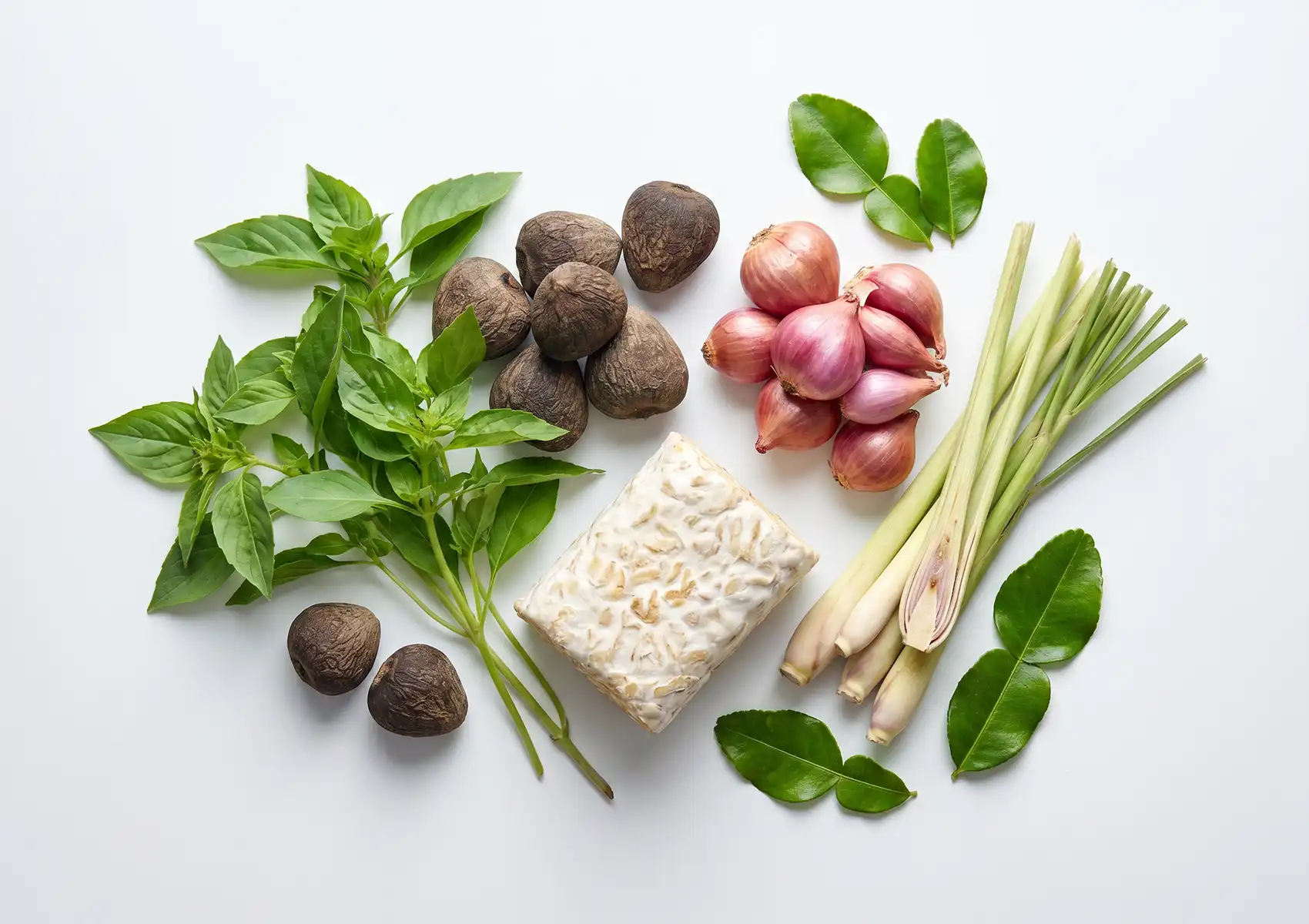
A dish arrives at the table. The technique is European. The structure is familiar. But something beneath it carries a different kind of weight: a herb’s brightness, a depth in the broth, a fermented note that stops you mid-bite and makes you pay attention. These are Indonesian and Balinese ingredients at work, and at Apéritif, they do not decorate the dish. They shape it.
Indonesia spans more than 17,000 islands, each with its own agricultural traditions, spice histories, and deeply regional food cultures. Bali sits within that landscape as one of its most biodiverse and culinary specific points. The Apéritif’s culinary team has built a cuisine around Global Gastronomy with Indonesian Produce: a philosophy that treats the Indonesian and Balinese pantry not as a source of local colour but as the foundation of every plate. This article traces the key ingredients from that pantry and explains what they bring to fine dining in Bali.
The Herbs That Define Balinese Cooking
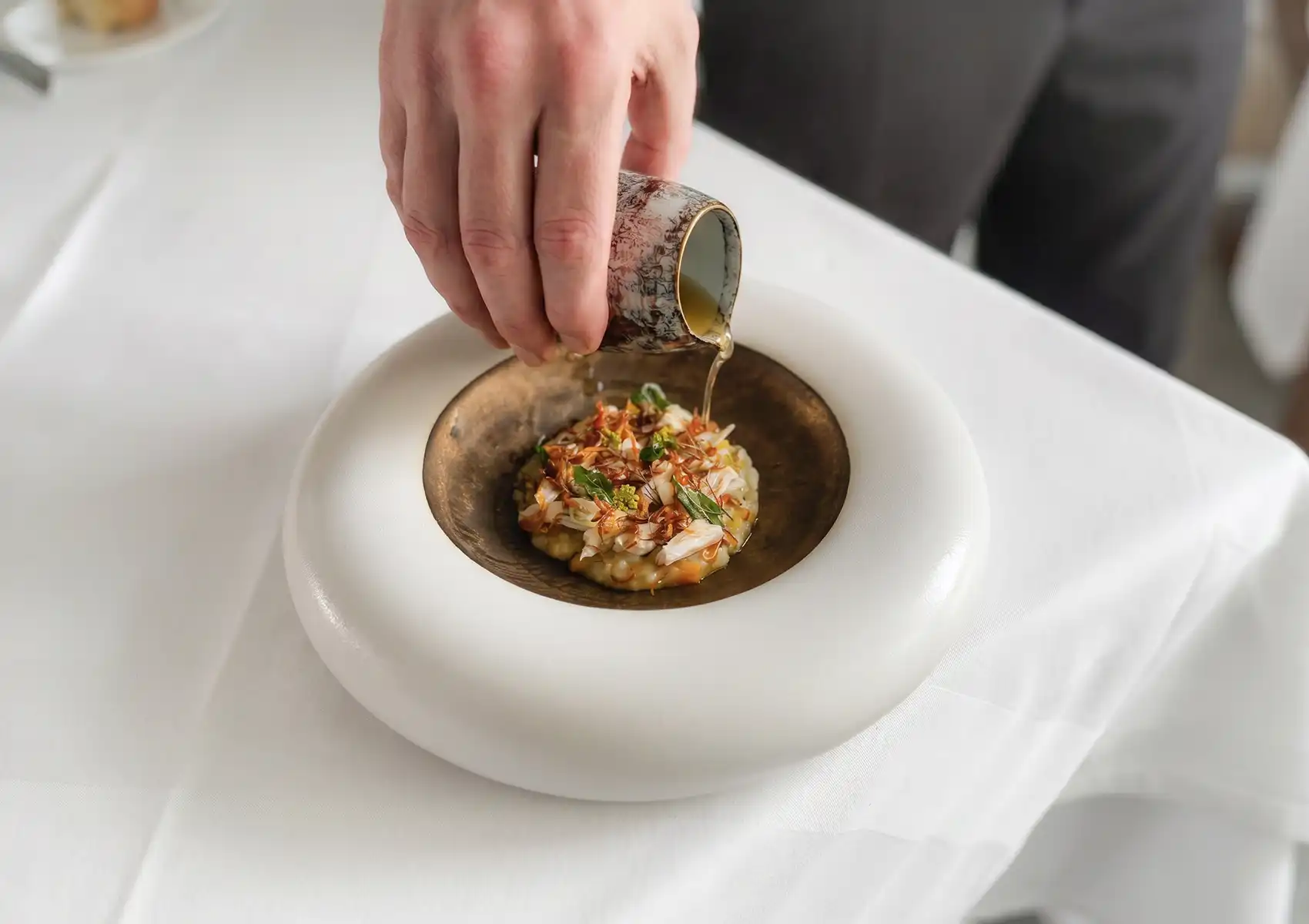
Kemangi, sometimes called Indonesian lemon basil, carries a bright citrus note alongside the familiar sweetness of basil. In Balinese home cooking, it is used raw, torn over grilled fish or folded into sambal at the last moment so the heat of the dish releases its fragrance without cooking it away. At Apéritif, Kemangi appears on the Tuna course alongside Romesco, Mango Salad, and Pindang Sauce, and again on the Madura Blue Crab Risotto, where, in both cases, it is added at the last moment to preserve its citrus fragrance, lifting the dish as it would in a Balinese home kitchen.
The Condiments That Build Character
Indonesia has one of the richest condiment traditions in the world, and two of its most compelling examples appear directly on the Apéritif degustation menu.
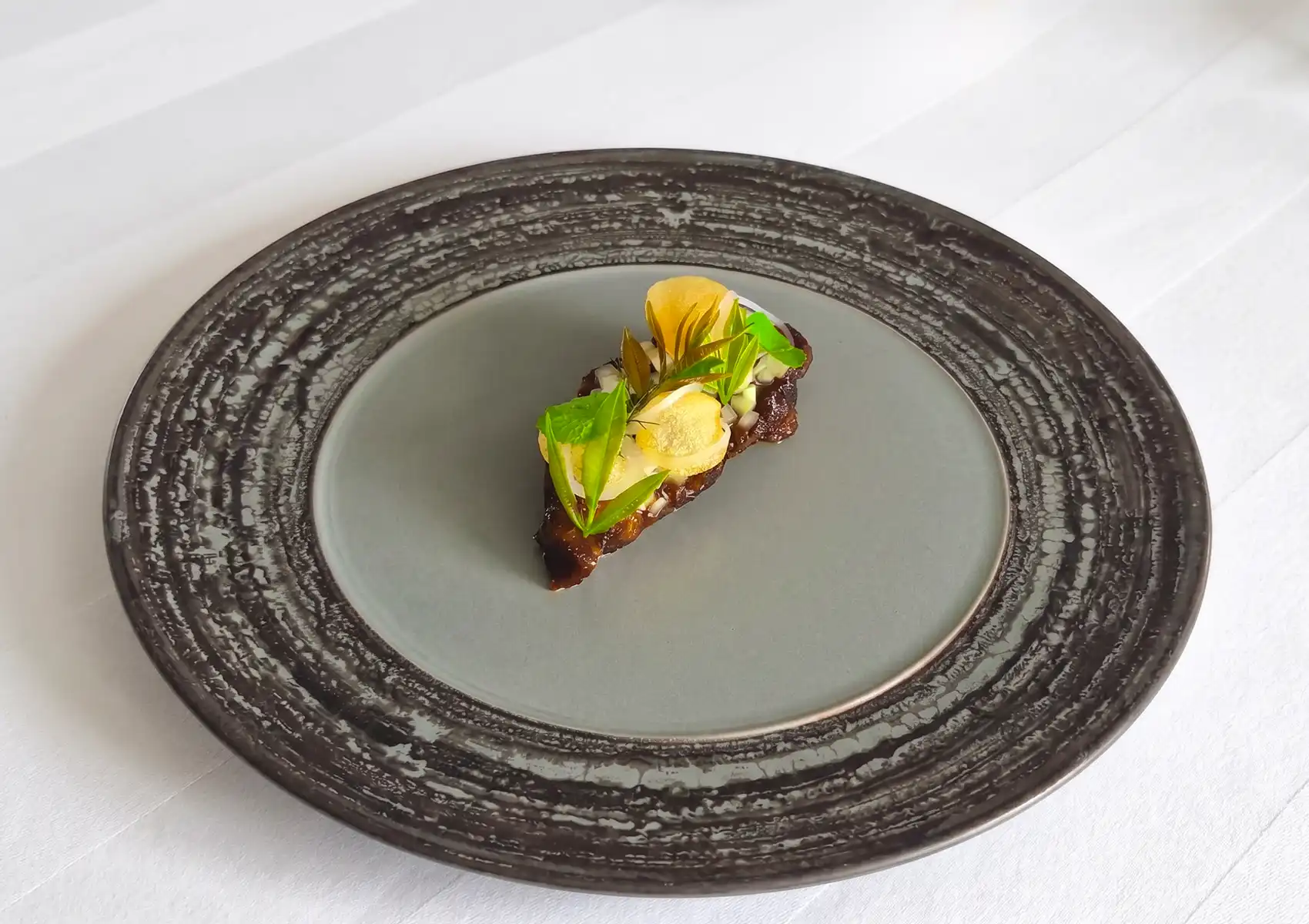
Acar, Indonesia’s great pickle tradition, a preparation of vegetables cured in a vinegar or rice wine solution with aromatics. It resets the palate, cuts through fat, and prepares the next mouthful. At Apéritif, acar appears alongside the Beef Cheek course, where its bright acidity cuts through the richness of the Coto Makassar broth and the depth of the beef consommé, providing a contrast that richness alone could not.
Serundeng, made by toasting grated coconut with spices until deeply golden, adds crunch, nuttiness, warmth, and a faint sweetness all at once. In fine dining, it serves as a textural garnish that delivers enormous flavour in a very small quantity, exactly the kind of ingredient a fine dining kitchen in Bali reaches for when it wants complexity without bulk.
Sambal Matah, Bali’s most distinctive sambal, is built on thinly sliced shallots, lemongrass, makrut lime leaf, chilli, coconut oil, and terasi, a fermented shrimp paste that adds depth and salinity. Unlike most sambals, which are cooked, Sambal Matah preserves the full aromatic intensity of its raw ingredients. At Apéritif, it appears on the Cauliflower course alongside caviar and oyster gel, its brightness providing the acidity and freshness the dish’s richness requires.
The Fermented Ingredients That Add Depth
Indonesian kitchens have relied on fermentation as a daily practice for centuries, and that tradition runs through multiple courses of the Guided by the Moon degustation.
Kluwek is the seed of the Pangium edule tree and is toxic in its raw state. Through boiling, burying in ash, and fermenting for several days, it becomes safe to eat and transforms into something extraordinary: jet-black, intensely savoury, and carrying a complex bitterness that deepens whatever it touches. It is the defining ingredient in rawon, one of Indonesia’s great beef broths, and at Apéritif it appears in both the Vegetable Terrine and the Tamarillo course on the vegan menu, where its darkness and depth anchor dishes that might otherwise rely on sweetness alone.
Kombucha, made in-house at Apéritif from tomato trimmings, appears on the Heirloom Tomato course as both a fermentation product and a zero-waste principle in action. The trimmings that would otherwise be discarded become the acidity that lifts the entire dish. On the vegetarian menu, the same course arrives with goat cheese mousse and kombucha. On the vegan menu, goat cheese is replaced with soy, keeping the kombucha’s fermented acidity as the constant that holds the dish together.
Tape, fermented cassava made with Rhizopus mould, closes the meal in the Mignardises as a Tape Financier, alongside a canelé and a passion-fruit-and-chocolate bite. A classic French petit four made with a fermented Indonesian ingredient, it is one of the clearest expressions on the menu of what Global Gastronomy with Indonesian Produce means in practice: two traditions meeting in a single bite at the very end of the meal, neither overwhelming the other.
The Preparations That Tell a Story
Some of the most powerful Indonesian ingredients are not individual plants or spices but entire preparations refined over centuries.
Coto Makassar, from South Sulawesi, is a broth of extraordinary depth made by slow-cooking beef in a mixture of toasted rice powder and a spice paste of galangal, lemongrass, candlenut, and coriander. At Apéritif, this preparation forms the foundation of the Beef Cheek course in the Guided by the Moon degustation, served alongside acar, puffed potato, and cem-cem leaves with a beef consommé poured at the table. The broth is refined and the spices lifted, but the soul of Coto Makassar remains on the plate.
Bobor is a Balinese and Javanese dish made with coconut milk, cooked with galangal, turmeric, and bay leaves. In traditional Balinese cooking, it is everyday comfort food, gentle and warming. At Apéritif, the kitchen takes that preparation further: the spicing is intensified, the coconut is balanced, and the sauce is finished with spinach chlorophyll, which gives it a deep green colour and a flavour approaching an Indonesian green curry. It appears as the sauce on the Line Caught Fish course in the Fading Moon, where it carries the full weight of a primary element rather than a supporting one.
Lawar, one of the most culturally significant preparations in Balinese cuisine, combines finely chopped meat or vegetables with grated coconut and a complex spice paste. Each village in Bali has its own lawar tradition, prepared collectively for temple ceremonies and important community occasions. At Apéritif, lawar appears across all four menus in the canapés and as a component of the Carrot Taco alongside confit duck and a garlic emulsion. A ritual preparation that belongs to ceremony and community has become a fine dining element without losing any of its cultural identity in the process.
The Proteins and Produce That Only Grow Here
Beyond the herbs, condiments, and preparations, Indonesia’s biodiversity yields ingredients simply unavailable elsewhere and offers some of the most compelling raw materials a fine-dining kitchen can work with.
Madura Blue Crab comes from the waters around Madura Island off the northeast coast of Java and is prized for its sweet, delicate flesh and natural salinity. The inspiration for the Full Moon course comes from the Executive Chef’s time in Manado and Bunaken, where bubur Manado, a rice porridge cooked with an abundance of vegetables, herbs, and local greens, became a daily ritual. At Apéritif, the kitchen translates that comforting preparation into a risotto, pairing sweet Madura blue crab with fish bouillon and pumpkin, adding kemangi at the last moment for its characteristic citrus lift. The bubur Manado spirit remains.
Jicama, known in Indonesian as Bengkuang, is a root vegetable with a crisp texture and a mild, slightly sweet flavour that holds up beautifully to both raw and cooked preparations. At Apéritif, it appears in the vegetarian and vegan canapés as part of the Ube Croustade.
Cem-Cem Leaves carry a distinctive sourness somewhere between lemon and tamarind, a clean, green acidity that cuts through richness with precision. In traditional Balinese cooking, they appear in broths and spiced preparations where their sourness balances slow-cooked meat and coconut-based preparations. At Apéritif, they appear on the Beef Cheek course alongside Coto Makassar, acar, and puffed potato.
Why This Matters at the Table
The Indonesian and Balinese pantry is unique. Its herbs carry fragrances that no European equivalent can replicate. Its fermented ingredients carry depths that take days, weeks, or months to develop. Its broths and preparations carry centuries of regional culinary intelligence. Its wild plants carry the particular character of a specific island, a specific soil, a specific tradition.
At Apéritif, these ingredients run through every menu. The Guided by the Moon degustation, the vegetarian menu, and the vegan menu each carry Indonesian and Balinese ingredients not as a gesture toward local identity but as the foundation of every plate. Kemangi lifts the Tuna and the Madura Blue Crab. Kluwek anchors the vegan Vegetable Terrine and Tamarillo. Lawar opens the meal across all four menus in the canapés. Bobor gives the Line Caught Fish its sauce. Coto Makassar gives the Beef Cheek its soul.
Understanding these ingredients is one way to understand what Global Gastronomy with Indonesian Produce means in practice: not a philosophy stated on a menu, but a decision made ingredient by ingredient, course by course, across every plate and every menu that leaves the Apéritif kitchen.
To experience these ingredients and the full Guided by the Moon degustation menu, reservations can be made at aperitif.com.
All menus at Apéritif are seasonal and subject to change. Dedicated Vegetarian and vegan degustation menus are also available.