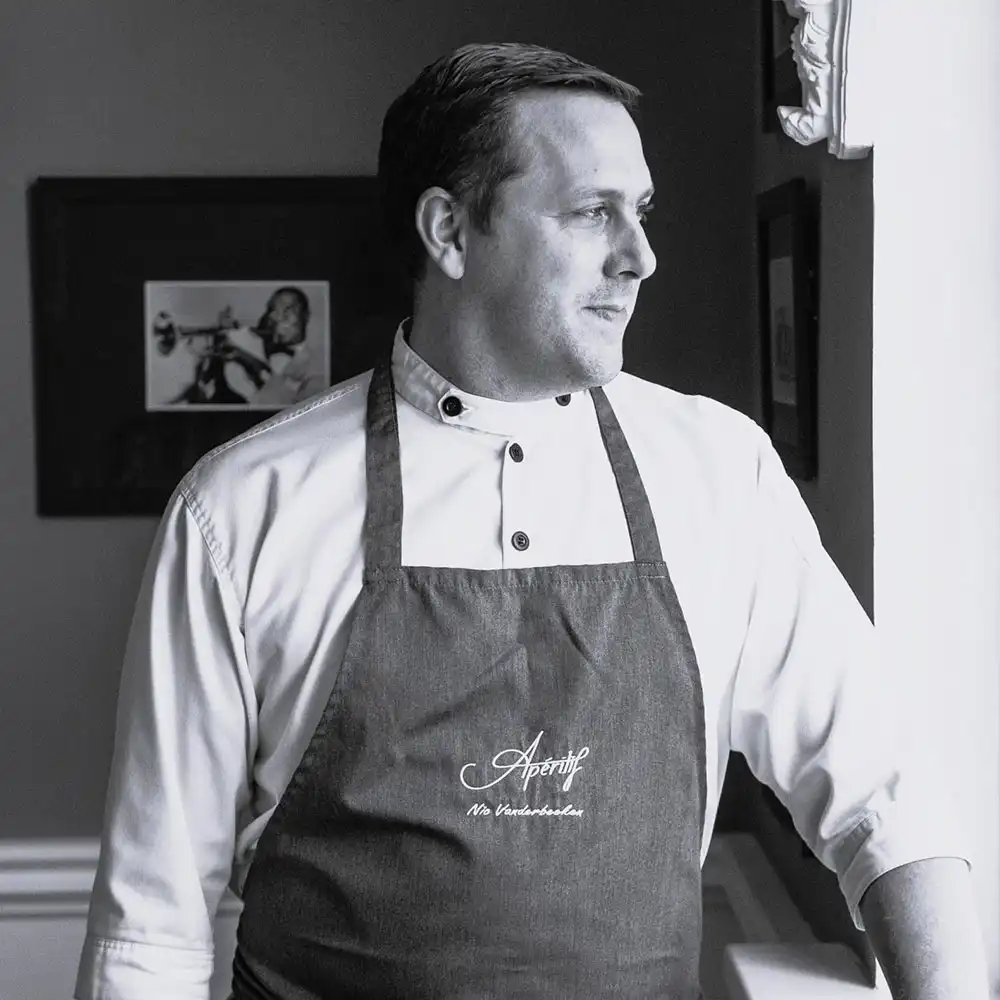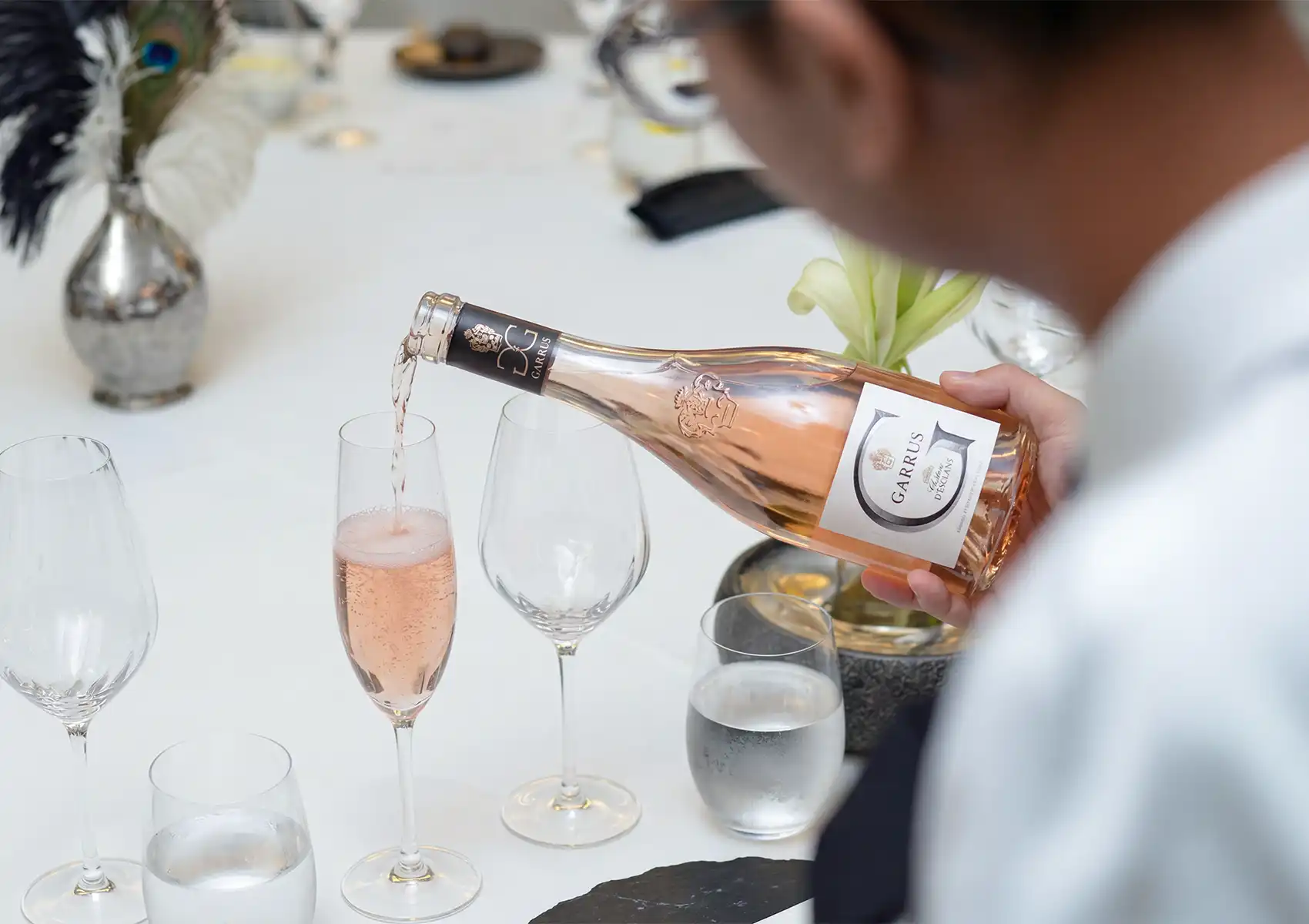
A pale pink pour catches the light. Tiny bubbles rising in a slow, lazy climb. But you may not have asked the deeper questions. What is sparkling rosé wine, really? And where does it belong within fine dining?
The answer is not a beach club in Seminyak. It is not a casual brunch by the pool. The answer is a colonial manor tucked between rice fields in Ubud. The answer is Apéritif Restaurant. Here, fine dining means slowing down. It means pouring with intention. It means storing a thoughtful collection of sparkling rosé in a wine cellar that the sommelier has spent years perfecting.
More Than a Pink Drink
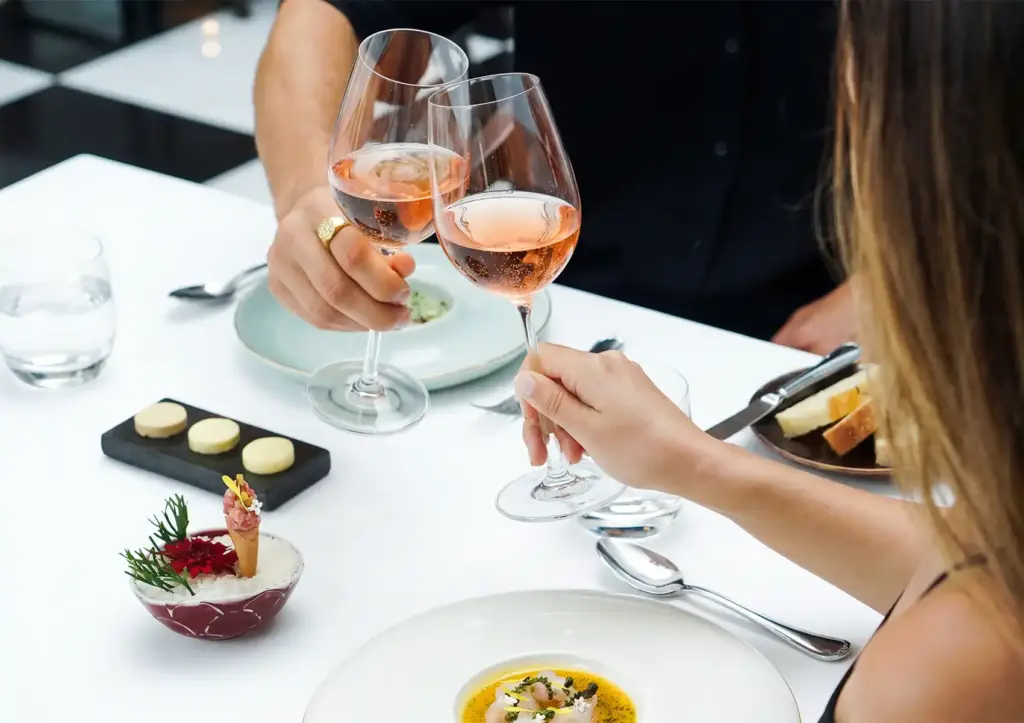
Ask someone what a good sparkling rosé wine is, and they will name a brand. They will point to a label they recognise from an airport duty-free shop.
At Apéritif, the answer is different. A good sparkling rosé is not about the name on the bottle. It is about what happens when the pour meets the palate. It is about the quiet moment before the first sip, when the glass catches the last light of the Ubud sunset.
The sommelier does not stock wines because they are popular. He stocks them because they belong. His collection of sparkling rosé includes bottles from small producers in Provence, from family estates in Lombardy, and from vineyards that do not mass-produce. Some are vintage. Others are young and bright. All of them have earned their place in the cellar.
The Question of Champagne
Many travellers ask quietly, often after they have already booked their flights. Is sparkling rosé wine champagne?
The honest answer is no. Champagne is a specific thing. It comes from a specific region in France. It follows strict rules. Sparkling rosé can come from anywhere. Italy, Spain, Australia, and even the south of France, outside Champagne.
But here is the nuance that matters. A well-made sparkling rosé can sit beside Champagne on any table. It can open in the evening. It can celebrate an anniversary. It can turn a Tuesday into something worth remembering.
At Apéritif, the wine list treats both with equal respect. Champagne for the purists. Sparkling rosé for the curious. And sometimes, for those who trust the sommelier, both in one evening.
The Heart of Fine Dining
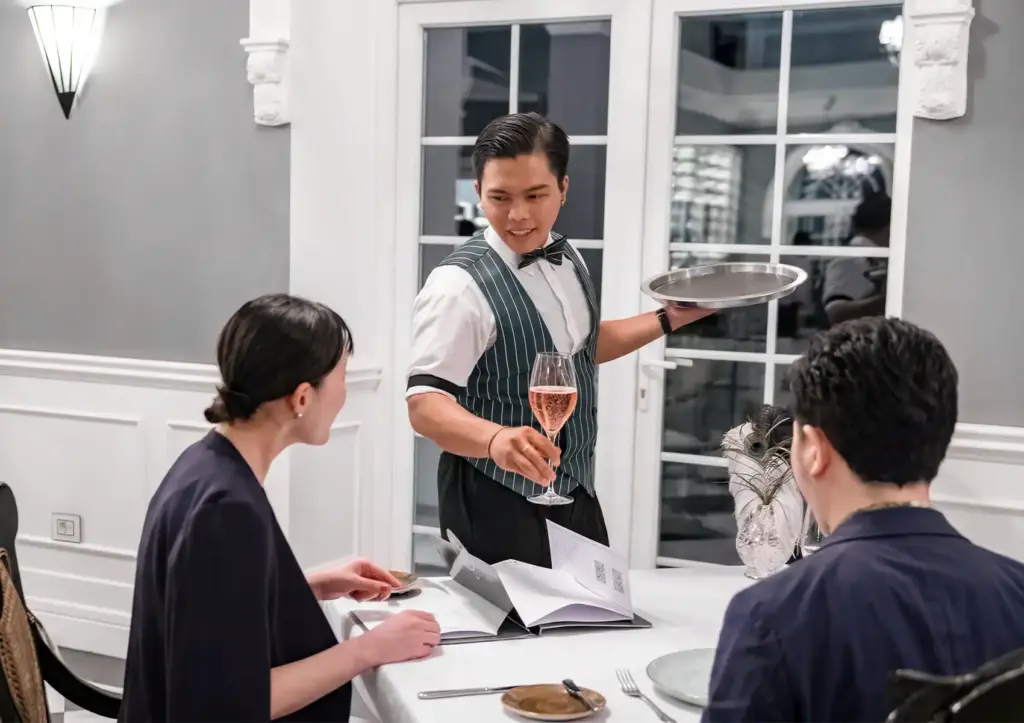
Because sparkling rosé wine, for all its charm, is not the main event. It is a prelude. A greeting. A question mark in a glass. What truly matters is the world it introduces. That world is called fine dining.
At Apéritif, fine dining is not a label on a door. It is not a dress code or a price tag. Fine dining is the deliberate pause between sunset and the first course. It is the weight of a bespoke plate. It is the scent of antique wood and slow-cooking spices. Fine dining is the reason you dress up on a Tuesday. It is the permission to linger for three hours without checking your phone.
The sommeliers understand this. When they select a sparkling rosé, they are not thinking about bubbles. They are thinking about the amuse-bouche that will arrive beside it. They are thinking about the valley view darkening through the colonial windows. They are thinking about fine dining as a complete sentence, not a collection of words.
The Ritual of Sparkling Rosé Wine
Now we arrive at the heart of the pour. Sparkling rosé wine is often misunderstood. Some think it is simply Champagne dyed pink. Others assume it is a sweet, simple drink for sunny afternoons. Neither is true.
A proper sparkling rosé wine is made with intention. The red grape skins stay in contact with the juice for just a few hours. Long enough to borrow colour and tannin. Short enough to remain bright and fresh. The second fermentation happens in the bottle for the best examples. That is what creates the tiny, persistent bubbles. That is what separates sparkling rosé wine from imitations.
At Apéritif, the sommelier seeks out sparkling rosé wine from specific regions. Provence for elegance. Lombardy for structure. Champagne for the rare few who want both. Each bottle tells a different story. But all of them share one thing. They are sparkling rosé wines that demand attention, not because it is loud, but because it is quiet.
What is a good sparkling rosé wine at Apéritif? It is the one that arrives chilled, poured slowly, and sipped without rush. It is the one that pairs with the first bite of the evening. It is the one that makes you forget the question and remember the feeling.
Not a Red Wine
Sparkling rosé is made from red grapes, but it is not a red wine. The juice is separated from the skins after a short time, usually a few hours or days. That brief contact gives the wine its pink hue without the tannins of a full red.
In practice, sparkling rosé lives in its own space. It is not red. It is not white. It is pink, and it is unapologetic about that. It pairs well with seafood and salad, as well as roasted chicken and soft cheese. The sommelier likes to serve it alongside the amuse-bouche. A small, surprising start to a long evening.
A Memorable Sparkling Rosé Wine
There is no single answer to what makes a memorable sparkling rosé wine. The right wine is the one that arrives at the right moment.
For some, it is a Billecart-Salmon Brut Rosé from Champagne. Elegant. Precise. For others, it is a lighter, fresher pour from a small producer they have never heard of. The sommelier team keeps both in the cellar. They watch the table. They read the room. Then they choose.
That is the difference between a wine list and a wine collection. One is a spreadsheet. The other is intuition.
The Rosé That Lives in the Cellar
Let us name a few. Because a wine list without names is just a promise. And Apéritif keeps its promises.
The sommelier has curated a collection of rosé wines that span the finest regions of Europe. Some are still. Some are sparkling. All of them belong here.
Château d’Esclans ‘Garrus’ from Côtes de Provence is widely regarded as one of the finest rosé wines in the world. The 2019 vintage sits quietly in the cellar. It is made from Vermentino and Grenache. The colour is pale, almost translucent. The taste is layered. White flowers. Fresh citrus. A long, mineral finish. This is not a casual rosé. It is a wine that rewards a slow evening and a special occasion.
Château d’Esclans ‘Les Clans’ from the 2020 vintage offers a slightly younger, more energetic sibling to Garrus. Syrah, Grenache and Vermentino come together here. The wine is aged in French oak barrels, which gives it a roundness that surprises many who think rosé must be light and simple. It is not. It is complex. It is memorable.
For those who prefer something more approachable, Château d’Esclans ‘Whispering Angel’ from 2023 is the bottle that started a movement. It is fresh. It is bright. It is the rosé that belongs on a terrace as the sun begins to set. Syrah, Cinsault and Grenache blend into something effortless. It is not trying to impress you. That is exactly why it does.
Château d’Astros Minuit Rosé from Côtes de Provence, vintage 2021, is another favourite. Syrah, Grenache and Cinsault again, but the balance here is different. More structured. More serious. The sommelier team recommends this one for guests who want a still rosé that can stand up to food, not just sit beside it.
Château d’Astros Amour from 2022 offers a softer, more floral expression. Same grapes. Different touch. This is the rosé you order when you want to pause. When you want to watch the valley darken and say very little.
E. Guigal Tavel from the Rhône Valley, vintage 2020, is something else entirely. Tavel is famous for making powerful rosé. Almost red in its intensity. Syrah, Grenache, Cinsault and Clairette come together in a wine that pairs beautifully with grilled fish or roasted poultry. It is not a shy wine. It is confident. It knows what it is.
Mas de Daumas Gassac Frisant Rosé from Pays d’Oc, vintage 2022, is a sparkling rosé made from Cabernet Sauvignon, Grenache, and Cinsault. It is rare. It is unusual. It is the bottle that the sommelier team saves for guests who have already tried everything else.
Sparkling Rosé from France and Italy
The sparkling rosé collection at Apéritif deserves its own mention.
Billecart-Salmon Brut Rosé is a legend. The house’s non-vintage cuvée rests in the cellar, waiting. It is elegant. It is precise. It is the Champagne rosé that sommeliers buy for themselves. Pale pink. Tiny bubbles. A finish that seems to last for minutes.
Taittinger Brut Prestige Rosé offers a lighter touch. More approachable. More forgiving. It is the sparkling rosé you can order on a Tuesday without feeling like you need an excuse.
For guests who prefer Italian bubbles, Contessa Giulia Prosecco Rosé ‘Extra Dry’ from Veneto, vintage 2022, is a gentle alternative. Glera and Pinot Noir come together in a wine that is sweet enough to be friendly but dry enough to be taken seriously.
Dom Pérignon Brut Rosé from 2008 is a celebrated vintage. The sommelier team keeps this one for the most special occasions. An anniversary. A proposal. A night that demands the best.
Billecart-Salmon Cuvée Elisabeth Salmon Brut Rosé from 2008 offers a different kind of elegance. Named after one of the founders of the house. This is the Champagne rosé you order when you want history in your glass.
A Still Rosé for the Patient Drinker
Not every rosé needs bubbles. Bodegas Arzuaga Rosae from Ribera del Duero, Spain, vintage 2023, is made from Tempranillo. It is a still rosé. It is dry. It is savoury. The sommelier team recommends this one for guests who are tired of sweet rosés and want something that tastes like earth and stone.
Château de l’Escarelle ‘Les Deux Anges’ from Côtes de Provence, vintage 2021, offers another still option. Syrah, Grenache and Cinsault again, but the balance is softer. More floral. This is the rosé you drink while reading a book on the terrace. Alone or together. Either is fine.
Château d’Astros Moon from Vin de Pays, France, vintage 2022, is a lighter, more everyday still rosé. Caladoc, Grenache and Cinsault. Bright. Uncomplicated. The sommelier team serves this one by the glass for guests who want a taste without committing to a full bottle.
An Evening with Bubbles
At Apéritif, sparkling rosé is not reserved for celebrations. It is also for the quiet nights. The ones where you have nowhere to be and no one to impress.
The evening begins at the Pinstripe Bar, just before sunset. A glass arrives. Pale pink. Cold. The bubbles are small and persistent. You take a sip. The valley unfolds. The rice fields whisper. And for a moment, you understand why people travel across the world for this. A pause. A moment of stillness. A reason to sit with someone you love and watch the valley darken.
Then the first course arrives. And the second. And the wine pairing continues. A white Burgundy with the fish course. A Barolo with the Venison Wellington. But the sparkling rosé stays in memory. It was the beginning. It was the promise. It was the unexpected pour that asked nothing of you except to be present.
When to Order It
Go for sparkling rosé when you want to start slowly. When you want something that pairs with the first light bites. When you want a wine that does not demand attention but quietly improves everything around it.
Go for a memorable sparkling rosé wine when you are celebrating. Not because you have to, but because the occasion deserves a bottle with a story.
And go for both when you trust the sommelier completely. He will not disappoint.
A Pink Glass Awaits
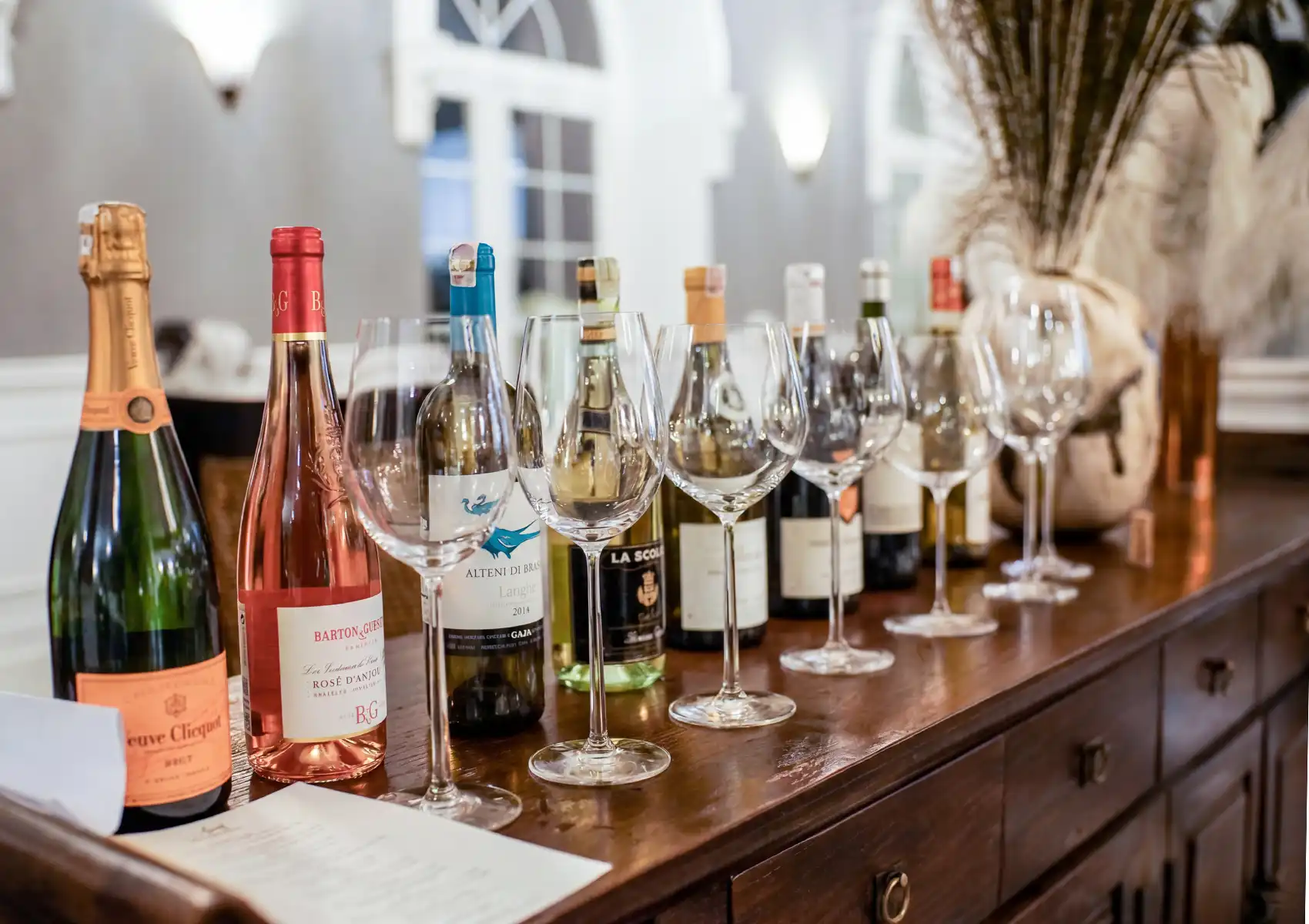
Some evenings ask for Champagne. Others ask for something pinker, softer, more surprising. Apéritif’s wine cellar holds both. But the sparkling rosé collection is something special. It is not the largest section of the cellar. It is the most thoughtful one.
When you are ready, book a table. Ask for the sommelier. Tell him you have been curious about sparkling rosé. He will walk to the cellar. He will return with something chilled. And he will pour it without ceremony.
Because a memorable sparkling rosé wine does not need a speech. It just needs a glass.
Reserve your evening at Apéritif.Apéritif Restaurant
Br. Nagi, Jl. Lanyahan, Petulu, Ubud, Bali
www.aperitif.com | @aperitifbali