A fine dining menu can show the geography of a country through individual dishes, ingredients and culinary references. At Apéritif Restaurant in Ubud, Indonesian regional influences provide the foundation for several courses on the Guided by the Lunar Cycle tasting menu. European technique gives these references a contemporary form, while the ingredients and flavour profiles remain central to each course.
The menu is not intended as a survey of Indonesian cuisine. It brings together selected references from across the archipelago and gives each one a defined role in the sequence of the meal. The New Moon canapés open with a broad Nusantara flavour profile, and the courses that follow draw on named regional preparations including naniura, pindang Palembang, woku and rendang.
Together, these references show how regional Indonesian cuisine can be translated into a fine dining setting without losing the character that makes each preparation recognisable.
The New Moon and Nusantara Flavour
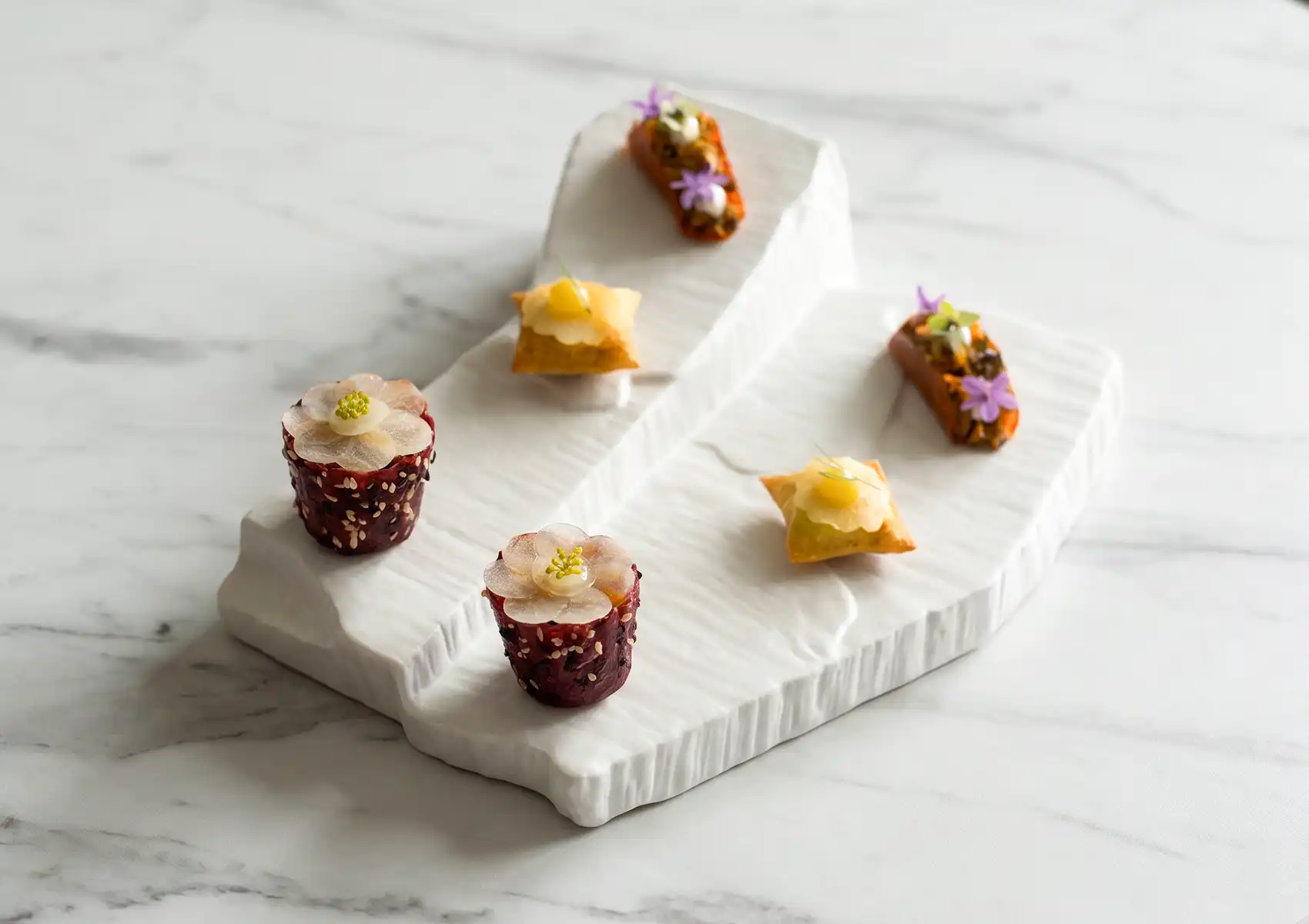
The meal opens with a cocktail and canapés at the New Moon. Four small bites set the register for everything that follows, and two of them carry a direct Indonesian reference.
Spring chicken arrives with a crisp skin cracker and sambal tomat, a cooked chilli sambal built on tomato and often made with terasi. It is rounder and less sharp than a raw sambal. Fish naniura places local red snapper in a tartlet. Alongside them sit beetroot with fromage blanc and compressed jicama, and the charcoal puff with smoked mackerel, a signature canapé of the restaurant.
These bites are not presented as complete traditional dishes. They introduce concentrated elements of Indonesian cooking through spice, acidity, aromatics and crisp texture before the plated courses begin.
1. North Sumatra and Fish Naniura
Naniura is a Batak dish from North Sumatra. Raw fish is cured in sour citrus juice and spices with no heat applied at any stage. Andaliman pepper is central to the preparation and gives the tingling character associated with Batak cooking.
At Apéritif Restaurant, the method is kept, and the format is changed. Local red snapper is prepared in the naniura style and served in a tartlet within the New Moon canapés. The curing and the spice profile carry the regional identity, while the tartlet gives the bite the precision expected at this point in the menu.
It is the only raw preparation among the four bites.
2. West Sumatra, from Ayam Pop to Rendang
West Sumatran influence appears at both ends of the savoury menu.
The spring chicken canapé takes its inspiration from ayam pop, the pale, gently cooked chicken associated with Padang cooking, and pairs it with sambal tomat (ketchup) and the skin cracker.
Rendang takes the more prominent role. Traditionally associated with West Sumatra and Minangkabau cuisine, rendang develops its depth through slow cooking, spices and the gradual concentration of flavour. At Apéritif Restaurant, it provides the flavour foundation of the Venison Wellington, a signature of the restaurant served with foie gras, rendang and sweet potato. A European pastry structure holds an Indonesian spice profile, and neither tradition is presented literally.
3. South Sumatra and Pindang Palembang
Pindang Palembang is a sour, spicy and aromatic fish soup from Palembang in South Sumatra, built on tamarind, pineapple, chilli, lemongrass and galangal.
It sets the direction for the After Full Moon course. Cuttlefish is served in a pindang Palembang broth, finished with chilli oil and an X.O. sauce made in-house from octopus and cuttlefish, then garnished with marigold leaves.
The course sits at the point where the menu begins to turn. The acidity and spice of the broth carry the meal away from the fullness of the courses before it, while the X.O. adds a concentrated savoury depth. The earlier menu used pindang as a loose archipelago-wide reference. Here it is tied to one city.
4. North Sulawesi and Woku
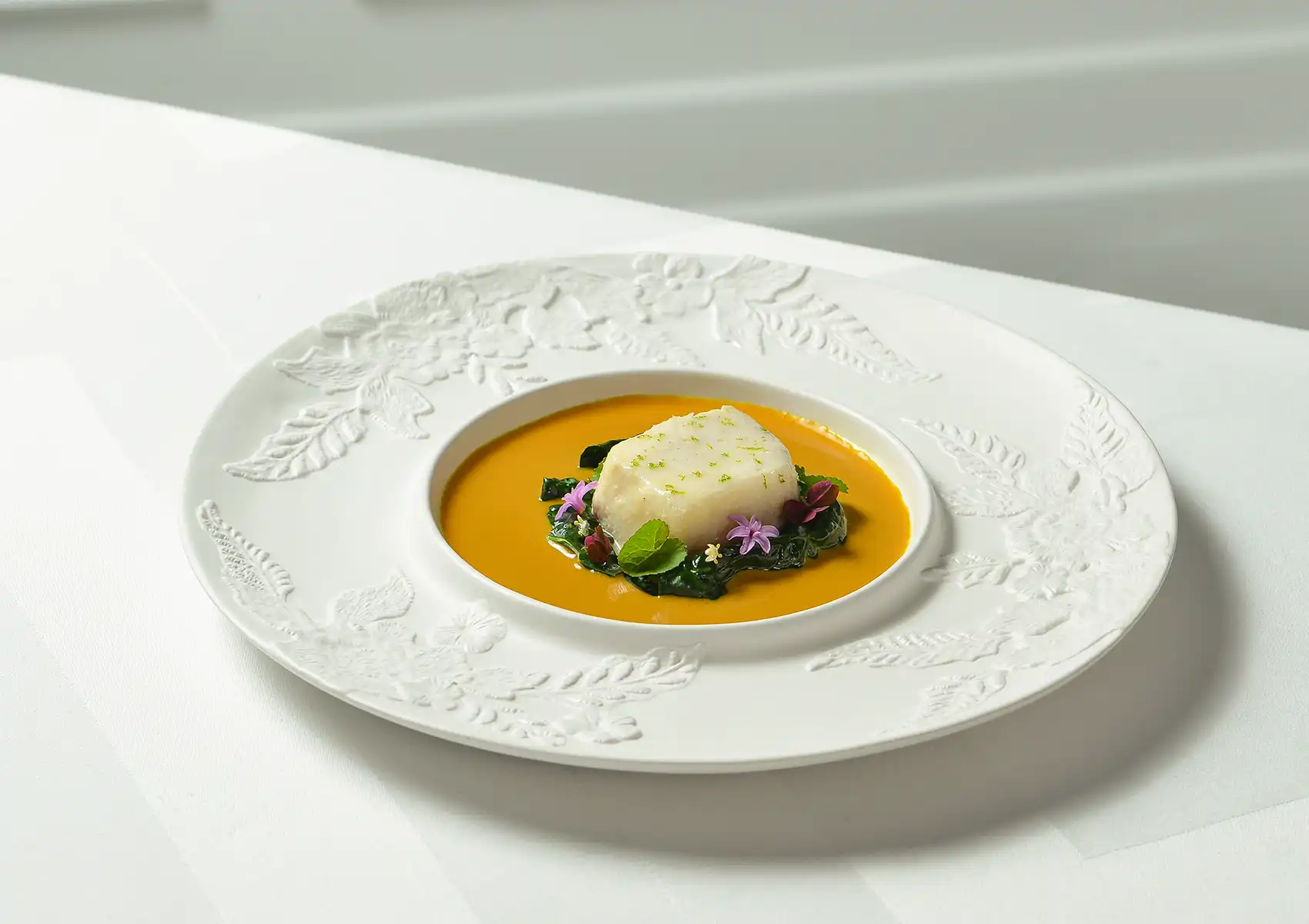
Woku is a cooking style and spice paste from Manado in North Sulawesi, built on turmeric, ginger, lemongrass, chilli, lime leaf, tomato, and a generous quantity of kemangi.
It gives Last Light its character, one of the two main course choices. Opu fish is served with woku, palm kale, herbs, and nasi uduk. The palm kale is a relative of cavolo nero and is grown in the restaurant’s own greenhouse.
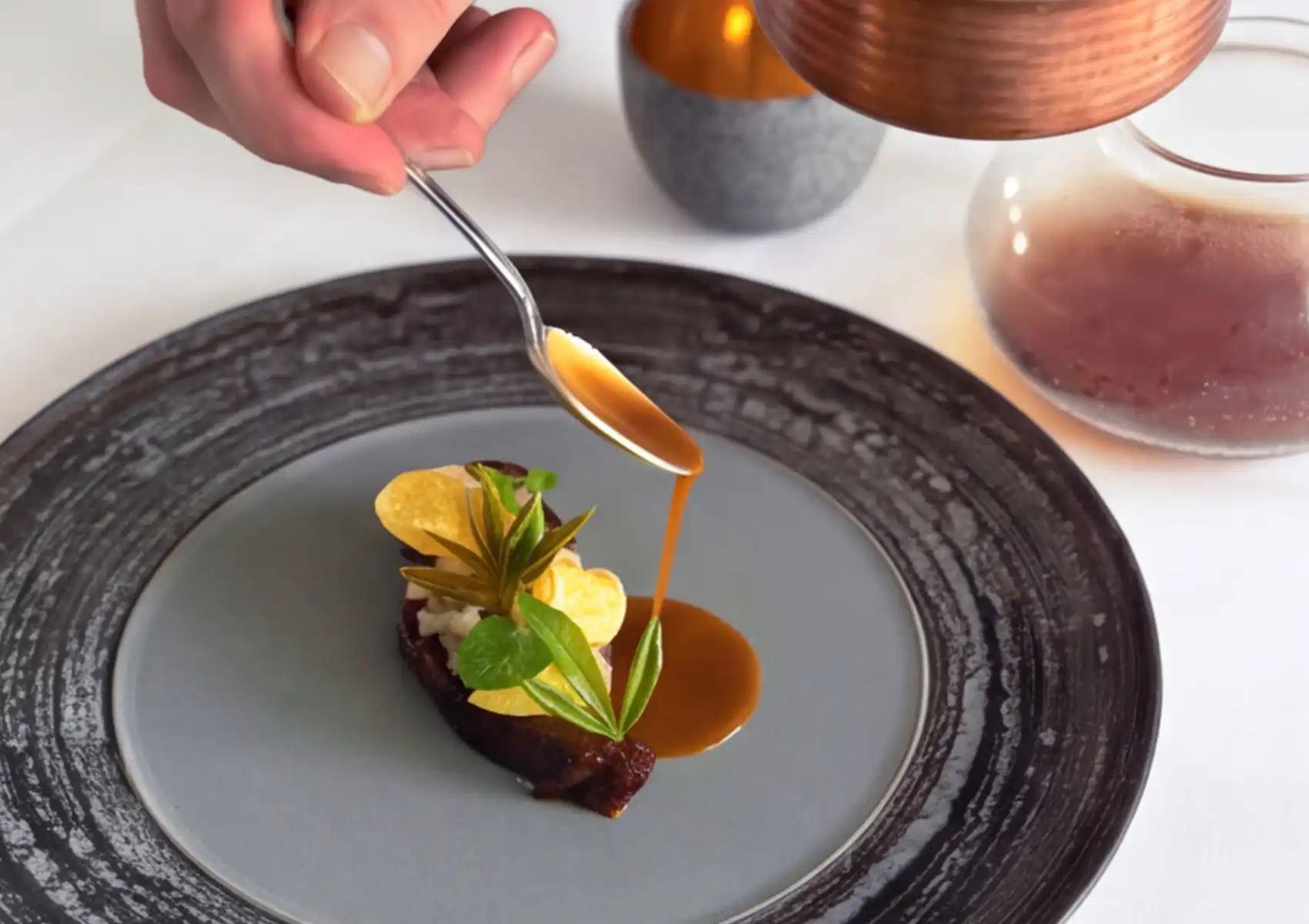
Woku carries the aromatic weight of the plate without heaviness, which is what allows this to be the lighter of the two main courses. The alternative, Closing Moon, is aged duck with confit leg, lacto-fermented pak choy and a jus sharpened with tamarind.
5. Bali and the Spice Paste Beneath It
Bali appears through foundations rather than through a single named dish.
Base genep is the complete Balinese spice paste of shallot, garlic, galangal, turmeric, ginger, kencur (aromatic ginger), and chilli, traditionally including candlenut and shrimp paste. It is served at the Fading Moon with Iberico pluma and lawar, a Balinese preparation of finely chopped vegetables, grated coconut and spices, made here with long beans and cassava.
A second Balinese reference closes the menu. The Dark Moon black rice uses beras injin, the Balinese black glutinous rice best known in bubur injin, served with ginger, coconut espuma and mango. Both of these courses appear on the seven-course menu.
Sambal matah, the raw Balinese sambal of shallot, chilli and aromatic herbs, appears with the cauliflower, caviar, and oyster gel plate offered at the Growing Moon.
6. Madura and Blue Crab
Regional identity can come from an ingredient as readily as from a named dish, and Madura supplies the clearest example on the menu.
Blue crab from the island off the north-east coast of Java is folded into the Growing Moon Chawanmushi, a Japanese steamed egg custard built on a kombu dashi. The crab gives sweetness and a defined seafood character to a course otherwise shaped by Japanese technique.
The technique here is not Indonesian and makes no claim to be. What places the course in the archipelago is the provenance of a single ingredient.
Regional Markers Beyond the Six
Two further references sit outside the six.
Nasi uduk brings a Betawi reference from Jakarta. Rice cooked in coconut milk with lemongrass and aromatic leaves, it is mixed at the table alongside the opu fish, while the smoked mackerel in the charcoal puff is sourced locally from Java and Sulawesi.
One reference belongs to no single region. The Half Moon Lapis Bresaola is dressed with rujak, the sweet, sour and spicy Indonesian fruit salad dressing of palm sugar, tamarind and chilli, set against air-dried beef from northern Italy and foie gras from France.
A Regional Indonesian Menu in Ubud
The regional references in Guided by the Lunar Cycle are part of a broader approach at Apéritif Restaurant. Indonesian ingredients, dishes and culinary traditions are brought together with European technique, creating a fine dining experience that stays connected to the country’s food culture.
The menu is available in seven-course and five-course formats. The five-course version omits the Iberico pluma and the black rice. Menus change with the seasons, so individual dishes and preparations may vary.
Dinner is served from 6 pm to 8:30 pm. Lunch is available from 12 pm to 2 pm with 24 hours’ notice. Walk-ins are accepted subject to table availability, though advance booking is advised.
Reservations can be made through Apéritif Restaurant.