A New Culinary Language
Set within a grand 1920s-style mansion, Apéritif is a restaurant of stunning ambition. The restaurant makes its Michelin ambitions known, and after this performance, it’s clear the conversation should not be about if Apéritif will earn a Michelin star, but how many. Its eventual award feels like a mere formality awaiting the guide’s arrival in Indonesia.
In a setting that evokes a bygone era of glamour, Chef Nic Vanderbeeken and his team are not looking to the past, but charting a course for the future of global fine dining. The restaurant uses its elegant, historical framework to stage a thoroughly modern and forward-thinking culinary performance.
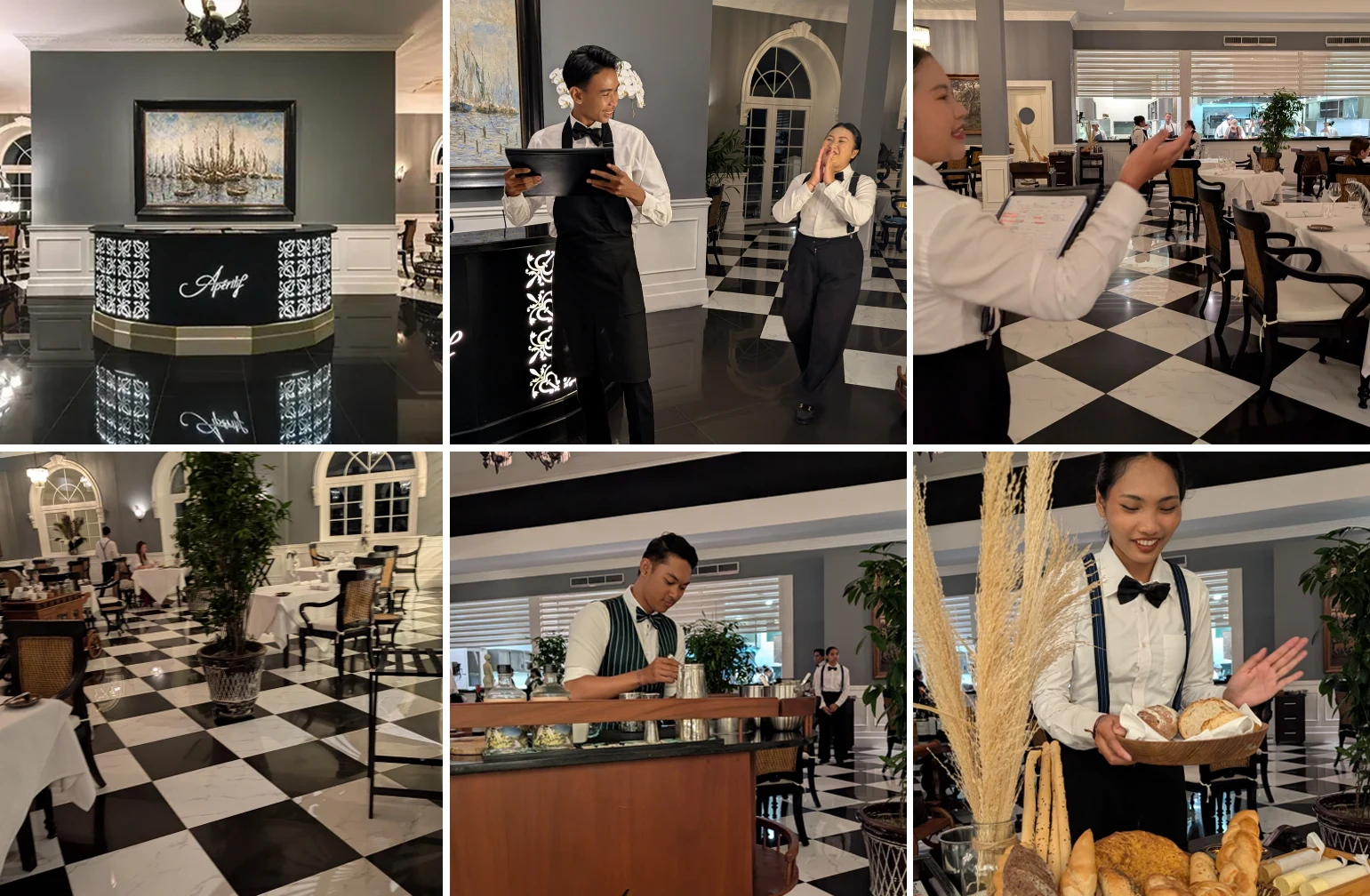
The restaurant’s philosophy is “Borderless Food,” a concept that Vanderbeeken executes with remarkable clarity and purpose. He has created a new, coherent language from a vocabulary of seemingly disparate parts: the rigor of French technique, the savory science of Japanese umami, and the potent, nuanced spice lexicon of the Indonesian archipelago. The dining room itself, a striking space of black-and-white floors and glittering chandeliers, becomes a neutral ground where these traditions can meet, and the open kitchen, a stage for the quiet performance to come.
Act I: A Dialogue Begins
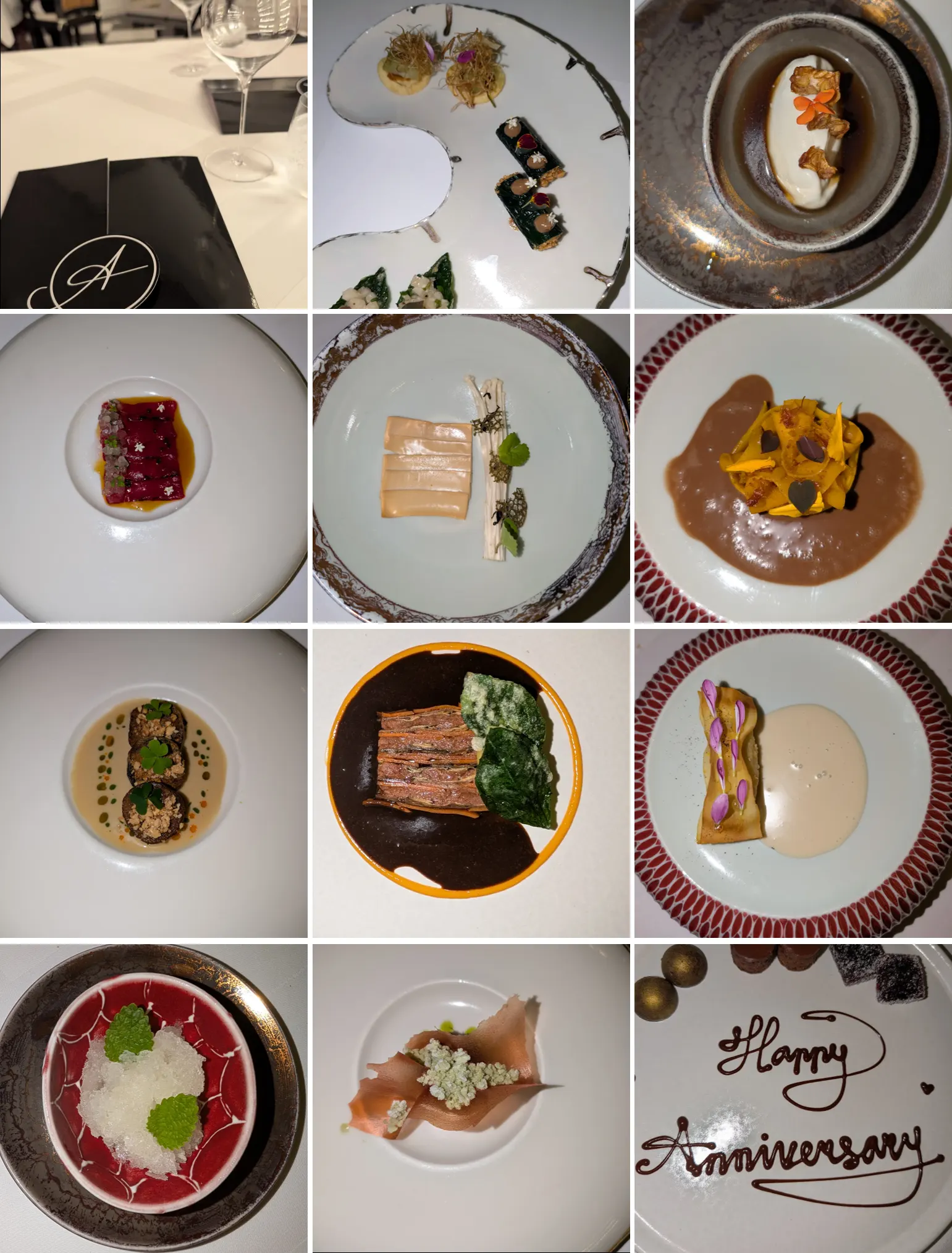
The plant-based degustation, “Guided by the Moon,” begins not with a single statement but a series of quick, declarative overtures. First, eggplant served with balado, the fiery chili paste of West Sumatra, its heat tamed into a complex, smoky warmth. This is followed by its counterpoint: crisp jicama dressed in a bright, citrus-soy ponzu with the crunch of potato chips—a gesture toward pan-Asian modernism. The dialogue between the local and the global is established. A refined karedok, the traditional raw vegetable salad, arrives as a bridge between these ideas, its components distinct and vibran
Act II: The Savory Heart
The meal then deepens, moving into a second act focused on texture and umami. A creamy soy emulsion, seasoned with a dark, savory dashi tare, is given a textural anchor with a crumble of crispy tempeh. Soon after, a dish of watermelon, treated with the Japanese tataki method of searing, offers a moment of surprising coolness and ingenuity, its sweetness balanced by soy and yuzu. This sets the stage for a course of profound depth: tofu paired with a six-month-fermented miso, its savory intensity rounded out by earthy enoki mushrooms and the clean, oceanic notes of kelp.
Act III: The Local Pivot
Just as the palate attunes to these subtle complexities, the menu pivots again, this time toward the terroir of Bali and the audacity of the chef. A dish of pumpkin—labu—finds an astonishing partner in the island’s own Kintamani Arabica coffee. The coffee’s bitter, acidic notes are used not as a novelty but as a structural element, cutting through the sweetness of the squash and a traditional palm sugar glaze. It’s a high-wire act of flavor logic. The theme of elevating humble ingredients continues with a layered vegetable terrine, its earthy flavors deepened by the inclusion of fermented cassava (tape) and the enigmatic Indonesian black nut, kluwek.
The Final Act
Chef Stephane embarked on his culinary voyage at l’Auberge Lamartine, a one-Michelin-starred restaurant situated in his hometown amidst the French Alps. His culinary prowess led him to kitchens across France and Switzerland. His love for exploration took him to the Caribbean, where he contributed his culinary artistry to the kitchens of the elegant Hotel Le Toiny on St. Barthelemy and La Samanna Hotel in St. Maarten. In 2008, he assumed the role of Executive Chef at the esteemed Cassis fine dining restaurant in Jakarta, Indonesia, where he spent five years crafting culinary excellence. Subsequently, he found his heart in Bali and made it his permanent home after relocating to Alila Villas Uluwatu.
The Verdict – This will be and should be the first Michelin Starred restaurant in Indonesia
The choreography of service is flawless, turning what could be an intimidating meal into an intimate one. Each dish arrives with a soft explanation, a key to unlock the ideas within. Apéritif succeeds because it is more than just an excellent restaurant. It is an argument. It argues that the most compelling culinary ideas are now emerging not from the established centers of the culinary world, but from the fertile spaces in between. It is a restaurant that doesn’t just feed you; it gives you a new way to see the world.
Apéritif
+62 361 908 2 777
res@aperitif.com
Br. Nagi, Jl. Lanyahan, Petulu, Kecamatan Ubud, Kabupaten Gianyar, Bali 80571
Instagram Facebook TripAdvisor